

Buy Nimesulide Paracetamol Injection 100mL Online
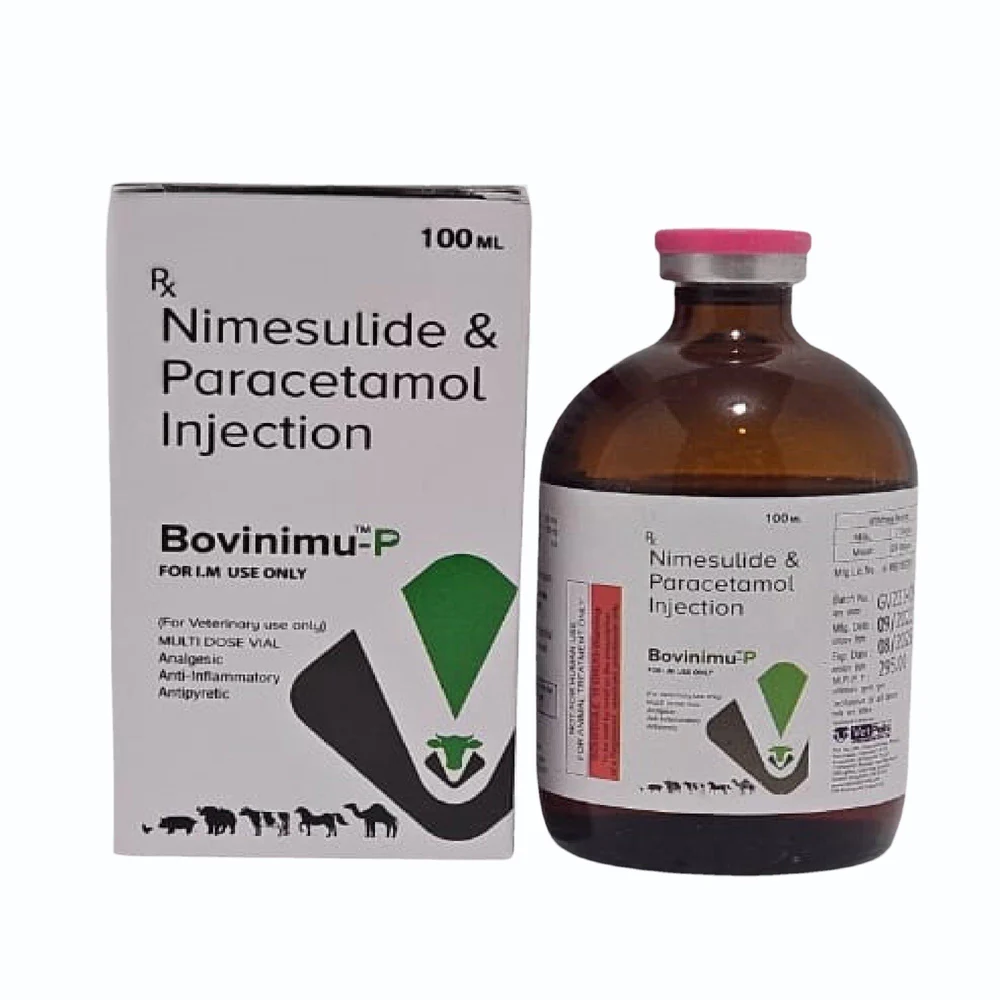
Nimesulide Paracetamol Injection 100mL is a veterinary injectable formulation combining nimesulide and paracetamol for the management of pain, inflammation and fever in animals. Multiple veterinary manufacturers document formulations containing 100mg of nimesulide and 150mg of paracetamol per mL, supplied in 100mL multidose vials.
The combination brings together two active ingredients with analgesic and antipyretic properties. Veterinary product information describes applications involving inflammatory conditions, painful musculoskeletal disorders, fever and certain infectious or postoperative conditions where symptomatic treatment is appropriate.
Because formulations can vary between manufacturers, the exact product label should always be checked. Some products containing nimesulide and paracetamol may additionally contain preservatives, solvents or other excipients, while others have different concentrations or presentations.
What Is Nimesulide Paracetamol Injection?
Nimesulide Paracetamol Injection is a veterinary medicine designed to help manage pain, inflammation and elevated body temperature.
A commonly documented formulation contains:
- Nimesulide — 100mg/mL
- Paracetamol — 150mg/mL
- Injectable vehicle/excipients according to manufacturer
- Presentation — 100mL vial
Veterinary manufacturers list the product as an injectable analgesic, anti-inflammatory and antipyretic preparation.
The product is generally associated with large-animal veterinary medicine, although target species can differ between individual manufacturers. One manufacturer’s product information specifically identifies cattle, pigs and horses, while other commercial listings describe broader veterinary applications.
For this reason, the specific label of the product being purchased should take priority over generalized online descriptions.
Nimesulide 100mg + Paracetamol 150mg
The combination is commonly presented as:
Each 1mL contains:
Nimesulide 100mg
Paracetamol 150mg
A 100mL vial therefore contains, when using this exact formulation:
- 10,000mg nimesulide
- 15,000mg paracetamol
These quantities are calculated from the stated concentration and should not be assumed for products with a different formulation.
Commercial veterinary references confirm the 100mg/mL nimesulide plus 150mg/mL paracetamol formulation in 100mL presentations.
How Nimesulide Works
Nimesulide is an NSAID used for its analgesic and anti-inflammatory effects.
It works through pathways involved in prostaglandin production. Prostaglandins participate in processes associated with:
- Inflammation
- Pain
- Fever
- Tissue responses to injury
By reducing inflammatory mediator activity, nimesulide can help reduce clinical signs associated with inflammation.
Nimesulide should nevertheless be regarded as a veterinary medicine requiring appropriate professional oversight.
How Paracetamol Works
Paracetamol, also known as acetaminophen, is primarily recognized for its analgesic and antipyretic properties.
Within a combination veterinary injection, it can contribute to management of:
- Pain
- Elevated temperature
- General discomfort
Its pharmacology differs from that of traditional NSAIDs, although the exact clinical effects and safety profile vary substantially among animal species.
This is particularly important because paracetamol is not equally safe across all animal species.
Therefore, the target species and product label must always be confirmed before treatment.
Nimesulide Paracetamol for Veterinary Pain Management
Pain can occur as a result of:
- Trauma
- Inflammation
- Musculoskeletal disorders
- Surgical procedures
- Infectious disease
- Joint disorders
- Soft-tissue injury
- Fever-associated illness
Veterinary pain management aims to improve animal comfort while addressing the underlying condition.
Nimesulide Paracetamol Injection may be selected by a veterinarian when an injectable analgesic and antipyretic approach is appropriate.
Pain medication should not be used simply to conceal an unresolved injury.
Nimesulide Paracetamol for Inflammation
Inflammation is a normal biological response to injury or disease.
Excessive inflammation can produce:
- Swelling
- Heat
- Pain
- Reduced mobility
- Tissue irritation
- Reduced performance
The nimesulide component is intended to provide anti-inflammatory activity.
Veterinary manufacturers describe the combination for inflammatory conditions and musculoskeletal disorders.
Nimesulide Paracetamol for Fever
Fever is a common clinical sign associated with infection and inflammation.
Veterinary product information describes nimesulide/paracetamol injections for conditions involving pyrexia and fever.
However, reducing fever does not necessarily treat its underlying cause.
For example, if fever is associated with a bacterial infection, the animal may require appropriate antimicrobial therapy in addition to supportive treatment.
Use in Cattle
Certain veterinary formulations of nimesulide/paracetamol injection are specifically marketed for cattle.
One manufacturer identifies use in cattle for:
- Acute respiratory infection
- Diarrhea in calves and young cattle
- Acute mastitis
- Inflammatory clinical signs associated with disease
The manufacturer describes use alongside appropriate antibiotic treatment where indicated.
This distinction is important: the injection may help manage pain, inflammation and fever, but it does not replace appropriate treatment of an underlying bacterial infection.
Use in Calves
Calves may develop fever and inflammatory signs associated with respiratory or gastrointestinal disease.
Veterinary management can involve:
- Fluid support
- Nutrition
- Appropriate antimicrobials when indicated
- Pain and fever management
- Monitoring temperature
- Monitoring hydration
- Close observation of clinical progression
A veterinarian should determine whether nimesulide/paracetamol is appropriate for an individual calf.
Use in Dairy Cattle
Veterinary product information for certain formulations identifies use in acute mastitis and describes combination with appropriate antibiotic treatment where required.
Mastitis can cause:
- Udder inflammation
- Pain
- Fever
- Reduced milk production
- Changes in milk appearance
- Systemic illness
Treatment should address the underlying cause while also providing appropriate supportive care.
Use in Pigs
Some veterinary formulations identify pigs as a target species.
The manufacturer’s information describes use for acute non-infectious locomotor disorders, including lameness and inflammation. It also describes use in puerperal septicemia/toxemia as part of appropriate veterinary treatment.
Again, supportive pain and fever management should not be considered a substitute for appropriate treatment of infection.
Use in Horses
Some veterinary manufacturers specifically identify horses as a target species for nimesulide/paracetamol injection.
One product description identifies the formulation for rapid initiation of therapy in musculoskeletal disorders and relief of pain associated with colic.
Equine use requires particular veterinary care because horses can be sensitive to gastrointestinal and renal complications associated with inappropriate NSAID use.
Nimesulide Paracetamol for Equine Musculoskeletal Conditions
Horses can develop musculoskeletal pain from:
- Joint inflammation
- Muscle injury
- Tendon injury
- Ligament injury
- Trauma
- Arthritis
- Hoof-related problems
- Overexertion
Pain and inflammation can result in:
- Lameness
- Stiffness
- Reduced performance
- Reluctance to move
- Changes in gait
A veterinarian should determine the underlying cause before treatment.
Nimesulide Paracetamol and Equine Colic
Colic describes abdominal pain rather than a single disease.
Potential causes range from relatively mild gastrointestinal discomfort to life-threatening intestinal obstruction or displacement.
Although some veterinary product information lists nimesulide/paracetamol for pain associated with colic, pain relief should never delay appropriate veterinary examination of a horse with suspected colic.
A horse with persistent, severe or recurring abdominal pain requires urgent veterinary assessment.
Nimesulide Paracetamol After Surgery
Some veterinary product descriptions identify postoperative inflammatory conditions among potential applications.
Postoperative pain management should be individualized according to:
- Type of surgery
- Species
- Age
- Body weight
- Hydration
- Kidney function
- Liver function
- Other medicines
The veterinarian responsible for the procedure should determine the most appropriate analgesic protocol.
Nimesulide Paracetamol for Fever and Infection
Nimesulide/paracetamol may be used as symptomatic therapy when fever accompanies disease.
However, symptomatic treatment is different from treatment of the underlying infection.
If an animal has bacterial pneumonia, mastitis or another bacterial disease, the veterinarian may prescribe an appropriate antimicrobial.
The analgesic/antipyretic injection may then form part of broader supportive care.
Nimesulide Paracetamol and Antibiotics
Veterinary product information specifically describes some indications where nimesulide/paracetamol is used in combination with appropriate antibiotic therapy.
This is an important distinction for animal owners.
The product is not an antibiotic.
It should not be marketed or understood as a replacement for antimicrobial therapy when antimicrobial treatment is required.
Nimesulide Paracetamol Injection Route
The route depends on the exact product.
Some documented veterinary formulations specify intramuscular administration, while product information and regional labels can vary.
Therefore, the route printed on the supplied product label should always be followed.
Do not assume that a formulation intended for intramuscular administration can automatically be administered intravenously or subcutaneously.
Nimesulide Paracetamol Dosage
There is no single universal dosage that can safely be applied to every nimesulide/paracetamol injection.
Different manufacturers can have:
- Different concentrations
- Different target species
- Different excipients
- Different routes
- Different approved indications
- Different dosage recommendations
One veterinary product document lists 5–10mg/kg body weight or as directed by a registered veterinarian, with intramuscular or subcutaneous administration, but this should not be generalized to every formulation.
The veterinarian should calculate the dose using the exact product concentration and animal’s body weight.
Why Product Concentration Matters
A major concern with injectable medicines is assuming that products with similar names contain identical concentrations.
Nimesulide/paracetamol formulations available commercially can differ.
For example, one current livestock product listing identifies:
Nimesulide 100mg + Paracetamol 150mg per mL
while another manufacturer lists different nimesulide/paracetamol concentrations among its product range.
Therefore:
Always check the actual label before calculating a dose.
Nimesulide Paracetamol and Body Weight
Veterinary medication doses are often calculated according to body weight.
This is particularly important with large animals.
An inaccurate weight estimate can result in an incorrect amount of medicine.
Veterinarians may use:
- Weigh scales
- Weight tapes
- Estimated body weight
- Production records
The safest method is to use the most accurate body weight available.
Nimesulide Paracetamol Safety
Nimesulide is an NSAID, and NSAIDs can produce adverse effects involving several organ systems.
Potential concerns include:
- Gastrointestinal irritation
- Gastrointestinal ulceration
- Kidney effects
- Liver effects
- Hypersensitivity
- Injection-site reactions
The risk can increase when NSAIDs are used at excessive doses, for inappropriate durations or in animals with certain underlying conditions.
Nimesulide and Liver Health
Nimesulide has received particular attention because of potential hepatic adverse effects in humans, and veterinary use should likewise be approached carefully.
Animals with known liver disease should be evaluated by a veterinarian before treatment.
Signs such as:
- Loss of appetite
- Weakness
- Jaundice
- Severe lethargy
- Vomiting
- Abnormal behavior
require veterinary attention.
Nimesulide and Kidney Health
NSAIDs can influence renal blood flow through prostaglandin-related mechanisms.
Risk can be higher in dehydrated or seriously ill animals.
Particular caution is appropriate when an animal has:
- Kidney disease
- Dehydration
- Shock
- Severe blood loss
- Reduced circulation
A veterinarian may choose an alternative treatment depending on the animal’s condition.
Nimesulide Paracetamol and Gastrointestinal Health
NSAID-related gastrointestinal complications can include:
- Reduced appetite
- Abdominal discomfort
- Diarrhea
- Ulceration
- Gastrointestinal bleeding
Horses require particular attention because gastrointestinal ulceration can be clinically significant.
The product should not be used indiscriminately in animals with a history of gastrointestinal disease.
Combining With Other NSAIDs
Nimesulide/paracetamol should not automatically be combined with another NSAID.
Examples include:
- Meloxicam
- Flunixin
- Phenylbutazone
- Ketoprofen
- Carprofen
- Firocoxib
Combining NSAIDs can increase the risk of adverse effects.
A veterinarian should determine whether changing from one NSAID to another requires an appropriate interval between treatments.
Combining With Corticosteroids
Corticosteroids such as dexamethasone and prednisolone can also increase gastrointestinal risk when combined with NSAIDs.
Do not combine nimesulide-containing products with corticosteroids unless specifically directed by a veterinarian.
Paracetamol and Species Differences
Paracetamol requires special attention because species differ considerably in their ability to metabolize it.
Dogs and particularly cats require different considerations than cattle, pigs and horses.
For this reason, a veterinary injection intended for large animals should not automatically be given to dogs or cats simply because the active ingredients appear familiar.
The exact product label and target species are critical.
Nimesulide Paracetamol for Dogs and Cats
Some online sellers may describe nimesulide/paracetamol products broadly for multiple animal species. However, the safety and authorization of a specific product depend on its formulation and regulatory approval.
Do not use a large-animal nimesulide/paracetamol injection in a dog or cat without explicit veterinary direction.
Cats are especially sensitive to paracetamol toxicity.
Food-Producing Animals
Because nimesulide/paracetamol injections can be used in cattle and pigs, food-animal withdrawal periods are an important consideration.
Withdrawal periods vary by:
- Product
- Country
- Target species
- Dose
- Route
- Regulatory approval
Never rely on a withdrawal period from a different manufacturer’s product.
Use the withdrawal information printed on the locally approved label.
Milk Withdrawal
For lactating cattle, the veterinarian and product label should be consulted for the applicable milk withdrawal period.
This is particularly important when the medicine is being used for mastitis or other conditions affecting dairy animals.
Milk intended for human consumption must not enter the food chain during a legally required withdrawal period.
Meat Withdrawal
Cattle and pigs treated with veterinary medicines may require a specified period before slaughter.
The applicable meat withdrawal period should always be verified from the exact product label and local regulations.
Nimesulide Paracetamol Storage
Storage instructions vary between manufacturers.
A typical veterinary product may require controlled room-temperature storage and protection from unsuitable environmental conditions, but the actual product label should take priority.
Before use:
- Check the expiration date
- Inspect the vial
- Confirm the seal is intact
- Check the appearance of the product
- Do not use damaged containers
Buying Nimesulide Paracetamol Injection 100mL
When looking for Nimesulide Paracetamol Injection 100mL, customers should verify the complete product specification rather than relying solely on the product name.
Check:
- Active ingredients
- Concentration
- Target species
- Manufacturer
- Batch number
- Expiration date
- Pack size
- Route of administration
- Regulatory information
- Storage instructions
A 100mL vial is available from several veterinary manufacturers, but the formulations are not necessarily identical.
Nimesulide Paracetamol Injection for International Veterinary Markets
Veterinary medicine regulations vary considerably around the world.
Customers in the United States, Canada, Australia, Mexico, France, Germany, Spain, the Netherlands, South Africa and other countries should verify that the exact formulation is authorized for their intended animal and indication.
International availability does not automatically mean that a product is approved for use in every jurisdiction.
Vet Pharma Med Product Information
At Vet Pharma Med, product information for Nimesulide Paracetamol Injection 100mL can help customers understand the formulation and its intended veterinary applications.
Relevant product search terms include:
- Nimesulide Paracetamol Injection 100mL
- Nimesulide 100mg Paracetamol 150mg Injection
- Nimesulide Veterinary Injection
- Paracetamol Veterinary Injection
- Nimesulide Paracetamol Injectable
- Veterinary Pain Relief Injection
- Veterinary Fever Injection
- Veterinary Anti-Inflammatory Injection
- Nimesulide Injection for Cattle
- Nimesulide Paracetamol Injection for Horses
- Nimesulide Paracetamol Injection for Pigs
These terms describe different aspects of the product rather than making unsupported claims about a particular animal or disease.
Frequently Asked Questions
What is Nimesulide Paracetamol Injection 100mL?
It is a veterinary injectable formulation combining nimesulide and paracetamol. A commonly documented formulation contains 100mg of nimesulide and 150mg of paracetamol per mL and is supplied in a 100mL vial.
What are the active ingredients?
The commonly documented formulation contains nimesulide 100mg/mL and paracetamol 150mg/mL.
What is Nimesulide Paracetamol Injection used for?
Veterinary manufacturers describe applications involving pain, inflammation, fever and certain musculoskeletal, respiratory, mastitis and postoperative conditions, depending on the product and target species.
Is it an antibiotic?
No. Nimesulide/paracetamol injection is not an antibiotic. It is used primarily for symptomatic management of pain, inflammation and fever.
Can it be used with antibiotics?
Some veterinary product information specifically describes its use alongside appropriate antibiotic therapy for certain infectious conditions.
Can it be used in cattle?
Some formulations are specifically marketed for cattle. The exact product label should be checked before use.
Can it be used in pigs?
Yes, certain veterinary formulations identify pigs as a target species.
Can it be used in horses?
Some formulations specifically identify horses and describe applications involving musculoskeletal disorders and pain associated with colic.
Is the injection suitable for dogs?
Do not assume that a large-animal formulation is appropriate for dogs. Veterinary advice is required because paracetamol safety and dosing differ between species.
Is it suitable for cats?
Paracetamol can be highly dangerous to cats. A nimesulide/paracetamol veterinary injection should not be administered to a cat unless specifically prescribed by a veterinarian.
What is the usual concentration?
One commonly marketed formulation contains 100mg/mL nimesulide plus 150mg/mL paracetamol.
How is it administered?
The route depends on the exact formulation. Some products specify intramuscular administration.
Can I use the same dose for every animal?
No. Dose depends on species, body weight, formulation, indication and veterinary instructions.
Can it be combined with meloxicam?
It should not be combined with another NSAID unless a veterinarian specifically determines that the treatment is appropriate.
Can it be used with phenylbutazone?
Do not combine NSAIDs without veterinary direction because the risk of adverse effects can increase.
Is a 100mL bottle always the same concentration?
No. Different manufacturers may produce different concentrations and formulations. Always check the label.
Does it require a withdrawal period?
For food-producing animals, withdrawal requirements may apply. The exact period must come from the applicable product label and local regulations.
Can it be purchased internationally?
Availability and legal requirements vary by country. Customers should verify the regulatory status of the exact formulation in their country.
Nimesulide Paracetamol Injection 100mL — Vet Pharma Med
Nimesulide Paracetamol Injection 100mL is a veterinary injectable combination designed for the management of pain, inflammation and fever. A widely documented formulation contains nimesulide 100mg/mL together with paracetamol 150mg/mL, presented in a 100mL vial.
Nimesulide provides anti-inflammatory and analgesic activity, while paracetamol contributes analgesic and antipyretic effects. Veterinary product information describes use in selected cattle, pig and horse conditions, including inflammatory disorders, musculoskeletal problems, fever and certain situations involving respiratory disease, mastitis or postoperative inflammation.
The medicine should be considered part of a broader veterinary treatment program rather than a substitute for diagnosis. When fever or inflammation results from an infection, the underlying disease may require specific therapy such as an appropriate antimicrobial. Veterinary manufacturers specifically describe some uses in combination with antibiotic treatment.
The 100mL presentation is available from multiple veterinary manufacturers, but the products are not necessarily identical. Concentrations, preservatives, excipients, target species, routes of administration and dosage instructions can vary. Some manufacturers document the 100mg/mL nimesulide plus 150mg/mL paracetamol combination, while other commercial products contain different strengths.
For responsible veterinary use, the product label should always be checked before administration. This is particularly important for food-producing animals because meat and milk withdrawal requirements can apply. The exact withdrawal period depends on the authorized product and jurisdiction.
Nimesulide Paracetamol Injection 100mL can be relevant to veterinary practices and animal-care professionals looking for an injectable option for pain and fever management. However, NSAIDs require appropriate precautions, particularly in animals affected by dehydration, kidney disease, gastrointestinal problems, liver disease or other serious medical conditions.
Vet Pharma Med recommends confirming the animal’s species, body weight, medical condition and exact product formulation before treatment. Veterinary medicines should be administered by, or under the direction of, an appropriately qualified veterinary professional.
Important: This product information is for educational purposes. Nimesulide Paracetamol Injection formulations can differ between manufacturers and countries. Always follow the exact manufacturer’s label, applicable local regulations and instructions from a qualified veterinarian
Nimesulide Paracetamolis a relatively COX-2 selective, non-steroidal anti-inflammatory drug (NSAID) with analgesic and antipyretic properties.
Nimesulide Paracetamol Injection is a relatively COX-2 selective, non-steroidal anti-inflammatory drug (NSAID) with analgesic and antipyretic properties. Its approved indications are the treatment of acute pain, the symptomatic treatment of osteoarthritis and primary dysmenorrhoea in adolescents and adults above 12 years old. Due to concerns about the risk of hepatotoxicity, nimesulide has been withdrawn from market in many countries.Acetaminophen, also known as Nimesulide Paracetamol Injection, is commonly used for its analgesic and antipyretic effects. Its therapeutic effects are similar to salicylates, but it lacks anti-inflammatory, antiplatelet, and gastric ulcerative effects. Nimesulide Paracetamol Injection Nimesulide Paracetamol Injection Nimesulide Paracetamol Injection
SIDE EFFECTS of Nimesulide Paracetamol Injection
INDICATION for Nimesulide Paracetamol Injection
For the treatment of acute pain, the symptomatic treatment of osteoarthritis and primary dysmenorrhoea in adolescents and adults above 12 years old.
For temporary relief of fever, minor aches, and pains.
Product Description of Nimesulide Paracetamol Injection
Brand Name:INSTA
Composition:
–Nimesulide 100 mg.
-Paracetamol 150 mg.
Indications:
-PUO
-Mastitis
-pain& fever
-lameness
-musculoskeletal disorder
Dosage & Pack:
-3-5 mg per kg body weight
-100 ml


Reviews
There are no reviews yet.