
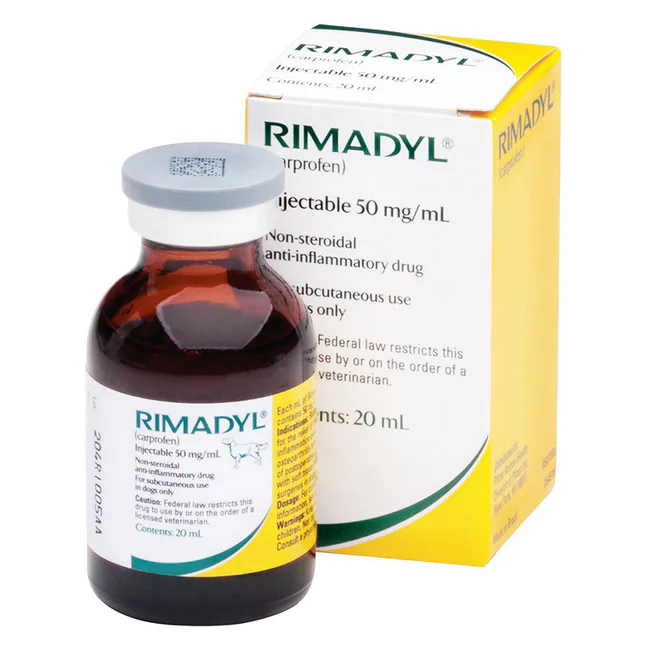

Rimadyl Injection 20mL – Powerful Advanced Carprofen Pain & Inflammation Relief
Rimadyl Injection 20mL is a a containing carprofen, a non-steroidal anti-inflammatory drug (NSAID) used in dogs. The U.S. Rimadyl injectable formulation is a 50 mg/mL sterile solution supplied in a 20mL bottle and is labeled for subcutaneous use in dogs. It is indicated for the relief of pain and inflammation associated with osteoarthritis and for control of postoperative pain associated with soft-tissue and orthopedic surgery.
For Vet Pharma Med, this page provides detailed information about Rimadyl Injection 20mL, including its active ingredient, veterinary applications, administration considerations, safety precautions and responsible purchasing.
What Is Rimadyl Injection 20mL?
Rimadyl Injection 20mL contains carprofen, an NSAID with analgesic, anti-inflammatory and antipyretic activity. The U.S. labeled injectable product contains 50 mg of carprofen per mL, making the 20mL vial equivalent to 1,000mg of carprofen in total.
Rimadyl Injectable is specifically labeled for dogs, and it is a prescription veterinary medicine.
Product Overview
| Product Detail | Information |
|---|---|
| Product | Rimadyl Injection |
| Active ingredient | Carprofen |
| Strength | 50mg/mL |
| Presentation | 20mL |
| Drug class | NSAID |
| Species | Dogs |
| Route | Subcutaneous |
| Prescription status | Prescription veterinary medicine |
| Primary uses | Osteoarthritis pain/inflammation and postoperative pain |
Table of Contents
- What Is Rimadyl Injection 20mL?
- What Is Carprofen?
- Rimadyl Injection for Dogs
- Uses of Rimadyl Injection
- How Carprofen Works
- Rimadyl Injection 20mL Dosage
- Safety and Precautions
- Rimadyl and Other NSAIDs
- Monitoring During Treatment
- Storage and Handling
- Where To Buy Rimadyl Injection 20mL Online
- Frequently Asked Questions
What Is Carprofen?
Carprofen is a non-steroidal anti-inflammatory medicine used in veterinary medicine to help manage pain and inflammation. The Rimadyl prescribing information describes carprofen as having analgesic, anti-inflammatory and antipyretic activity.
Carprofen’s effects are associated with inhibition of cyclooxygenase activity and reduced production of prostaglandins involved in inflammatory processes. Prostaglandins also have important physiological roles, including supporting normal gastrointestinal and renal function, which is one reason NSAID treatment requires appropriate veterinary oversight.
Rimadyl Injection for Dogs
Rimadyl Injection 20mL is intended for dogs under the U.S. product labeling.
It may be used when a veterinarian determines that treatment of pain and inflammation is appropriate, including situations involving:
- Osteoarthritis
- Postoperative pain
- Soft-tissue surgery
- Orthopedic surgery
- Inflammatory discomfort
The underlying cause of pain should be assessed by a veterinarian rather than relying solely on an anti-inflammatory medicine to manage symptoms.
Uses of Rimadyl Injection
Rimadyl Injectable is labeled for relief of pain and inflammation associated with osteoarthritis in dogs. It is also labeled for control of postoperative pain associated with soft-tissue and orthopedic surgeries.
Osteoarthritis can cause symptoms such as:
- Stiffness
- Difficulty rising
- Reduced activity
- Reluctance to climb stairs
- Difficulty jumping
- Changes in gait
- Reduced willingness to exercise
Veterinary assessment can help determine whether these symptoms are related to osteoarthritis or another underlying condition.
How Carprofen Works
Carprofen is an NSAID that works through inhibition of cyclooxygenase activity. This reduces the production of certain prostaglandins involved in inflammation and pain.
Because prostaglandins also contribute to normal gastrointestinal and kidney function, NSAIDs can produce unwanted effects when used in susceptible animals. This makes appropriate patient selection and veterinary monitoring important.
Rimadyl Injection 20mL Dosage
The U.S. labeling states a recommended dose for subcutaneous administration to dogs of 2 mg/lb (4.4 mg/kg) once daily, with the total daily dose alternatively divisible into 1 mg/lb (2.2 mg/kg) twice daily.
The exact dose for an individual dog should be determined by the prescribing veterinarian based on the dog’s weight, medical history and clinical circumstances.
The 20mL description refers to the vial volume and does not mean that 20mL should be administered to a dog.
Do not change the prescribed dose or frequency without veterinary direction.
Safety and Precautions
NSAIDs can potentially cause gastrointestinal, kidney and liver adverse effects. Zoetis advises that pet owners discontinue therapy and contact their veterinarian if signs of an adverse reaction occur.
Veterinary evaluation is particularly important for dogs that:
- Are dehydrated
- Have kidney disease
- Have liver disease
- Have gastrointestinal disease
- Have bleeding disorders
- Are receiving other medications
- Are elderly or medically compromised
Possible warning signs can include:
- Vomiting
- Diarrhea
- Reduced appetite
- Dark or abnormal stools
- Changes in thirst
- Changes in urination
- Lethargy
- Yellowing of the gums or eyes
- Behavioral changes
If concerning symptoms occur, contact a veterinarian promptly.
Rimadyl and Other NSAIDs
Rimadyl Injection should not be combined with other NSAIDs unless specifically directed by a veterinarian.
The prescribing information warns against concurrent use with other NSAIDs or corticosteroids because of the potential for increased adverse effects.
Tell the veterinarian about all medicines and supplements your dog is receiving before treatment begins.
Monitoring During Treatment
Veterinary monitoring can be particularly important when an animal receives NSAID therapy for an extended period.
Depending on the individual dog’s circumstances, a veterinarian may consider:
- Medical history
- Physical examination
- Hydration status
- Kidney function
- Liver function
- Gastrointestinal health
- Response to treatment
The objective is to obtain appropriate pain control while minimizing avoidable risks.
Storage and Handling
Store Rimadyl Injection 20mL according to the manufacturer’s current instructions and the pharmacy label.
Before administration, verify:
- Product name
- Carprofen concentration
- Expiration date
- Vial integrity
- Storage requirements
The product is a veterinary medicine and should be kept securely away from children and animals for whom it has not been prescribed.
Where To Buy Rimadyl Injection 20mL Online
If you are looking to Buy Rimadyl Injection 20mL Online, verify that you are purchasing the correct carprofen 50mg/mL injectable formulation.
The U.S. Rimadyl injectable product is a prescription medicine restricted to use by or on the order of a licensed veterinarian.
Vet Pharma Med provides product information for customers researching veterinary medicines and animal-health products.
Before purchasing, confirm:
- Rimadyl Injection 20mL
- Carprofen 50mg/mL
- 20mL presentation
- Manufacturer
- Expiration date
- Storage requirements
- Prescription requirements
- Applicable veterinary regulations
Customers outside the United States should also verify local product authorization and prescription requirements because veterinary labeling can differ between countries.
Frequently Asked Questions
What is Rimadyl Injection 20mL?
Rimadyl Injection 20mL is a prescription veterinary injectable containing carprofen. The U.S. product is supplied as a 50mg/mL sterile solution in a 20mL bottle for subcutaneous use in dogs.
What is the active ingredient in Rimadyl Injection?
The active ingredient is carprofen, an NSAID used to manage pain and inflammation in dogs.
What is Rimadyl Injection used for?
The U.S. labeling indicates Rimadyl Injectable for relief of pain and inflammation associated with osteoarthritis and control of postoperative pain associated with soft-tissue and orthopedic surgery in dogs.
What strength is Rimadyl Injection?
The injectable formulation is 50mg/mL. The standard U.S. presentation is a 20mL bottle.
What is the dosage of Rimadyl Injection 20mL?
The U.S. labeled dosage is 4.4mg/kg once daily, or the total daily dose may be divided into 2.2mg/kg twice daily. The veterinarian prescribing the medication should determine the appropriate regimen for an individual dog.
Can Rimadyl be used with another NSAID?
Concurrent use with another NSAID should be avoided unless specifically directed by a veterinarian. The same precaution applies to corticosteroids.
Is Rimadyl Injection for horses?
The U.S. Rimadyl Injectable label specifies dogs. It should not be assumed to be approved for horses or other species without appropriate veterinary and regulatory authorization.
Where can I buy Rimadyl Injection 20mL?
When purchasing online, verify the exact product, concentration, manufacturer, prescription requirements, expiration date and applicable veterinary regulations.
- Rimadyl Injection 20mL – Powerful Advanced Canine Pain Relief
- Rimadyl Injection 20mL – Proven Positive Veterinary Pain Support
- Discover Rimadyl Injection 20mL, a carprofen 50mg/mL veterinary NSAID for dogs, with professional information on pain relief, inflammation, safety and use.
- Learn about Rimadyl Injection 20mL for dogs, including carprofen, osteoarthritis pain, postoperative care, safety precautions, administration and prescription requirements.
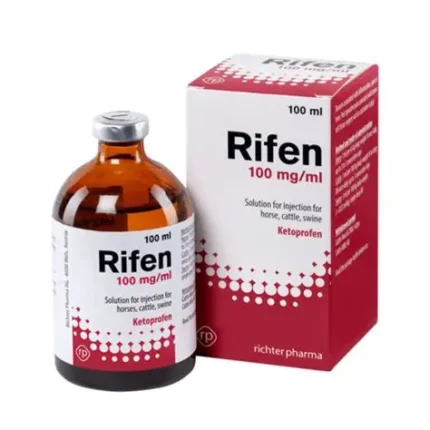
Rimadyl product is indicated as an adjunct to antimicrobial therapy to reduce clinical signs in acute infectious respiratory disease and acute mastitis in cattle
Rimadyl, Rimadyl , for dogs, acute, chronic, diseases of the musculoskeletal system, pain relief, swelling.
Order of application, indications, dose, possible side effects, contraindications Rimadyl :
- Rimadyl tablets with the taste of the liver are prescribed for inflammatory and painful phenomena arising from acute and chronic diseases of the musculoskeletal system.
- Rimadyl tablets are used for analgesia and as an anti-inflammatory agent to reduce postoperative pain and swelling.
- Rimadyl tablets are administered orally in the initial period of treatment at a daily dose of 4 mg of carprofen per kg of body weight. It is recommended to divide the daily dose into two equal parts. After 7 days of treatment, depending on the clinical indications, the daily dose can be reduced to 2 mg / kg body weight.
- In diseases of the musculoskeletal system, the duration of treatment depends on the condition of the animal and under the supervision of a veterinarian can continue throughout the life of the animal.
- Do not exceed the set dose.
- As with the use of other nonsteroidal anti-inflammatory drugs after the use of Rimadil P in individual animals, in rare cases, irritation of the stomach and vomiting may occur.
- It is forbidden to use Rimadyl schennyh bitches.
- Do not prescribe other nonsteroidal anti-inflammatory drugs or nephrotoxic drugs earlier than 24 hours after administration of Rimadyl R. Rimadil P, like other nonsteroidal anti-inflammatory drugs, should be administered with caution to animals with heart, kidney and liver diseases.
Composition of Rimadyl:
- Rimadyl P is a nonsteroidal, anti-inflammatory drug in the form of tablets for oral use, containing as the active agent carprofen – 20 mg, 50 mg or 100 mg per tablet, and as auxiliary substances spray powder of porcine liver, hydrolyzed vegetable protein, corn starch , confectionery sugar, glucose syrup, gelatin type A, magnesium stearate, and lactose monohydrate.
Dosage Form of Rimadyl:
- In appearance, Rimadil P with the taste of the liver represents tablets of a light brown color with a letter “R” embossed on one side of the tablet and a separation groove on the other side.
Packaging, storage conditions, shelf life Rimadyl:
- Rimadil P tablets with a taste of the liver of 20, 30, 50, 60, 100 or 180 tablets are packaged in square-shaped vials of white high-density polyethylene with a polypropylene lid inaccessible for children to open.
- Each bottle in Russian is labeled with the name of the medicinal product, the name of the manufacturer and its address, the name and content of the active substance, purpose, storage conditions, batch number, date of manufacture and shelf life, the inscription “For animals”.
- Store with precaution (list B), in a dry, dark and out of reach of children at a temperature of from 0 to 25 piles of C.
- The shelf life of 3 years from the date of manufacture, subject to storage in original packaging.
- Do not use Rimadyl P after the expiration date.
Pharmacological properties Rimadyl:
- Carprofen, the active ingredient Rimadila P, belongs to the group of nonsteroidal anti-inflammatory drugs, and has anti-inflammatory, analgesic and antipyretic effects.
- Carprofen, like other nonsteroidal anti-inflammatory drugs, inhibits cycloxygenase in the arachidonic acid cycle. In this case, the drug mainly affects cycloxygenase-II, which is induced in response to the development of inflammation.As a result, the synthesis of inflammatory prostaglandins, causing inflammation, swelling and pain, is blocked.
- At therapeutic doses, carprofen has a much weaker effect on cycloxygenase-I, and as a result, it has no effect on the synthesis of protective prostaglandins. Thus, carprofen does not interfere with normal physiological processes in tissues, especially in the stomach, intestines, kidneys and platelets.
- Carprofen is rapidly absorbed from the gastrointestinal tract, reaches a peak plasma concentration 1–3 hours after administration, with a bioavailability of more than 90%.
- The half-life in dogs is about 8 hours.
- Carprofen is more than 99% bound to plasma proteins. The drug is metabolized in the liver, excreted mainly in the feces (about 80%), and in the urine.
Personal preventive measures Rimadyl:
- When working with Rimadil P, you should follow the general rules of personal hygiene and safety precautions provided for when working with drugs.
- As with any other drugs, after work you should thoroughly wash your hands with warm water and soap

Reviews
There are no reviews yet.