
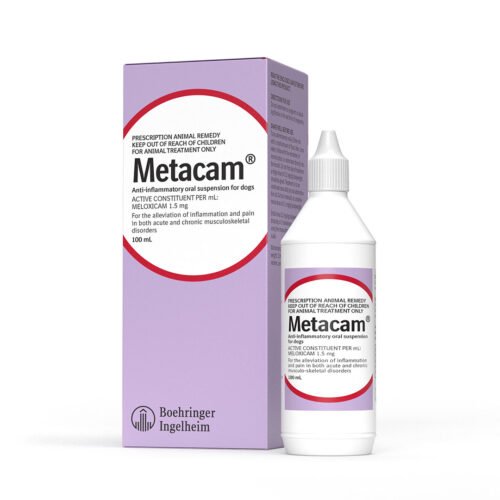
Metacam Oral 1.5mg/mL for Dogs – Meloxicam Oral Suspension for Canine Osteoarthritis
Metacam Oral 1.5mg/mL for Dogs is a meloxicam oral suspension formulated for veterinary use in dogs. It is a non-steroidal anti-inflammatory drug (NSAID) indicated for the control of pain and inflammation associated with osteoarthritis in dogs. The 1.5 mg/mL formulation provides a liquid option that can be measured according to the dog’s body weight, making accurate administration an important part of treatment.
At Vet Pharma Med, product information should always be presented alongside appropriate veterinary guidance. Metacam is a prescription veterinary medicine, and treatment should be determined by a veterinarian after considering the dog’s health history, current medications, age, weight, and individual response to treatment.
What Is Metacam Oral 1.5mg/mL?
Metacam Oral Suspension contains meloxicam, an NSAID of the oxicam class. The 1.5 mg/mL presentation contains 1.5 mg of meloxicam per milliliter. It is specifically formulated for oral administration in dogs and is indicated for controlling pain and inflammation associated with canine osteoarthritis.
Osteoarthritis can cause chronic discomfort, stiffness, reduced mobility, reluctance to exercise, difficulty climbing stairs, and changes in normal activity. Appropriate veterinary pain management can form an important part of maintaining comfort and mobility in affected dogs.
How Metacam Works
Meloxicam belongs to the NSAID class and works by inhibiting cyclooxygenase enzymes involved in the production of prostaglandins. Prostaglandins have several functions in the body, including roles associated with pain and inflammation.
By reducing prostaglandin production, meloxicam can help reduce pain and inflammation. Because these biochemical pathways also have important protective functions, NSAIDs can produce adverse effects in some animals. This is why Metacam should be administered according to veterinary instructions and why monitoring may be recommended during longer-term treatment.
Metacam for Dogs With Osteoarthritis
Canine osteoarthritis is a degenerative joint condition that can progressively affect a dog’s comfort and mobility. Dogs with OA may show subtle signs such as slowing down on walks, difficulty getting up, reluctance to jump, stiffness after resting, or reduced interest in previously enjoyable activities.
Metacam Oral Suspension is specifically indicated for the control of pain and inflammation associated with osteoarthritis in dogs.
Pain management is generally most effective when it is part of a broader veterinary treatment strategy. Depending on the individual dog, a veterinarian may also recommend weight management, controlled exercise, physical rehabilitation, environmental modifications, and other appropriate therapies.
1.5mg/mL Liquid Formulation
One important feature of Metacam Oral Suspension is its liquid formulation. The manufacturer provides calibrated syringes designed to assist with accurate weight-based administration. The 1.5 mg/mL concentration is intended for dogs in the applicable weight range specified by the product labeling.
Accurate measurement is particularly important with NSAIDs. Owners should use the supplied measuring device as directed rather than estimating doses with household spoons.
Dosage and Administration
The manufacturer states that the labeled initial dose is 0.2 mg/kg on the first day, followed by 0.1 mg/kg once daily for subsequent treatment. The product information also emphasizes using the lowest effective dose for the shortest duration consistent with the individual dog’s response.
Because Metacam is a prescription medication, the dog’s veterinarian should determine the appropriate treatment plan. Do not independently increase, decrease, or extend treatment.
The manufacturer also provides specific administration instructions for small dogs because accurate measurement is particularly important at lower body weights.
Important Safety Information
Metacam should not be given to dogs with known hypersensitivity to meloxicam. The manufacturer warns that NSAIDs as a class can be associated with gastrointestinal, kidney, and liver adverse effects. Dogs should be evaluated for pre-existing conditions and current medications before treatment and monitored appropriately during therapy.
Concurrent use with another NSAID, corticosteroid, or certain nephrotoxic medications should be avoided or carefully managed by a veterinarian.
Metacam Is Not for Cats
Metacam Oral Suspension is for dogs only. It should not be administered to cats. The manufacturer specifically warns that repeated meloxicam use in cats has been associated with acute renal failure and death.
Possible Adverse Reactions
Reported adverse reactions associated with meloxicam oral suspension in dogs have included vomiting, diarrhea or soft stool, bloody stool, decreased appetite, and other less common observations.
If a dog receiving Metacam develops vomiting, diarrhea, loss of appetite, unusual lethargy, changes in drinking or urination, black or bloody stools, or another concerning change, the owner should contact the veterinarian promptly.
Veterinary Monitoring
For dogs receiving ongoing NSAID therapy, veterinarians may recommend periodic examinations and, where appropriate, laboratory monitoring. This can help identify underlying conditions and assess whether continued treatment remains appropriate.
The manufacturer specifically recommends evaluating dogs for pre-existing conditions and current medications before treatment and monitoring them regularly while receiving Metacam.
Metacam and Long-Term Osteoarthritis Management
Managing osteoarthritis is usually a long-term process rather than simply treating individual episodes of discomfort. A veterinarian may evaluate the dog’s body condition, activity level, joint function, pain level, and response to treatment.
The goal is generally to maintain comfort and mobility while using the lowest effective dose for the shortest duration consistent with the individual response, as stated in the manufacturer’s information.
Why Accurate Dosing Matters
Accurate dosing is especially important with veterinary NSAIDs. Dogs vary considerably in body size, and the appropriate amount of medication is calculated according to body weight and the veterinarian’s treatment plan.
The manufacturer provides weight-calibrated syringes and different concentrations to facilitate precision dosing, including for smaller dogs.
Pet owners should never substitute an ordinary kitchen spoon for the supplied dosing device or alter the prescribed amount without veterinary approval.
Frequently Asked Questions
What is Metacam Oral 1.5mg/mL for Dogs?
Metacam Oral 1.5mg/mL is a meloxicam oral suspension indicated for controlling pain and inflammation associated with osteoarthritis in dogs.
Is Metacam a painkiller?
Metacam is an NSAID that helps control pain and inflammation. It is not an opioid analgesic.
What is the active ingredient?
The active ingredient is meloxicam, an NSAID of the oxicam class. The 1.5 mg/mL formulation contains 1.5 mg of meloxicam per milliliter.
Can Metacam be given to cats?
No. Metacam Oral Suspension is labeled for dogs only, and the manufacturer specifically warns against its use in cats.
Can Metacam be used every day?
The labeled regimen includes once-daily administration after the first day, but the veterinarian should determine whether continued daily treatment is appropriate for an individual dog.
Can Metacam be combined with another NSAID?
Do not combine Metacam with another NSAID unless specifically directed by a veterinarian. The manufacturer warns against concurrent use with another NSAID and corticosteroids.
Is Metacam suitable for every dog?
No. A veterinarian should assess the dog’s medical history, existing conditions, and medications before prescribing it. Certain dogs may require additional precautions or may not be appropriate candidates.
What is Metacam Oral Suspension used for?
Metacam Oral Suspension is used to control pain and inflammation caused by arthritis.
For:
Dogs
Benefits:
Relief from pain to improve quality of life.
Palatable and easy to administer.
How it works:
Metacam Oral Suspension is a non-steroidal anti-inflammatory drug (NSAID). It works by inhibiting the hormones which generate chemicals that are responsible for pain and inflammation.
What you should know:
Metacam Oral Suspension is not a cure, but can effectively manage the symptoms of pain and inflammation.
How to give this medication:
Metacam Oral Suspension is mixed with food or given orally. To prevent accidental overdosing of small dogs, administer drops on food. Metacam Oral Suspension should be administered initially at 0.09 mg/lb (0.2 mg/kg) body weight only on the first day of treatment. For all treatments after day 1, it should be administered once daily at a dose of 0.045 mg/lb (0.1 mg/kg). Give this medication exactly as directed by your veterinarian. If you do not understand the directions, ask the veterinarian or pharmacist to explain them to you.
If you miss a dose:
Give the missed dose as soon as you remember. However, if it is almost time for the next scheduled dose, skip the missed dose and give the regular dose as directed. Do not double dose.
Metacam Oral Suspension should not be used in:
The safe use of Metacam Oral Suspension in animals less than 6 months of age, pregnant dogs, dogs used for breeding purposes, or in lactating bitches has not been established. Metacam is not recommended for dogs with bleeding disorders.
Possible side effects:
The use of NSAIDs may cause stomach upset, with the potential to product gastric ulcers. Adverse reactions may include vomiting, diarrhea, decreased appetite, dark or tarry stools, excessive thirst, increased urination, pale gums due to anemia, yellowing of gums, skin or white of the eye due to jaundice, lethargy, incoordination, seizure or behavioral changes. If you observe any of these side effects, contact your veterinarian as soon as possible.
Medication Name:
meloxicam
Is a generic equivalent available?
No
Storage:
Store at room temperature.
Reviews
There are no reviews yet.