Buy Clorketam 1000 Injection – Veterinary Ketamine Anesthetic
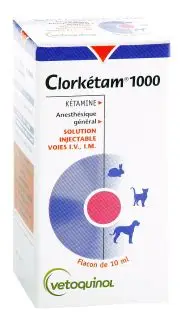
Clorketam 1000 Injection
Clorketam 1000 Solution Injectable is a veterinary ketamine anesthetic containing ketamine as its active substance. Current official veterinary product information identifies the formulation as containing 100 mg of ketamine per mL, supplied as ketamine hydrochloride, with chlorobutanol hemihydrate as an excipient. The product is identified for cats, dogs and laboratory animals and is used in veterinary practice for restraint, sedation and general anesthesia.
Clorketam 1000 is therefore a specialist veterinary medicine rather than an ordinary nutritional supplement or general-purpose animal-care product. Its use requires professional assessment because anesthesia affects the central nervous system, cardiovascular system, respiratory function and other physiological processes.
For veterinary professionals researching Clorketam 1000 Injection, the most important considerations include the exact formulation, target species, intended clinical application, contraindications, interactions, anesthetic combinations, monitoring requirements and applicable controlled-medicine regulations.
What Is Clorketam 1000?
Clorketam 1000 is an injectable veterinary medicine based on ketamine hydrochloride. The current official product information states that each mL contains ketamine equivalent to 100 mg of ketamine, with 115.4 mg of ketamine hydrochloride, together with 3 mg of chlorobutanol hemihydrate and water for injection.
The medicine belongs to the pharmacological group of dissociative anesthetics. Official veterinary information classifies its ATCvet code as QN01AX03.
Clorketam 1000 has a specialist role in veterinary anesthesia. It should be used only by appropriately qualified veterinary professionals who can assess the animal, select an appropriate anesthetic protocol and provide monitoring and supportive care.
Active Ingredient in Clorketam 1000
The active substance in Clorketam 1000 is ketamine.
The official product specification identifies:
- Ketamine: 100 mg/mL
- Ketamine supplied in hydrochloride form
- Chlorobutanol hemihydrate: 3 mg/mL
- Water for injection as the vehicle
The product is described as a clear, colorless injectable solution.
Ketamine has a well-established role in veterinary anesthesia and is used as part of carefully selected anesthetic protocols.
Clorketam 1000 for Veterinary Anesthesia
Veterinary anesthesia is used when an animal needs to remain sufficiently immobile, sedated or unconscious for a procedure.
Depending on the clinical situation, anesthesia may be necessary for surgery, diagnostic procedures, handling or other interventions.
Clorketam 1000 is indicated in the official product information for:
- Restraint
- Sedation
- General anesthesia
in the specified target animals.
The appropriate anesthetic plan depends on the species, age, body condition, health status, procedure, expected pain, concurrent medication and other clinical factors.
Clorketam 1000 for Dogs
Dogs are among the target species listed in the official veterinary product information.
In dogs, ketamine may form part of a broader veterinary anesthetic protocol. It should not be considered an all-purpose anesthetic that can be safely administered without professional evaluation.
The veterinarian must consider the animal’s cardiovascular and respiratory condition, neurological status, concurrent medications and the nature of the procedure.
Clorketam 1000 should therefore be handled as a professional veterinary anesthetic rather than a routine medication for home use.
Clorketam 1000 for Cats
Cats are also listed among the target species for Clorketam 1000.
Feline anesthesia requires careful attention to patient history, physical examination, cardiovascular and respiratory status and concurrent medications.
The product information identifies ketamine as being metabolized differently between cats and dogs, which is one reason anesthetic protocols must be selected by a veterinarian according to the individual animal.
Clorketam 1000 for Laboratory Animals
The official product information also identifies laboratory animals among the target animals.
Use in laboratory settings should follow applicable institutional, ethical and regulatory requirements as well as the approved study protocol.
Animal welfare, appropriate anesthesia, monitoring and recovery procedures are essential components of responsible laboratory-animal care.
How Clorketam 1000 Works
Ketamine is classified as a dissociative anesthetic.
The official veterinary information explains that ketamine acts through blockade of nerve transmission in the thalamic and cortical areas while activating the limbic region of the central nervous system.
This pharmacological activity contributes to the characteristic anesthetic state produced by ketamine.
The duration and quality of anesthesia can vary substantially depending on the animal, procedure, dose, route and other anesthetic agents used alongside ketamine.
For that reason, the product should be considered one component of a veterinary anesthetic protocol rather than a medicine that produces an identical response in every animal.
Clorketam 1000 and Sedation
Sedation reduces an animal’s awareness and responsiveness while generally maintaining a greater degree of consciousness than general anesthesia.
The official Clorketam 1000 information includes sedation among its indicated veterinary applications.
The veterinarian determines whether sedation alone is appropriate or whether a deeper anesthetic protocol is necessary.
The choice depends on the procedure and the animal’s clinical condition.
Clorketam 1000 and General Anesthesia
General anesthesia produces a deeper state of unconsciousness suitable for procedures that cannot be safely performed with simple restraint or light sedation.
Clorketam 1000 is identified for general anesthesia in the approved target species.
For major or painful surgical procedures, the official information states that ketamine should not be relied upon as the sole anesthetic and that combinations with additional anesthetic or muscle-relaxing agents may be required.
This is an important distinction for responsible product information: Clorketam 1000 should not be marketed as a complete standalone solution for every surgical procedure.
Clorketam 1000 and Painful Procedures
Anesthesia and analgesia are related but distinct components of veterinary care.
An animal undergoing a painful procedure requires an appropriate analgesic plan.
The official Clorketam 1000 information specifically states that the product should not be used as the sole anesthetic for painful procedures.
Veterinarians may therefore combine anesthetic agents and analgesic medicines according to the procedure and patient’s clinical needs.
Clorketam 1000 and Muscle Relaxation
Ketamine alone may not provide sufficient muscle relaxation for many surgical procedures.
The official product information states that a muscle relaxant may be necessary when the procedure requires adequate muscle relaxation.
This reinforces the importance of a complete anesthetic protocol.
The veterinarian must select combinations according to the procedure, patient condition and potential interactions.
Veterinary Monitoring During Anesthesia
Monitoring is an essential part of safe veterinary anesthesia.
Depending on the procedure and patient, professional monitoring can include assessment of:
- Respiratory function
- Heart rate
- Circulation
- Oxygenation
- Temperature
- Depth of anesthesia
- Reflexes
- Recovery
The precise monitoring requirements depend on the animal and procedure.
Because Clorketam 1000 is an injectable anesthetic, it should only be administered where appropriate veterinary equipment and trained personnel are available.
Clorketam 1000 Contraindications
The official product information lists several important contraindications.
Clorketam 1000 should not be used in the specified circumstances including certain eye conditions, elevated hypertension or intracranial pressure, significant cardiorespiratory impairment, and hepatic or renal dysfunction. It should also not be used in animals with hypersensitivity to the active ingredient or excipients.
These restrictions demonstrate why an animal should be clinically assessed before anesthesia.
A product page should not encourage owners to determine suitability themselves.
Eye Conditions and Clorketam 1000
The official information states that Clorketam 1000 should not be used for eye surgery, loss of ocular integrity or in the presence of glaucoma.
Veterinary ophthalmic procedures require specialized anesthetic planning.
The veterinarian should select an appropriate protocol after considering the eye condition and overall health of the animal.
Cardiovascular and Respiratory Considerations
Anesthesia can affect cardiovascular and respiratory function.
The official product information lists cardiorespiratory impairment among the conditions in which Clorketam 1000 should not be used.
Pre-anesthetic assessment is therefore important.
Animals with underlying cardiopulmonary disease may require alternative anesthetic strategies, additional stabilization or more intensive monitoring.
Liver and Kidney Considerations
The official Clorketam 1000 information also identifies hepatic and renal dysfunction among the contraindications.
Ketamine is metabolized by the liver and eliminated mainly through the urine in free and metabolized forms. The product information notes that hepatic metabolism is much less extensive in cats than in dogs.
These pharmacokinetic differences are important considerations for professional anesthetic planning.
Clorketam 1000 and Seizure Risk
The official product information states that ketamine may have either pro-convulsant or anticonvulsant properties and should therefore be used cautiously in animals prone to seizures.
A veterinary anesthetist should consider seizure history and neurological status when selecting an anesthetic protocol.
This is another reason why Clorketam 1000 should not be used without veterinary supervision.
Recovery From Ketamine Anesthesia
Recovery from anesthesia should be monitored carefully.
The official product information notes that clonic movements and excitement during recovery can occur. It recommends consideration of combinations with agents providing analgesic and muscle-relaxing effects of at least comparable duration.
A quiet, controlled recovery environment can be an important component of veterinary anesthetic management.
Clorketam 1000 Drug Interactions
Clorketam 1000 can interact with other medicines used in anesthesia.
The official information states that neuroleptics, tranquilizers and chloramphenicol can potentiate ketamine anesthesia. It also identifies possible prolongation of recovery when ketamine is combined with barbiturates, opioids or diazepam.
The document also notes potential increased risk of cardiac arrhythmias when ketamine is used with thiopental or halothane and reports that halothane can prolong ketamine’s half-life.
These interactions should be assessed by the veterinarian responsible for the anesthetic protocol.
Clorketam 1000 and Theophylline
The official product information warns that combining theophylline with ketamine may increase the incidence of epileptic seizures.
A complete medication history should therefore be obtained before anesthesia.
Clorketam 1000 and Organophosphates
The official product information states that Clorketam 1000 should not be administered to animals being treated with organophosphorus compounds.
Veterinarians should review all current treatments before selecting an anesthetic protocol.
Clorketam 1000 and Other Anesthetics
Ketamine may be combined with other anesthetic medicines when clinically appropriate.
The official information identifies possible combinations with alpha-2 adrenergic agonists, injectable anesthetics, neuroleptics, tranquilizers and inhalational anesthetic agents.
The exact combination must be selected by a veterinary professional.
There is no single anesthetic combination that is appropriate for every patient or every procedure.
Why Professional Administration Matters
Clorketam 1000 is not an ordinary over-the-counter animal medicine.
Current French regulatory information identifies Clorketam 1000 as a veterinary medicine requiring a prescription and states that administration is exclusively reserved for veterinarians.
This is particularly important because ketamine is a controlled substance in numerous jurisdictions.
Consequently, availability and legal requirements can vary considerably between countries.
Clorketam 1000 Regulatory Status
The French veterinary medicines database currently lists CLORKETAM 1000 SOLUTION INJECTABLE, with Vetoquinol S.A. as the authorization holder and French marketing authorization number FR/V/0035548 7/1982. The database identifies an unlimited authorization status and lists cats, dogs and rodents among the target species.
The same official source identifies 10 mL and 20 mL presentations and states that the medicine is prescription-only with administration reserved exclusively for veterinarians.
Regulatory status in France should not be assumed to represent approval or availability in the United States, Canada, Australia or every other European market.
Clorketam 1000 in Europe
Veterinary medicine regulations differ between countries.
For customers and veterinary professionals in France, Germany, Spain, the Netherlands and other European countries, the appropriate national regulatory authority should be consulted regarding the current legal status, dispensing requirements and authorized use of Clorketam 1000.
European veterinary medicines databases can also provide country-specific regulatory information.
This is particularly important for ketamine-containing medicines because controlled-substance requirements may apply in addition to ordinary veterinary-medicine rules.
Clorketam 1000 in the United States
United States veterinary regulations are separate from European regulatory systems.
The presence of Clorketam 1000 in European veterinary databases does not by itself establish that the same product is approved or legally marketed in the United States.
Veterinary professionals in the United States should use products that are legally authorized for the intended purpose and comply with applicable controlled-substance requirements.
Clorketam 1000 in Canada
Canadian veterinary professionals should similarly verify the product’s Canadian regulatory status and controlled-substance requirements before considering its use.
Imported veterinary medicines can be subject to specific restrictions.
A responsible product page should therefore avoid implying that a product approved in one jurisdiction is automatically approved for use in Canada.
Clorketam 1000 in Australia
Australian veterinary professionals should verify the product’s Australian registration and applicable controlled-drug requirements before use.
Veterinary medicine labels, species indications and legal requirements can vary by country.
Clorketam 1000 for Veterinary Professionals
Veterinary professionals researching Clorketam 1000 may be particularly interested in:
- Active ingredient
- Concentration
- Target species
- Indications
- Contraindications
- Drug interactions
- Anesthetic combinations
- Monitoring requirements
- Storage
- Regulatory status
- Professional administration requirements
Providing this information clearly makes a product page more useful than a page consisting primarily of repeated commercial keywords.
Clorketam 1000 Product Information
The current official product information describes the medicine as a clear, colorless injectable solution. The formulation contains ketamine equivalent to 100 mg/mL and chlorobutanol hemihydrate.
The official information states a shelf life of two years for the veterinary medicine as packaged for sale.
Storage and handling should always follow the current product label and applicable professional requirements.
Clorketam 1000 and Responsible SEO Content
For an authoritative veterinary website, Clorketam 1000 content should avoid unsupported claims.
For example, responsible content should not claim that the medicine:
- Is suitable for every animal
- Can be safely administered by pet owners
- Guarantees painless surgery
- Can replace all other anesthetics
- Has no risks
- Is universally approved worldwide
- Can be used without veterinary monitoring
Accurate product content is more useful to veterinary professionals and helps establish the website as an informative resource.
Frequently Asked Questions
What is Clorketam 1000 Injection?
Clorketam 1000 is an injectable veterinary medicine containing ketamine. The current official formulation contains 100 mg of ketamine per mL.
What is Clorketam 1000 used for?
The official product information identifies restraint, sedation and general anesthesia as its veterinary indications for the specified target animals.
Does Clorketam 1000 contain ketamine?
Yes. Ketamine is the active substance in Clorketam 1000.
What animals can receive Clorketam 1000?
Current official product information identifies cats, dogs and laboratory animals as target species.
Is Clorketam 1000 an antibiotic?
No. Clorketam 1000 is a ketamine-based anesthetic, not an antibiotic.
Is Clorketam 1000 a painkiller?
Ketamine has analgesic properties, but Clorketam 1000 should not be represented as a standalone solution for every painful procedure. The official information specifically states that it should not be used as the sole anesthetic for painful interventions.
Can Clorketam 1000 be used alone for major surgery?
The official product information states that major and very painful surgery requires combination with additional anesthetic agents and that muscle relaxation may also need to be provided separately.
Can pet owners administer Clorketam 1000?
This is a professional veterinary anesthetic. The French official veterinary database states that its administration is exclusively reserved for veterinarians.
Does Clorketam 1000 require veterinary supervision?
Yes. Because it is an injectable anesthetic containing ketamine, its use requires professional assessment and monitoring.
Can Clorketam 1000 be used in cats?
Cats are among the target species identified in the official product information.
Can Clorketam 1000 be used in dogs?
Dogs are also listed among the target species.
Is Clorketam 1000 available in every country?
No assumption should be made about worldwide availability or authorization. Veterinary medicines and controlled substances are regulated differently in different countries.
What is the concentration of Clorketam 1000?
The official product information identifies 100 mg of ketamine per mL, supplied as ketamine hydrochloride.
What are important contraindications?
Official information lists several contraindications, including certain eye conditions, glaucoma, significant hypertension or intracranial hypertension, cardiorespiratory impairment and hepatic or renal dysfunction.
Can Clorketam 1000 interact with other medicines?
Yes. The official product information describes interactions with several anesthetic, sedative and other medicines.
Why is monitoring important?
Anesthetic medicines can affect consciousness, breathing, cardiovascular function and recovery. Professional monitoring allows complications to be identified and managed promptly.
Where To Buy Clorketam 1000 Injection Online
Clorketam 1000 Injection is a specialist veterinary anesthetic containing ketamine at a concentration of 100 mg per mL. Official veterinary documentation identifies it for restraint, sedation and general anesthesia in specified animals, including cats, dogs and laboratory animals.
Its use requires considerably more clinical judgment than an ordinary veterinary supplement. The veterinarian must assess the animal before anesthesia, consider contraindications and drug interactions, select an appropriate anesthetic combination and monitor the patient throughout the procedure and recovery.
The official information emphasizes that ketamine alone does not provide all of the characteristics required for many surgical procedures. Major or painful procedures may require additional anesthetic, analgesic and muscle-relaxing agents.
For SEO purposes, Vet Pharma Med should position its Clorketam 1000 page as an authoritative veterinary-information resource rather than relying on repetitive phrases such as “buy Clorketam 1000.” The strongest content strategy is to provide accurate information about the active ingredient, formulation, target species, veterinary applications, contraindications, interactions, professional administration and country-specific regulatory considerations.
This approach gives search engines substantially more useful topical information while giving veterinary professionals and animal-care readers a clearer understanding of what Clorketam 1000 is and why its use belongs within a properly supervised veterinary anesthetic protocol.
CLORKETAM 1000 is a sterile injectable solution that can be administered intramuscularly and intravenously in laboratory animals, canines and domestic cats.
Ketamine
Ketamine hydrochloride (a derivative of Ketamine) is reported as an ingredient of Clorketam 1000 in the following countries:France CLORKETAM 1000
Important Notice: The Drugs.com international database is in BETA release. This means it is still under development and may contain inaccuracies. It is not intended as a substitute for the expertise and judgement of your physician, pharmacist or other healthcare professional. It should not be construed to indicate that the use of any medication in any country is safe, appropriate or effective for you. Consult with your healthcare professional before taking any medication.Further information for CLORKETAM 1000
Always consult your healthcare provider to ensure the information displayed on this page applies to your personal circumstances.
Cis a sterile injectable solution that can be administered intramuscularly and intravenously in laboratory animals, canines and domestic cats.Due to these properties, is indicated in numerous surgical interventions: superficial and short-term interventions, scheduled surgical interventions, urgent interventions, even in pregnant females, obstetric interventions, among others. Depending on the nature of the intervention, CLORKÉTAM 1000 can be administered after a premedication (acepromazine, glucopyrrolate, diazepam, droperidol, etc.).
On the other hand, chlorobutanol has antibacterial and antifungal properties acting as a preservative, however, it induces good analgesia, good immobilization, rapid induction of numbness and rapid recovery in accordance with the stages of sedation. Ketamine can produce an erratic awakening characterized by vocalization, ataxia and seizures; Chlorobutanol decreases these undesirable effects.


Reviews
There are no reviews yet.