
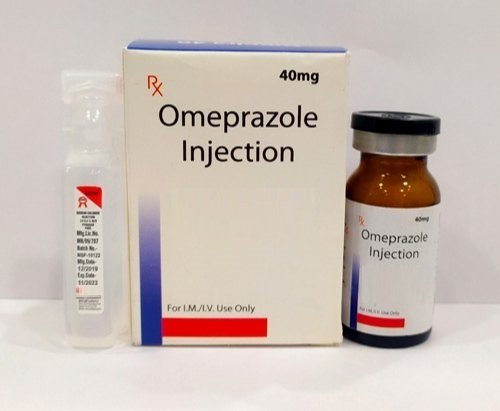
Omeprazole Injection 20mL For Sale Online
Omeprazole Injection 20mL is a long-acting injectable formulation of omeprazole used in veterinary medicine for the management of gastric ulcer disease in horses. One documented BOVA formulation contains 100mg of omeprazole per mL and is supplied in a 20mL presentation.
Omeprazole belongs to a group of medicines known as proton pump inhibitors (PPIs). It works by suppressing gastric acid secretion, helping create a less acidic environment in the stomach that can support healing of gastric ulceration.
Long-acting injectable omeprazole has been investigated as an alternative to daily oral omeprazole in horses. Research has examined its ability to maintain gastric acid suppression for approximately a week following administration, while more recent pharmacokinetic research has also highlighted important medication-control considerations for horses in training.
Because injectable omeprazole products can differ in formulation, concentration, regulatory status and administration instructions, the exact label supplied with the product should always be checked before treatment.
What Is Omeprazole Injection 20mL?
Omeprazole Injection 20mL is an injectable veterinary preparation containing omeprazole.
For the BOVA formulation documented in veterinary literature and product materials, the specifications include:
- Active ingredient: Omeprazole
- Strength: 100mg/mL
- Presentation: 20mL
- Total omeprazole in 20mL: 2,000mg
- Dosage form: Injectable suspension
- Target species: Horses
- Administration: Intramuscular for the documented long-acting formulation
- Drug class: Proton pump inhibitor
The 20mL presentation and 100mg/mL concentration are documented by veterinary product information and research involving the BOVA formulation.
It is important not to assume that every product sold under the general description “omeprazole injection” has identical ingredients or concentration.
Omeprazole and Equine Gastric Ulcers
Gastric ulcer disease is an important concern in horses, particularly performance horses.
Equine gastric disease can involve different areas of the stomach. Two commonly discussed categories are:
- Equine Squamous Gastric Disease (ESGD)
- Equine Glandular Gastric Disease (EGGD)
These conditions can have different risk factors and may respond differently to treatment.
Signs associated with gastric disease can be subtle. Some horses may show:
- Reduced appetite
- Weight loss
- Poor body condition
- Changes in behavior
- Reduced performance
- Sensitivity when being girthed
- Changes in attitude
- Difficulty maintaining condition
However, these signs are not specific to gastric ulcers. Gastroscopy is generally required to directly assess gastric ulceration and determine the nature and severity of lesions.
How Omeprazole Works
Omeprazole suppresses gastric acid production by inhibiting the gastric proton pump responsible for secreting hydrogen ions into the stomach.
Reducing acid exposure can help create conditions more favorable for gastric ulcer healing.
This is particularly relevant in horses because gastric acid is produced continuously, while management factors such as exercise, feeding schedules and periods without forage can affect the stomach’s exposure to acid.
Omeprazole therefore focuses on acid suppression, rather than simply masking signs of discomfort.
Long-Acting Injectable Omeprazole
One of the main differences between injectable and conventional oral omeprazole is the administration route.
Traditional oral omeprazole is commonly administered daily in horses. Injectable long-acting formulations have been developed to provide prolonged acid suppression following intramuscular administration.
Early investigations reported that a long-acting intramuscular formulation could produce acid suppression for up to approximately seven days following a single injection.
A later clinical study evaluated a novel long-acting injectable formulation in performance horses with gastric ulcers and investigated both safety and clinical efficacy.
Omeprazole Injection 20mL for Performance Horses
Performance horses can be exposed to several factors associated with gastric ulcer risk.
These can include:
- Intensive exercise
- Training stress
- Frequent travel
- Competition
- Changes in routine
- Reduced forage availability
- High-concentrate feeding
- Stall confinement
- Social stress
Research into injectable omeprazole has therefore focused heavily on performance horses.
A 2025 pharmacokinetic study examined Thoroughbred horses receiving a long-acting injectable formulation at weekly intervals and found that omeprazole remained detectable above the study’s specified international screening limit for substantially longer than previously assumed.
This finding is especially relevant to horses competing under medication-control rules.
Omeprazole Injection and Gastric Acid
Gastric acid is a normal and necessary part of digestion.
The problem occurs when gastric mucosa is exposed to acid under circumstances that contribute to injury.
Omeprazole reduces acid secretion, allowing damaged tissue greater opportunity to heal.
The goal of treatment is therefore not to eliminate digestion, but to reduce excessive acid exposure sufficiently to support recovery.
Omeprazole for Equine Squamous Gastric Disease
ESGD affects the squamous portion of the equine stomach.
This area has less natural protection against gastric acid than the glandular mucosa.
During exercise, abdominal pressure and movement can increase exposure of the squamous mucosa to acidic gastric contents.
Performance horses may therefore be particularly susceptible.
Veterinary management can include:
- Acid suppression
- Dietary modification
- Increased forage availability
- Reduction of prolonged fasting
- Stress management
- Training adjustments
Medication alone may not address every contributing factor.
Omeprazole for Equine Glandular Gastric Disease
EGGD affects the glandular portion of the stomach.
Glandular gastric disease can be more complicated than squamous ulceration because several mechanisms may contribute to the development and persistence of lesions.
Veterinary examination and gastroscopy are particularly important when glandular disease is suspected.
Research involving injectable omeprazole has reported improvements in glandular lesions in some treated horses, but treatment outcomes can vary and injectable products should be used under veterinary supervision.
Omeprazole Injection 20mL Dosage
The dosage of injectable omeprazole depends on the specific formulation.
For a documented 100mg/mL long-acting formulation, published research has used 4mg/kg intramuscularly once weekly.
At 100mg/mL, a 4mg/kg dose corresponds to:
0.04mL per kg body weight
For example, a 500kg horse would receive 20mL at 4mg/kg when using a 100mg/mL formulation.
However, this should not be interpreted as a universal dosage recommendation for every omeprazole injection product.
The concentration, formulation and legal status of injectable omeprazole can differ.
A veterinarian should determine the appropriate dose for the particular product and horse.
Why the 20mL Presentation Is Important
A 20mL vial of a 100mg/mL formulation contains:
20mL × 100mg/mL = 2,000mg omeprazole
This is consistent with published research in which 20mL of a 100mg/mL formulation provided 2,000mg of omeprazole to a 500kg horse at 4mg/kg.
The bottle size therefore should not be confused with the concentration.
A 20mL bottle could contain a different amount of active ingredient if the formulation has a different concentration.
Administration of Injectable Omeprazole
The long-acting formulation documented in the literature is administered intramuscularly.
Injection should be performed by a veterinarian or appropriately trained professional.
The injection site should be selected according to veterinary technique and the product’s instructions.
Because some injectable omeprazole formulations are relatively thick suspensions, administration can require appropriate equipment and technique.
A South African veterinary report describing a compounded formulation noted localized pain and swelling at injection sites and difficulty injecting because of product thickness.
Injection-Site Reactions
Local reactions can occur following injectable omeprazole.
Possible reactions include:
- Temporary swelling
- Local tenderness
- Firmness
- Discomfort
- Inflammation
A manufacturer brochure for the BOVA formulation reports localized reactions in approximately 1–2.6% of cases and describes them as typically transient.
Any severe, persistent or worsening injection-site reaction should be assessed by a veterinarian.
Omeprazole Injection Versus Oral Omeprazole
Oral omeprazole is an established treatment option for equine gastric ulcer disease.
Injectable formulations have been investigated as an alternative where prolonged acid suppression and less frequent administration may be desirable.
Potential practical advantages of a long-acting injectable formulation include:
- Less frequent administration
- Avoidance of daily oral dosing
- Reduced dependence on oral absorption
- Convenient treatment for some horses
- Potentially improved compliance
However, injectable treatment also has disadvantages, including injection-site reactions and medication-control considerations.
The best route depends on the individual horse, diagnosis, product and veterinary treatment plan.
Injectable Omeprazole and Bioavailability
One reason injectable omeprazole has attracted attention is the variability associated with oral administration.
Oral administration can be influenced by:
- Feeding
- Gastric emptying
- Absorption
- Product formulation
- Individual differences
Intramuscular administration bypasses the gastrointestinal tract and can therefore provide a different pharmacokinetic profile.
Research has demonstrated sustained acid suppression following long-acting injectable administration.
Omeprazole and Feeding Management
Medication is only one part of gastric health management.
Good management practices may include:
- Providing regular access to forage
- Avoiding unnecessary prolonged fasting
- Managing concentrate intake
- Providing appropriate feeding frequency
- Reducing avoidable stress
- Allowing appropriate turnout
- Reviewing training intensity
These practices can complement veterinary treatment.
Omeprazole for Horses With Weight Loss
Weight loss can be associated with gastric disease, but it has many possible causes.
A horse losing weight may also have:
- Dental disease
- Parasites
- Poor nutrition
- Chronic infection
- Liver disease
- Kidney disease
- Metabolic disease
- Gastrointestinal disorders
- Dental pain
Therefore, omeprazole should not automatically be used whenever a horse loses weight.
A complete veterinary assessment is preferable.
Omeprazole and Poor Performance
Poor performance is another nonspecific sign.
A horse may perform poorly because of:
- Pain
- Lameness
- Gastric disease
- Respiratory disease
- Cardiac disease
- Training issues
- Saddle problems
- Dental disease
- Nutritional deficiencies
Gastric ulcer disease is one possible contributor, but diagnosis should guide treatment.
Omeprazole and Behavioral Changes
Behavioral changes may sometimes be associated with gastric discomfort.
Owners may notice:
- Irritability
- Resistance to saddling
- Girthiness
- Changes during grooming
- Reluctance to work
- Changes in appetite
These signs can have numerous other causes.
Gastroscopy can help establish whether gastric ulceration is present.
Omeprazole and Gastroscopy
Gastroscopy is valuable because it allows a veterinarian to visualize the stomach directly.
A gastroscopic examination can help identify:
- Squamous lesions
- Glandular lesions
- Ulcer severity
- Healing progress
- Other abnormalities
Research evaluating injectable omeprazole has used gastroscopy before and after treatment to assess lesion changes.
Long-Term Gastric Management
Successful management of gastric ulcer disease often involves more than medication.
A veterinarian may recommend a combination of:
- Appropriate acid suppression
- Dietary management
- Forage-based feeding
- Reduced fasting
- Stress reduction
- Training modification
- Follow-up gastroscopy
The treatment strategy should be tailored to the individual horse.
Omeprazole Injection for Racehorses
Racehorses require particular consideration.
Long-acting injectable omeprazole can remain detectable for longer than the conventional oral treatment profile.
A 2025 pharmacokinetic study found that, using the stated international screening limit, detection time following weekly 4mg/kg administration was greater than 384 hours (16 days) in plasma and urine.
Therefore, a horse competing under medication-control rules should not receive long-acting injectable omeprazole without checking the current rules and veterinary guidance.
Competition and Medication Rules
The fact that a medicine is used therapeutically does not automatically mean it is permitted during competition.
Rules can differ between:
- Racing organizations
- Equestrian federations
- Countries
- Individual competitions
The detection period of injectable omeprazole may be considerably longer than the dosing interval.
Owners and trainers should therefore plan treatment well before competition and obtain current veterinary and regulatory guidance.
Omeprazole Injection and Withdrawal
For horses, “withdrawal” can have a different practical meaning than food-animal withdrawal.
Horses are generally not treated as food-producing animals in the same manner as cattle and pigs, but medication-control and prohibited-substance rules can still apply.
The appropriate medication-control interval should be established using the current rules applicable to the horse’s competition.
Safety Considerations
Omeprazole is generally considered an important medication in equine gastric disease management, but no medicine is completely free of risk.
Veterinary supervision is particularly important when:
- Treatment is prolonged
- The horse has other diseases
- Other medicines are being administered
- The horse is pregnant
- The horse competes
- The diagnosis is uncertain
- There is a severe or recurring gastric problem
Omeprazole and Other Medicines
Before treatment, inform the veterinarian about all medications the horse receives.
This includes:
- NSAIDs
- Corticosteroids
- Antibiotics
- Sedatives
- Anthelmintics
- Joint medications
- Supplements
- Other gastric medicines
Potential interactions depend on the specific products involved.
Omeprazole and Sucralfate
Sucralfate is another medicine sometimes used in equine gastric disease management.
Some clinical reports have evaluated injectable omeprazole alongside oral sucralfate, particularly in horses with glandular lesions.
Whether combination therapy is appropriate depends on the horse’s diagnosis and should be determined by a veterinarian.
Omeprazole Injection Storage
Storage requirements depend on the specific manufacturer’s formulation.
The product label should be checked for:
- Temperature
- Light protection
- Container handling
- Shelf life
- In-use period
- Disposal instructions
Do not use an injectable product if the container is damaged or the product has passed its expiry date.
Buying Omeprazole Injection 20mL Online
Customers searching for Omeprazole Injection 20mL online should carefully confirm the product formulation.
Important information includes:
- Omeprazole concentration
- Bottle size
- Manufacturer
- Injectable formulation
- Intended species
- Administration route
- Expiration date
- Regulatory status
The phrase “omeprazole injection 20mL” alone does not establish the concentration.
For example, the BOVA formulation documented in veterinary research contains 100mg/mL and is supplied as 20mL.
Omeprazole Injection 20mL in the USA
Injectable omeprazole formulations may have different regulatory statuses depending on the country.
The U.S. product information and veterinary prescribing requirements should be checked before use.
A product available through veterinary channels in another country should not automatically be assumed to be FDA-approved in the United States.
Omeprazole Injection 20mL in Canada
Canadian customers should verify the regulatory status of the exact formulation and consult an appropriate veterinarian before treatment.
Omeprazole Injection 20mL in Australia
Australian horse owners should check the applicable veterinary medicine requirements and competition regulations.
Australia has significant equine racing and sport industries, making medication-control considerations particularly important.
Omeprazole Injection 20mL in Europe
Customers in countries including France, Germany, Spain and the Netherlands should verify the status of the exact formulation under their local veterinary medicine regulations.
Regulatory requirements can differ between countries.
Omeprazole Injection 20mL in USA
Injectable omeprazole has received particular veterinary attention in USA. V-Tech describes a compounded long-acting injectable omeprazole formulation developed in South Africa and reports an in-practice case study involving 15 horses.
The case study reported improvement or resolution of gastric lesions in the treated horses, but it was a relatively small clinical evaluation and should not be interpreted as equivalent to large randomized clinical trials.
Frequently Asked Questions
What is Omeprazole Injection 20mL?
It is an injectable formulation of omeprazole used in veterinary management of gastric ulcer disease in horses. A documented BOVA formulation contains 100mg/mL and is supplied in a 20mL presentation.
What is the active ingredient?
The active ingredient is omeprazole.
What strength is the 20mL injection?
The BOVA formulation documented in current product materials contains 100mg/mL.
How much omeprazole is in a 20mL bottle?
At 100mg/mL, a 20mL bottle contains 2,000mg of omeprazole.
Is Omeprazole Injection used for horses?
Yes. Long-acting injectable omeprazole formulations have been investigated and used for veterinary management of gastric ulcer disease in horses.
How is long-acting injectable omeprazole administered?
The documented long-acting formulation is administered by intramuscular injection.
How often is injectable omeprazole given?
Published research has evaluated a weekly administration schedule for a 100mg/mL long-acting formulation. The correct schedule must be determined by a veterinarian for the specific product and horse.
Is injectable omeprazole the same as oral omeprazole?
No. Although both contain omeprazole, the formulation, route, absorption characteristics and dosing schedule can differ.
Does injectable omeprazole require fasting?
Long-acting injectable omeprazole bypasses the gastrointestinal tract, so it does not have the same feeding-related administration considerations as oral omeprazole. Product-specific instructions should nevertheless be followed.
Can injectable omeprazole cause injection-site swelling?
Yes. Localized pain or swelling can occur. Some product information reports that these reactions are generally transient.
Can racehorses receive injectable omeprazole?
A veterinarian may use it therapeutically, but competition rules must be checked carefully. Research indicates that the detection period can extend well beyond the weekly dosing interval.
Is Omeprazole Injection available in 20mL?
Yes. A documented 100mg/mL formulation is supplied in a 20mL presentation.
Should I use injectable omeprazole without a gastroscopy?
A veterinarian should determine whether gastroscopy is appropriate. Clinical signs alone cannot reliably establish the presence, location or severity of gastric ulcers.
Omeprazole Injection 20mL — Vet Pharma Med
Omeprazole Injection 20mL is a long-acting injectable formulation designed for veterinary management of gastric ulcer disease in horses. A documented BOVA formulation contains 100mg of omeprazole per mL, with a 20mL presentation containing a total of 2,000mg of active ingredient.
As a proton pump inhibitor, omeprazole works by suppressing gastric acid secretion. Long-acting injectable formulations have been developed to provide prolonged acid suppression without the daily oral administration required by conventional omeprazole products. Research has demonstrated sustained acid suppression following intramuscular administration, while clinical studies have investigated its use in horses affected by squamous and glandular gastric disease.
The 20mL presentation is particularly associated with the 100mg/mL formulation studied in horses, where 20mL provides 2,000mg of omeprazole. Published research has evaluated administration at 4mg/kg once weekly, although dosage must always be determined from the exact formulation and veterinary instructions rather than assumed from the bottle size alone.
One important advantage of injectable administration is that the medicine does not have to pass through the gastrointestinal tract before entering systemic circulation. This can help avoid some of the absorption variability associated with oral treatment. Long-acting injectable omeprazole has consequently attracted interest for horses where consistent acid suppression and practical treatment administration are important.
However, injectable treatment is not simply a replacement for good management. Horses with gastric disease may benefit from appropriate forage availability, reduced periods of fasting, sensible concentrate feeding, stress reduction and appropriate training management. A veterinarian should investigate persistent weight loss, poor performance, appetite changes, girth sensitivity or behavioral changes rather than assuming that gastric ulcers are the cause.
Competition horses require particular care. Recent pharmacokinetic research found that omeprazole from a long-acting injectable formulation could remain detectable above the study’s specified international screening limit for more than 384 hours, or 16 days, after repeated weekly administration. This makes medication-control planning especially important for racehorses and other competition animals.
Vet Pharma Med can provide product-focused information for customers researching Omeprazole Injection 20mL, Omeprazole 100mg/mL Injection, long-acting omeprazole for horses, injectable omeprazole for equine gastric ulcers, and related veterinary product terms. Customers should verify the exact manufacturer, concentration, formulation, regulatory status and administration instructions before purchasing or using any injectable medicine.
Important: Injectable omeprazole formulations are not necessarily identical. Always follow the specific manufacturer’s label and veterinary instructions for the product supplied. This information is intended for product education and should not replace diagnosis, prescribing or treatment advice from a qualified veterinarian
Omeprazole Following the identification of testosterone in a vial of Bova’s long acting omeprazole injection for horses in mid-June 2019 by the New South Wales (NSW) racing authority, Bova says subsequent tests have now confirmed that the level of contamination was less than one millionth of the internationally accepted standard for impurities, well below the level that could have resulted in a positive drug test.
After the contamination was first identified, sales of the product in Australia were stopped immediately and Bova initiated an investigation.
The British Horseracing Authority then conducted its own analysis of samples of the UK product, discovering that it too was contaminated with testosterone.
However, Bova says the levels of testosterone in the end product were confirmed to be 400-700 pg/ml, which is less than one millionth of the internationally accepted standard for impurities (1 picogram being equal to one billionth of a milligram).
Nick Bova, managing Director of Bova UK, said: “We have consulted veterinary pharmacologists and sports medicine specialists who have given their opinion that these levels are within accepted standards and could neither have a clinical effect nor result in a positive blood or urine test for testosterone in competition horses.
“The levels of testosterone within the product are inconsequential compared to endogenous production in mares and geldings as well as stallions and higher levels are found frequently in feed and water sources; testosterone being a common compound produced by humans and animals from multiple organs.”
The source of the contamination was traced to the excipient used in the product, which was used by Bova Aus and Bova UK. Both companies have now switched their supplier of this excipient. Bova says all testing done on the new supplier has shown no traces of testosterone, even with the new extra sensitive method of analysis which is capable of reaching picogram levels.
Nick added: “Whilst we hope to reassure you that the use of long-acting injectable omeprazole will not have had adverse implications for your patients or clients we can also reassure you that we are not complacent about the presence of impurities in any of our products, particularly an impurity that is of such significance to equestrian sport.
“Although the level of impurities is well within the accepted international standard, we have changed the supplier of the excipient in question. We have established an analytical method capable of testing down to picogram levels, which has been used to test the end product to ensure there are no further concerns with future batches.
“We sincerely apologise for any inconvenience this issue may have caused. Many vets and horse owners now rely on long-acting injectable omeprazole for horses that do not respond to oral treatment and we can reassure anyone who has used the product in recent months, or has product that they are due to use, that they can do so safely.
“However, we would draw attention to the recent statement from the BHA that they do not wish the product to be used in horses in training currently.
Reviews
There are no reviews yet.