
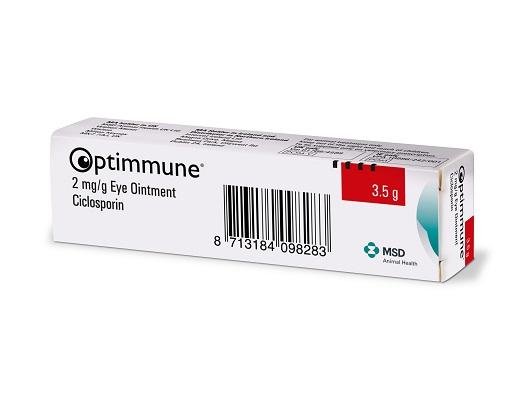
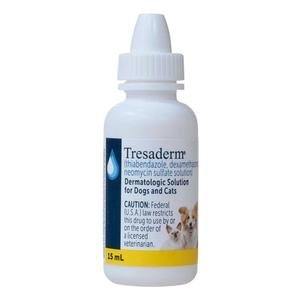
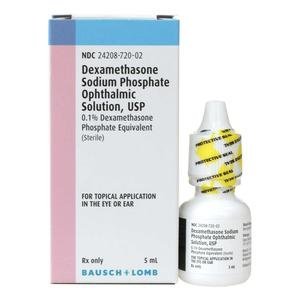
Optimmune Ophthalmic for Dogs – 0.2% Cyclosporine Eye Ointment
Optimmune Ophthalmic for Dogs
Optimmune Ophthalmic Ointment is a veterinary ophthalmic medication containing 0.2% cyclosporine USP and is indicated for the management of chronic keratoconjunctivitis sicca (KCS) and chronic superficial keratitis (CSK) in dogs. FDA animal-drug records identify Optimmune under NADA 141-052 and list cyclosporine as its active ingredient.
For dog owners and veterinary professionals searching for an established treatment option for chronic canine eye conditions, Optimmune provides a targeted ophthalmic formulation designed specifically for administration to affected eyes.
Chronic eye disease in dogs can require consistent, ongoing management. Conditions such as KCS can result from inadequate tear production, while chronic superficial keratitis can cause persistent changes to the corneal surface. Because the eye is a delicate organ, treatment should be based on veterinary diagnosis rather than simply treating redness, discharge, squinting, or other symptoms without determining their cause.
Vet Pharma Med can provide informative product content for customers researching Optimmune Ophthalmic for Dogs, Optimmune 0.2% cyclosporine, cyclosporine eye ointment for dogs, canine dry eye treatment, KCS in dogs, and chronic superficial keratitis in dogs.
What Is Optimmune Ophthalmic?
Optimmune is a prescription veterinary ophthalmic ointment containing 0.2% cyclosporine USP.
The FDA’s Freedom of Information Summary identifies the product as OPTIMMUNE Ophthalmic Ointment, with the established name 0.2% cyclosporine USP ophthalmic ointment. The product is classified as an Rx veterinary medicine.
Unlike oral medications, Optimmune is formulated as an ophthalmic ointment for topical application to the eye.
The FDA-approved veterinary indication includes management of chronic KCS and chronic superficial keratitis in dogs.
Optimmune Active Ingredient
The active ingredient in Optimmune is cyclosporine.
The product contains 0.2% cyclosporine USP in an ophthalmic ointment formulation.
Cyclosporine belongs to a class of medicines with immunomodulatory and immunosuppressive properties. In veterinary ophthalmology, topical cyclosporine has an important role in managing certain chronic inflammatory and immune-mediated ocular conditions.
The topical ophthalmic formulation allows the medication to be applied directly to the affected eye.
What Is Canine KCS?
Keratoconjunctivitis sicca, commonly abbreviated KCS, is often referred to as dry eye.
KCS occurs when the eye does not produce an adequate amount of tears or when the tear film is otherwise insufficient to maintain normal ocular surface health.
Tears are much more than simple moisture. The tear film helps lubricate the eye, nourish the cornea, remove debris, and support the normal defenses of the ocular surface.
When tear production is inadequate, the cornea and conjunctiva can become irritated and inflamed.
Over time, untreated or inadequately managed KCS can result in significant ocular discomfort and changes to the corneal surface.
Optimmune for Chronic KCS
The FDA indication for Optimmune includes the management of chronic keratoconjunctivitis sicca in dogs.
This is an important distinction because KCS is commonly a chronic condition rather than a problem that can necessarily be resolved with a short course of medication.
The goal of management is to improve the ocular environment, support tear-film function, reduce ongoing inflammatory processes, and help protect the eye from complications associated with chronic tear deficiency.
Treatment plans can vary between individual dogs depending on the severity of disease and other ocular findings.
What Is Chronic Superficial Keratitis?
Chronic superficial keratitis (CSK) is another canine eye condition for which Optimmune has an FDA-approved indication.
CSK involves chronic changes affecting the superficial tissues of the cornea and can be influenced by immune-mediated inflammatory processes.
The condition may be particularly noticeable because the cornea is normally transparent. Changes to the corneal surface can affect the appearance of the eye and, in more advanced cases, vision.
The FDA-approved Optimmune indication includes management of chronic superficial keratitis in dogs.
Optimmune and Cyclosporine
Cyclosporine is an immunomodulatory medication. When administered ophthalmically, it is used to influence local ocular immune and inflammatory processes.
For dogs with appropriate diagnoses, topical cyclosporine can form part of a long-term ophthalmic management strategy.
The FDA’s current animal-drug information continues to list Optimmune under cyclosporine products and identifies NADA 141-052.
Why Veterinary Diagnosis Matters
Eye problems in dogs can have many different causes.
Redness, discharge, squinting, cloudiness, rubbing, or excessive blinking can occur with:
- Dry eye
- Corneal ulceration
- Foreign bodies
- Allergic or inflammatory conditions
- Infection
- Trauma
- Glaucoma
- Uveitis
- Eyelid abnormalities
- Tear-duct problems
- Other corneal diseases
A dog with a corneal ulcer, for example, may require a completely different treatment plan.
For this reason, Optimmune should be used according to a veterinarian’s diagnosis and instructions rather than being selected solely because a dog’s eye appears irritated.
Optimmune Dosage for Dogs
The FDA approval information recommends a 1/4-inch strip of Optimmune administered every 12 hours to the affected eye or eyes. The ointment may be placed directly on the cornea or into the conjunctival sac.
Because this is a prescription veterinary medication, owners should follow the veterinarian’s instructions and the labeling supplied with the specific product.
Do not increase the amount or frequency simply because symptoms appear severe.
Likewise, do not discontinue long-term therapy without veterinary guidance.
How to Apply Optimmune Ophthalmic Ointment
Correct administration is important when using any ophthalmic medication.
A general application process involves:
- Wash your hands before handling the medication.
- Keep the tube clean.
- Position the dog comfortably and securely.
- Gently expose the affected eye.
- Apply the prescribed amount of ointment.
- Avoid allowing the tube tip to touch the eye or surrounding surfaces.
- Allow the dog to blink naturally.
- Replace the cap securely after administration.
- Wash your hands after application.
The exact technique may vary depending on the dog’s temperament and the veterinarian’s instructions.
Preventing Tube Contamination
Ophthalmic products must be handled carefully.
Do not allow the tip of the Optimmune tube to contact:
- The cornea
- Eyelashes
- Eyelids
- Skin
- Fingers
- Other surfaces
Contact can introduce contamination into the product and potentially compromise the sterility of an ophthalmic medication.
If the tube becomes contaminated or damaged, contact the dispensing veterinarian or pharmacy for advice.
Consistency Is Important
Chronic ocular diseases often require consistent treatment.
The FDA information for Optimmune notes that dogs affected with chronic superficial keratitis may require lifelong consistent therapy.
This does not mean every dog will have exactly the same treatment duration. Instead, it highlights the chronic nature of some conditions treated with Optimmune.
Owners should follow the individual treatment schedule established by the veterinarian.
Optimmune and Long-Term Canine Eye Care
Long-term management of chronic eye disease can involve more than one component.
Depending on the dog’s condition, a veterinarian may recommend:
- Cyclosporine ophthalmic therapy
- Artificial tear supplementation
- Additional ophthalmic medications
- Regular eye examinations
- Tear-production monitoring
- Corneal examinations
- Management of secondary complications
The appropriate combination depends on the underlying diagnosis.
Optimmune should therefore be considered part of a veterinary treatment plan rather than an isolated solution for every canine eye problem.
Artificial Tears and Optimmune
Dogs with KCS may require additional lubrication depending on the severity of their disease.
Artificial tear products can help supplement the tear film, while cyclosporine addresses an important component of the chronic disease process.
If multiple ophthalmic products are prescribed, the veterinarian should provide instructions regarding the order and timing of administration.
Different ophthalmic products may require separation between applications.
Optimmune for Dogs With Dry Eye
The phrase “dry eye” is commonly used by pet owners when referring to KCS.
A dog with KCS may develop ocular discomfort, redness, mucus-like discharge, frequent blinking, or other changes.
Because chronic KCS can damage the ocular surface, veterinary assessment is important.
Optimmune is specifically indicated for management of chronic KCS in dogs, making it a relevant prescription ophthalmic medication for appropriately diagnosed patients.
Optimmune for Dogs With Chronic Superficial Keratitis
Optimmune also has an FDA-approved indication for management of chronic superficial keratitis in dogs.
CSK can produce progressive corneal changes. Dogs with the condition may need ongoing monitoring to assess the response to treatment and changes in the cornea.
Consistent treatment and veterinary follow-up can be important components of long-term management.
What Does Cyclosporine Do in the Eye?
Cyclosporine has immunomodulatory activity.
In veterinary ophthalmology, topical cyclosporine is used to help manage conditions in which immune-mediated inflammation and inadequate tear production are relevant components of disease.
For KCS, treatment is aimed at improving the ocular surface environment and supporting tear-film function.
The therapeutic effect is not necessarily immediate. Chronic ophthalmic diseases may require continued treatment and follow-up before the full management response is assessed.
Is Optimmune an Antibiotic?
No.
Optimmune contains cyclosporine, not an antibiotic.
This distinction is important because eye discharge does not automatically mean that a bacterial infection is present.
If an infection is suspected, the veterinarian may prescribe an appropriate antimicrobial or other medication after examining the eye.
Optimmune should not be substituted for an antibiotic when an antibiotic is specifically indicated.
Is Optimmune a Steroid?
Optimmune is not a corticosteroid.
Its active ingredient is cyclosporine, an immunomodulatory medication.
This difference is clinically relevant because different ophthalmic conditions require different medication classes.
For example, the treatment of an inflammatory ocular disease may differ substantially from the management of a corneal ulcer or infectious condition.
Optimmune and Corneal Ulcers
Owners should not assume that Optimmune is appropriate for every painful or red eye.
A corneal ulcer requires veterinary examination and a specific treatment plan.
If a dog is squinting severely, keeping an eye closed, rubbing its face, or developing sudden corneal cloudiness, prompt veterinary assessment is appropriate.
Eye conditions can progress rapidly, and delaying diagnosis may increase the risk of complications.
Possible Adverse Reactions
As with other ophthalmic medications, individual dogs may experience irritation or other adverse reactions.
Owners should monitor for unusual or worsening signs after administration.
Contact the veterinarian if the dog develops:
- Marked redness
- Severe discomfort
- Increased squinting
- Swelling
- Significant discharge
- Sudden vision changes
- Worsening corneal cloudiness
- Other unexpected eye changes
Any serious or rapidly worsening ocular problem deserves prompt veterinary attention.
Optimmune Prescription Status
Optimmune is a prescription veterinary product.
The FDA Freedom of Information Summary identifies its dispensing status as Rx and states that federal law restricts the drug to use by or on the order of a licensed veterinarian.
For an online veterinary pharmacy page, this prescription status should be displayed accurately.
Storage and Product Handling
Store Optimmune according to the current package labeling and pharmacy instructions.
Keep the tube:
- Properly closed
- Protected from contamination
- Away from children
- Away from pets that are not receiving the medication
- Stored according to the product label
Do not use an ophthalmic medication if its packaging appears compromised or if the product has been contaminated.
Why Optimmune Is Different From Ordinary Eye Lubricants
Artificial tears primarily provide lubrication.
Optimmune contains cyclosporine and is a prescription ophthalmic medication intended for specific chronic canine eye conditions.
Therefore, Optimmune should not be described simply as an eye lubricant.
Its role in the treatment plan is determined by the underlying disease and veterinary diagnosis.
Optimmune Ophthalmic for Dogs and Veterinary Monitoring
Dogs receiving long-term treatment for KCS or CSK may benefit from regular veterinary eye examinations.
Monitoring can help assess:
- Ocular comfort
- Tear production
- Corneal appearance
- Inflammation
- Discharge
- Response to treatment
- Development of complications
Veterinary monitoring is particularly important when a condition is chronic.
Can Optimmune Be Used in Both Eyes?
The FDA dosing information refers to application to the affected eye or eyes.
Whether one or both eyes require treatment depends on the individual dog’s diagnosis.
Do not automatically apply medication to both eyes simply because one eye is affected. Follow the veterinarian’s instructions.
Optimmune for Dogs of Different Ages
Optimmune is used in veterinary practice for appropriately diagnosed canine patients.
Age alone does not determine whether treatment is suitable.
The veterinarian may consider the dog’s age, general health, eye condition, concurrent medications, and previous treatment response when developing a management plan.
Optimmune for Small Dogs
Small dogs can require particularly careful handling when ophthalmic medications are administered.
The product’s ophthalmic dosage is measured as a strip of ointment rather than a conventional mg/kg oral dose.
Owners should therefore follow the specific application instructions rather than attempting to calculate an oral-style dose independently.
Optimmune for Senior Dogs
Senior dogs may develop multiple health conditions at the same time.
A senior dog with chronic eye disease may therefore need a complete medication review.
Tell the veterinarian about all prescription medicines, supplements, and ophthalmic products being used.
This helps the veterinarian develop an appropriate overall treatment plan.
Optimmune and Other Eye Medications
Dogs with chronic ocular disease may sometimes require multiple topical medications.
When several products are prescribed, timing can matter.
Ask the veterinarian how long to wait between products and which medication should be applied first.
Do not mix different ophthalmic medications together in the Optimmune tube or container.
Why KCS Requires Ongoing Attention
KCS is not simply an occasional episode of eye irritation.
Inadequate tear production can leave the ocular surface vulnerable to irritation and chronic changes.
Long-term management can therefore be necessary.
The FDA’s historical approval documentation specifically describes chronic KCS as a condition requiring management rather than implying that a short course of treatment necessarily resolves the underlying disease.
Recognizing Potential Eye Emergencies
A dog’s eye should be evaluated promptly when there is:
- Sudden severe pain
- A closed or tightly squinting eye
- Sudden cloudiness
- Blood in the eye
- A visible foreign object
- Sudden vision impairment
- Severe swelling
- Significant trauma
- Rapidly worsening discharge or redness
These symptoms can occur with conditions requiring urgent treatment.
Optimmune should not be used as a substitute for emergency ophthalmic evaluation.
Buying Optimmune Ophthalmic for Dogs Online
When searching for Optimmune Ophthalmic for Dogs online, customers should verify that they are purchasing the correct veterinary product.
Important product details include:
- Product name
- Cyclosporine concentration
- Ophthalmic ointment formulation
- Intended species
- Prescription status
- Packaging
- Manufacturer information
- Expiration date
- Storage requirements
Because Optimmune is a prescription veterinary product, purchasing and dispensing should comply with applicable laws and veterinary-prescription requirements.
Optimmune 0.2% Cyclosporine Ophthalmic Ointment
The 0.2% cyclosporine ophthalmic ointment formulation is the key product specification associated with Optimmune.
FDA records identify the product as 0.2% cyclosporine USP ophthalmic ointment.
This makes “Optimmune 0.2%” and “cyclosporine ophthalmic ointment for dogs” highly relevant search terms for a product page.
Optimmune and Veterinary Ophthalmology
Veterinary ophthalmology focuses on diagnosing and managing diseases affecting the eyes and visual system of animals.
Chronic conditions such as KCS and CSK can require specialized treatment because the eye’s anatomy is delicate and vision can be affected by disease progression.
Optimmune is one established prescription veterinary ophthalmic option for appropriately diagnosed canine patients.
Why Accurate SEO Content Matters for Veterinary Products
For a veterinary pharmacy website such as Vet Pharma Med, SEO should not rely on repeating the product name dozens of times.
A stronger product page naturally answers the questions customers actually search for:
- What is Optimmune?
- What is Optimmune used for?
- Does Optimmune contain cyclosporine?
- Is Optimmune for dogs?
- What is KCS?
- What is chronic superficial keratitis?
- How is Optimmune administered?
- Is Optimmune prescription-only?
- Can Optimmune be used long term?
- What should owners know before purchasing it?
This creates useful, medically responsible content rather than keyword-stuffed copy.
International Search Relevance
Customers in the United States, Canada, Australia, France, Germany, Spain, the Netherlands, Mexico, and other markets may search for Optimmune using slightly different terminology.
Relevant natural search phrases can include:
- Optimmune for Dogs
- Optimmune Ophthalmic Ointment
- Optimmune 0.2%
- Cyclosporine Eye Ointment for Dogs
- Cyclosporine Ophthalmic for Dogs
- Dog Dry Eye Treatment
- Canine KCS Treatment
- Chronic Superficial Keratitis in Dogs
- Dog Eye Ointment
- Veterinary Cyclosporine Eye Medication
However, regulatory status, prescription requirements, approved indications, and product availability can differ between countries.
Therefore, international SEO content should not imply that U.S. approval automatically applies to every country.
Vet Pharma Med Product Information
Vet Pharma Med can position its Optimmune page as an informative resource for customers researching prescription canine ophthalmic medication.
A trustworthy product page should emphasize accurate product identification, responsible veterinary use, clear instructions, and appropriate safety information.
Rather than promising guaranteed results, the page should explain that response varies between individual dogs and that chronic ocular conditions may require ongoing veterinary monitoring.
Frequently Asked Questions About Optimmune Ophthalmic for Dogs
What is Optimmune Ophthalmic for Dogs?
Optimmune is a prescription veterinary ophthalmic ointment containing 0.2% cyclosporine. It is indicated for management of chronic KCS and chronic superficial keratitis in dogs.
What is the active ingredient in Optimmune?
The active ingredient is cyclosporine USP at 0.2%.
What is Optimmune used for in dogs?
FDA-approved indications include management of chronic keratoconjunctivitis sicca and chronic superficial keratitis in dogs.
Is Optimmune used for dry eye in dogs?
Yes. Chronic keratoconjunctivitis sicca, commonly called dry eye, is one of the FDA-approved indications for Optimmune in dogs.
What is the Optimmune dose for dogs?
The FDA approval information specifies a 1/4-inch strip every 12 hours to the affected eye or eyes. The ointment may be placed directly on the cornea or into the conjunctival sac.
Always follow the veterinarian’s current instructions for the individual dog.
Is Optimmune prescription-only?
Yes. FDA documentation identifies Optimmune as an Rx veterinary product restricted to use by or on the order of a licensed veterinarian.
Can Optimmune be used for chronic superficial keratitis?
Yes. Management of chronic superficial keratitis in dogs is an FDA-approved indication for Optimmune.
Is Optimmune an antibiotic?
No. Optimmune contains cyclosporine, not an antibiotic.
Is Optimmune a steroid?
No. Its active ingredient is cyclosporine, an immunomodulatory medication.
Can Optimmune be used long term?
Some dogs with chronic KCS or CSK require prolonged treatment. FDA documentation notes that dogs with chronic superficial keratitis may require lifelong consistent therapy.
The duration should be determined by the veterinarian.
Can Optimmune cure every type of dog eye problem?
No. Optimmune is indicated for specific chronic canine ocular conditions and should not be used as a general treatment for every cause of redness, discharge, pain, or corneal cloudiness.
Does Optimmune contain cyclosporine?
Yes. Optimmune contains 0.2% cyclosporine USP in an ophthalmic ointment formulation.
Can Optimmune be used in both eyes?
It can be administered to affected eyes according to veterinary instructions. The FDA dosing information refers to the affected eye or eyes.
Does Optimmune replace artificial tears?
Not necessarily. Some dogs with KCS may need lubricating therapy in addition to cyclosporine. The veterinarian determines whether additional eye products are appropriate.
Why does my dog need Optimmune every day?
Chronic KCS and CSK can require ongoing management. Consistent administration helps maintain the treatment plan established by the veterinarian.
Can I stop Optimmune when my dog’s eyes look better?
Do not discontinue chronic ophthalmic therapy without veterinary advice. A dog’s eyes may appear improved while the underlying condition still requires management.
Can I use human cyclosporine eye drops instead?
Do not substitute another product without veterinary direction. Different cyclosporine formulations can have different concentrations, excipients, indications, and administration instructions.
What should I do if my dog’s eye gets worse while using Optimmune?
Contact the veterinarian promptly. Worsening pain, severe squinting, sudden cloudiness, significant discharge, or changes in vision can indicate another ocular problem requiring examination.
Final Product Summary
Optimmune Ophthalmic for Dogs is a prescription veterinary eye ointment containing 0.2% cyclosporine USP. FDA documentation identifies it under NADA 141-052 and indicates its use for the management of chronic keratoconjunctivitis sicca (KCS) and chronic superficial keratitis (CSK) in dogs.
The FDA’s current animal-drug records continue to list Optimmune as a cyclosporine veterinary product.

Reviews
There are no reviews yet.