Overxicam 50mL Injection For Sale Online
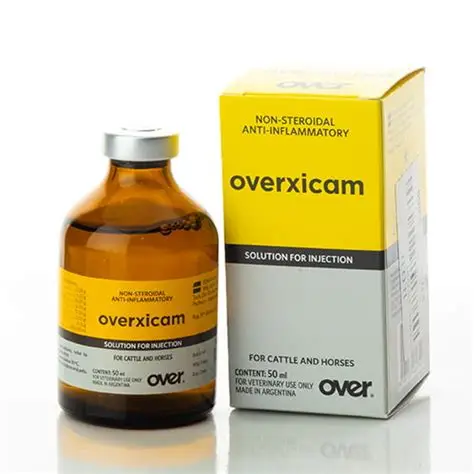
Overxicam 50mL Injection is a veterinary non-steroidal anti-inflammatory drug (NSAID) containing meloxicam 2%, equivalent to 20mg of meloxicam per mL. The product is marketed for large-animal veterinary use and is identified for cattle, horses and pigs, with species-specific administration and dosing instructions.
The 50mL presentation is documented by the manufacturer and veterinary distributors. The manufacturer’s product information states that each 100mL contains 2g of meloxicam, while the 50mL bottle therefore contains a total of 1g of meloxicam.
Overxicam belongs to the oxicam class of NSAIDs. Meloxicam works by reducing the production of prostaglandins involved in inflammatory and pain processes. Veterinary information describes its anti-inflammatory, analgesic and antipyretic properties.
What Is Overxicam 50mL?
Overxicam is an injectable meloxicam formulation designed for veterinary use in large animals.
The manufacturer’s information identifies the following:
- Active ingredient: Meloxicam
- Concentration: 2g/100mL
- Equivalent concentration: 20mg/mL
- Presentation: 50mL vial
- Product type: Injectable NSAID
- Target species: Cattle, horses and pigs
- Administration: Species-dependent
- Manufacturer: Laboratorios Over / Organización Veterinaria Regional S.R.L.
The exact registration, labeling and withdrawal requirements can differ between countries, so the locally supplied product label should always be checked.
Meloxicam in Overxicam
Meloxicam is the active pharmaceutical ingredient in Overxicam.
It belongs to the NSAID family and is used in veterinary medicine to manage pain and inflammation associated with various conditions.
The Overxicam manufacturer describes the product as a non-steroidal anti-inflammatory with analgesic and antipyretic activity.
The product information also describes effects associated with reduced prostaglandin synthesis and inflammatory processes.
This makes meloxicam useful when inflammation and pain are significant components of a veterinary condition.
Overxicam 50mL for Horses
Overxicam is specifically listed for horses by the manufacturer.
For equine use, the manufacturer’s product information identifies Overxicam for acute and chronic musculoskeletal disorders.
Musculoskeletal conditions can affect horses of all types, including:
- Sport horses
- Racehorses
- Working horses
- Pleasure horses
- Older horses
- Young horses
Musculoskeletal pain can arise from joints, muscles, tendons, ligaments, bones or surrounding soft tissues.
A veterinary examination is important because different causes of lameness and pain can require very different treatment approaches.
Overxicam for Equine Musculoskeletal Pain
Musculoskeletal problems are among the most common causes of reduced mobility and performance in horses.
Signs may include:
- Lameness
- Stiffness
- Reluctance to move
- Reduced performance
- Difficulty turning
- Reduced willingness to work
- Changes in gait
- Pain during movement
Overxicam may be used when a veterinarian determines that meloxicam is appropriate.
Pain relief should not be used to encourage an injured horse to continue strenuous exercise. Reducing pain without addressing the underlying cause can potentially allow an injury to worsen.
Overxicam for Acute Conditions
Acute musculoskeletal problems can develop suddenly.
Examples include:
- Sudden lameness
- Acute soft-tissue inflammation
- Injury-related pain
- Sudden stiffness
- Traumatic inflammation
A veterinarian should assess acute lameness, particularly when the horse is unable to bear weight, has significant swelling or appears to be experiencing severe pain.
Overxicam for Chronic Conditions
Chronic musculoskeletal disorders can cause persistent or recurring discomfort.
Older horses may experience degenerative changes that affect mobility and comfort.
Veterinary management of chronic pain may involve a combination of:
- Medication
- Exercise modification
- Farriery
- Weight management
- Physiotherapy
- Nutritional management
- Appropriate rest
Overxicam may be considered as part of a broader treatment plan when clinically appropriate.
Overxicam for Cattle
Overxicam is also identified for cattle.
The manufacturer’s information describes use in cattle for conditions including acute respiratory infections, diarrhea, mastitis, udder edema and foot inflammation.
The product is intended to help manage pain, inflammation and related clinical signs as part of appropriate veterinary treatment.
For infectious conditions, meloxicam does not replace antimicrobial treatment when an antibiotic is clinically indicated.
For example, in bacterial respiratory disease, the underlying infection may require appropriate antimicrobial therapy while the NSAID is used to help manage inflammation and clinical discomfort.
Overxicam for Swine
Overxicam is also marketed for pigs.
The manufacturer identifies use in pigs for non-infectious locomotor disorders, lameness and inflammation, as well as certain systemic conditions.
The route of administration differs from that used in horses and cattle.
This is one reason why the exact species and product instructions should always be confirmed before administration.
Overxicam Dosage for Horses
The manufacturer’s product information lists an equine dose of 0.6mg meloxicam per kg body weight, equivalent to 3mL of Overxicam per 100kg body weight. The listed route for horses is intravenous administration.
The manufacturer’s information describes the product as a single-dose treatment, with additional dosing dependent on the specific product instructions and veterinary judgment.
Because meloxicam dosing must be individualized and NSAIDs can cause serious adverse effects if used incorrectly, administration should be performed according to veterinary instructions.
Overxicam Dosage for Cattle
The manufacturer’s listed cattle dose is 0.5mg/kg body weight, equivalent to 2.5mL per 100kg body weight. The product can be administered subcutaneously or intravenously in cattle according to the manufacturer’s instructions.
The actual treatment decision should be based on the animal’s condition and the applicable local product label.
Overxicam Dosage for Pigs
The manufacturer’s information lists a pig dose of 0.4mg/kg body weight, equivalent to 2mL per 100kg body weight, administered intramuscularly.
The product information also states that a second administration may be given after 24 hours in pigs when necessary.
Veterinary direction remains important when determining whether additional treatment is appropriate.
Overxicam Administration
Administration varies according to species.
Horses
The manufacturer identifies intravenous administration for horses.
Cattle
Cattle may receive the product by subcutaneous or intravenous administration, according to the manufacturer’s instructions.
Pigs
Pigs receive the product by intramuscular administration according to the manufacturer’s information.
These routes should not be interchanged.
How Meloxicam Works
Meloxicam belongs to the NSAID class and acts by interfering with pathways involved in prostaglandin production.
Prostaglandins are involved in several physiological processes, including:
- Inflammation
- Pain signaling
- Fever
- Blood flow regulation
- Protection of the gastrointestinal tract
- Kidney function
Reducing prostaglandin production can therefore reduce pain and inflammation, but it can also affect normal protective physiological functions.
That is why NSAIDs should be used carefully and at appropriate doses.
Overxicam and Inflammation
Inflammation is part of the body’s response to injury, infection or tissue irritation.
Inflammation can produce:
- Heat
- Swelling
- Pain
- Redness
- Reduced function
Overxicam’s meloxicam component is intended to reduce inflammatory processes and associated pain.
However, inflammation is sometimes an important part of healing, so prolonged or unnecessary anti-inflammatory treatment should be avoided.
Overxicam and Fever
Meloxicam also has antipyretic properties.
The manufacturer’s information describes Overxicam as an anti-inflammatory, antipyretic and analgesic product.
Fever is a clinical sign rather than a disease itself.
If an animal develops a fever, the underlying cause should be investigated rather than relying solely on temperature reduction.
Overxicam and Pain Management
Pain management is an important component of responsible veterinary medicine.
Appropriate pain control can help an animal:
- Rest comfortably
- Move more normally
- Maintain appetite
- Recover from injury
- Participate in rehabilitation
- Reduce unnecessary suffering
However, effective pain relief does not eliminate the need to diagnose the cause of pain.
Overxicam and Equine Performance
Pain can significantly affect equine performance.
A horse that suddenly becomes unwilling to work may be experiencing pain rather than simply fatigue.
Potential causes include:
- Lameness
- Hoof problems
- Joint disease
- Muscle injury
- Tendon injury
- Dental pain
- Gastric discomfort
- Back pain
A veterinarian should investigate unexplained performance changes.
Competition Horse Considerations
Competition horses require additional caution when receiving medication.
Meloxicam and other NSAIDs may be subject to medication-control rules depending on the governing organization and jurisdiction.
Before administering Overxicam to a competition horse, check the current rules applicable to the relevant event.
Do not assume that a veterinary medicine is automatically permitted during competition simply because it is legally available.
Overxicam and Other NSAIDs
Overxicam should not be combined with other NSAIDs unless specifically directed by a veterinarian.
Examples of other NSAIDs include:
- Flunixin
- Phenylbutazone
- Ketoprofen
- Firocoxib
- Other meloxicam formulations
Combining NSAIDs can increase the risk of adverse effects, particularly involving the gastrointestinal tract and kidneys.
Overxicam and Corticosteroids
NSAIDs and corticosteroids can both affect gastrointestinal and renal physiology.
Products such as dexamethasone or prednisolone should not be combined with meloxicam without veterinary direction.
A veterinarian should determine whether an appropriate washout period or alternative treatment is necessary.
Overxicam Contraindications
Meloxicam-containing medicines require careful consideration in animals with certain conditions.
Particular caution is appropriate in animals with:
- Kidney disease
- Liver disease
- Gastrointestinal ulceration
- Dehydration
- Bleeding disorders
- Hypersensitivity to NSAIDs
The veterinarian should review the animal’s medical history before prescribing treatment.
Overxicam and Dehydration
NSAIDs can pose increased renal risk in dehydrated animals.
Horses and livestock experiencing:
- Severe diarrhea
- Significant blood loss
- Heat stress
- Reduced water intake
- Shock
may require stabilization before NSAID treatment.
Veterinary evaluation is especially important in these situations.
Overxicam Side Effects
Potential adverse effects of meloxicam can involve the:
- Gastrointestinal system
- Kidneys
- Liver
- Injection site
- General health
Signs that require veterinary attention may include:
- Loss of appetite
- Vomiting where applicable
- Diarrhea
- Bloody feces
- Abdominal discomfort
- Reduced urination
- Weakness
- Collapse
The risk depends on species, dose, duration and individual health.
Overxicam and Gastrointestinal Health
Prostaglandins have protective roles within the gastrointestinal tract.
NSAID therapy can therefore increase the risk of gastrointestinal irritation or ulceration, particularly in susceptible animals or when used incorrectly.
Veterinary monitoring is important when treatment is prolonged or when the animal has a history of gastrointestinal problems.
Overxicam and Kidney Function
The kidneys depend partly on prostaglandin-mediated mechanisms to maintain appropriate blood flow.
NSAIDs can interfere with these mechanisms.
This is particularly important when an animal is:
- Dehydrated
- Hypotensive
- Receiving other nephrotoxic medicines
- Affected by kidney disease
Veterinary assessment is recommended before treatment in high-risk animals.
Overxicam for Food-Producing Animals
Overxicam is used in cattle and pigs, so withdrawal information is an important consideration.
The exact withdrawal period can depend on the country’s registration and the formulation supplied.
Some product listings state restrictions concerning dairy cattle, including that the product should not be administered to dairy animals producing milk for human consumption.
Always follow the withdrawal period and food-animal restrictions printed on the locally authorized product label.
Overxicam Storage
Storage instructions should be checked on the packaging supplied with the product.
The vial should be:
- Kept in accordance with label requirements
- Protected from inappropriate environmental conditions
- Kept securely away from unauthorized use
- Checked for expiry before administration
Do not use an injectable vial if it is damaged, contaminated or expired.
Overxicam 50mL Presentation
Overxicam is available in a 50mL vial.
The manufacturer identifies both 10mL and 50mL presentations.
The 50mL size can be useful for veterinary practices and livestock operations where an appropriate amount of product is required for multiple animals, subject to the product’s in-use instructions and local regulations.
Buying Overxicam 50mL Online
Customers searching for Overxicam 50mL Injection online should verify that the product is the correct veterinary formulation.
Important details include:
- Overxicam
- 50mL presentation
- Meloxicam 2%
- 20mg/mL concentration
- Veterinary injectable formulation
- Correct target species
- Manufacturer
- Batch number
- Expiration date
The product should not be confused with Overxicam oral formulations for dogs, which have a different concentration and dosage form. Public veterinary information identifies a separate oral Overxicam formulation containing 0.15g meloxicam per 100mL for dogs.
Overxicam 50mL for International Customers
Veterinary medicine regulations differ between countries.
Customers in the:
- USA
- Canada
- Australia
- France
- Germany
- Spain
- Netherlands
- Mexico
- United Kingdom
- Other international markets
should verify that the exact formulation is authorized for their intended animal species and purpose.
An international product is not automatically authorized in every market.
Frequently Asked Questions
What is Overxicam 50mL Injection?
Overxicam 50mL is an injectable veterinary NSAID containing meloxicam 2%, or 20mg/mL. It is marketed for cattle, horses and pigs.
What is the active ingredient?
The active ingredient is meloxicam.
What concentration is Overxicam?
Overxicam contains 2g of meloxicam per 100mL, equivalent to 20mg/mL.
Is Overxicam used in horses?
Yes. The manufacturer’s information identifies horses as a target species and lists acute and chronic musculoskeletal disorders among the equine indications.
How is Overxicam given to horses?
The manufacturer’s information identifies intravenous administration for horses.
What is the listed equine dose?
The manufacturer lists 3mL per 100kg body weight, corresponding to 0.6mg meloxicam/kg.
Can Overxicam be used in cattle?
Yes. Cattle are among the listed target species.
Can Overxicam be used in pigs?
Yes. Pigs are also listed as a target species.
Is Overxicam an antibiotic?
No. Overxicam contains meloxicam, an NSAID. It is not an antibacterial antibiotic.
Can Overxicam be combined with another NSAID?
It should not be combined with another NSAID unless specifically directed by a veterinarian.
Can Overxicam be used in a competition horse?
Competition rules should be checked before treatment because medication-control regulations vary.
Is Overxicam available in 50mL?
Yes. The manufacturer’s information lists a 50mL presentation.
Overxicam 50mL Injection — Vet Pharma Med
Overxicam 50mL Injection is a meloxicam-based veterinary NSAID formulated at 2% concentration, providing 20mg of meloxicam per mL. The product is identified for use in cattle, horses and pigs, with the administration route and dose varying according to species.
For horses, Overxicam is indicated by the manufacturer for acute and chronic musculoskeletal disorders and is administered intravenously according to the product information. The listed equine dosage is 3mL per 100kg body weight.
For cattle, the product is used in veterinary management of several inflammatory and painful conditions, while pig indications include selected locomotor and inflammatory disorders.
As an NSAID, meloxicam helps reduce inflammatory and pain-related processes. However, it should be used responsibly because inappropriate NSAID administration can increase the risk of gastrointestinal, renal and other adverse effects.
Overxicam should not be confused with oral meloxicam formulations marketed under similar names. The 50mL injectable product contains 2g of meloxicam per 100mL, while other Overxicam formulations can have substantially different concentrations and routes of administration.
For horse owners, trainers, cattle producers and veterinary professionals searching for Overxicam 50mL Injection, Overxicam meloxicam 2%, meloxicam injection for horses, Overxicam for cattle, or Overxicam for pigs, Vet Pharma Med provides product-focused information while emphasizing responsible veterinary use.
Before treatment, the animal should be assessed by a veterinarian, particularly when pain, lameness, fever or inflammation is severe or persistent. Customers should also verify the locally applicable label because authorization, withdrawal requirements, competition rules and prescribing requirements can vary between countries.
Important: Overxicam is a veterinary medicine and should be used according to the manufacturer’s instructions and veterinary direction. The information above is educational and does not replace diagnosis or treatment advice from a qualified veterinarian.
overxicam 50ml vetacortyl 5ml fluvet 50ml synedem 25ml edemax 30ml dexamethasone 10ml abhayrab 0.5ml equicistan 100ml fructosa c 100ml overxicam.
Kynoselen is a cardiac & respiratory tonic & selenium supplement. overxicam 50ml
Muscular stimulant for horses and dogs. Aids in control of muscular dystrophy in horses and dogs. (tying up in horses).
Kynoselen treats selenium deficiency and increases and helps selenium supplementation.
Kynoselen protects muscles and delays the onset of Muscle fatigue.
Active constituents: overxicam 50ml
Disodic adenosine monophosphate: Improves cardiac and skeletal muscle output & increases blood supply to muscles.
Heptaminol hydrochloride: Increases cardiac output to meet increased demand during & following exercise & training.
Magnesium aspartate
Postassium aspartate: reported to be of value in delaying the onset of muscle fatigue.
Selenium (as sodium selenite): Highly available selenium. Prevents & treats selenium deficiency. Protects from muscle damage & “tying-up”.
Cyanocobalamin (Vitamin B12): For carbohydrate, protein & amino acid metabolism (the process by which food is used to produce energy). Improves appetite with a “tonic” effect.overxicam 50ml
Selenium:
Selenium is an essential trace element. An important interrelationship exists between Vitamin E and selenium. Selenium is important for
Large areas of Australia are known to be selenium deficient. Hay & grain grown in soils in these areas will be selenium deficient. Both selenium & vitamin E appear essential for muscle function and the contribution of each is dependent on the other. It appears that it takes a considerable time (from 8 – 10 weeks) for dietary selenium supplementation to increase blood glutathione peroxidase (the enzyme that combines with Vitamin E to protect muscles & muscle activity). Injections of sodium selenite repeated weekly or fortnightly are recommended.

Reviews
There are no reviews yet.