
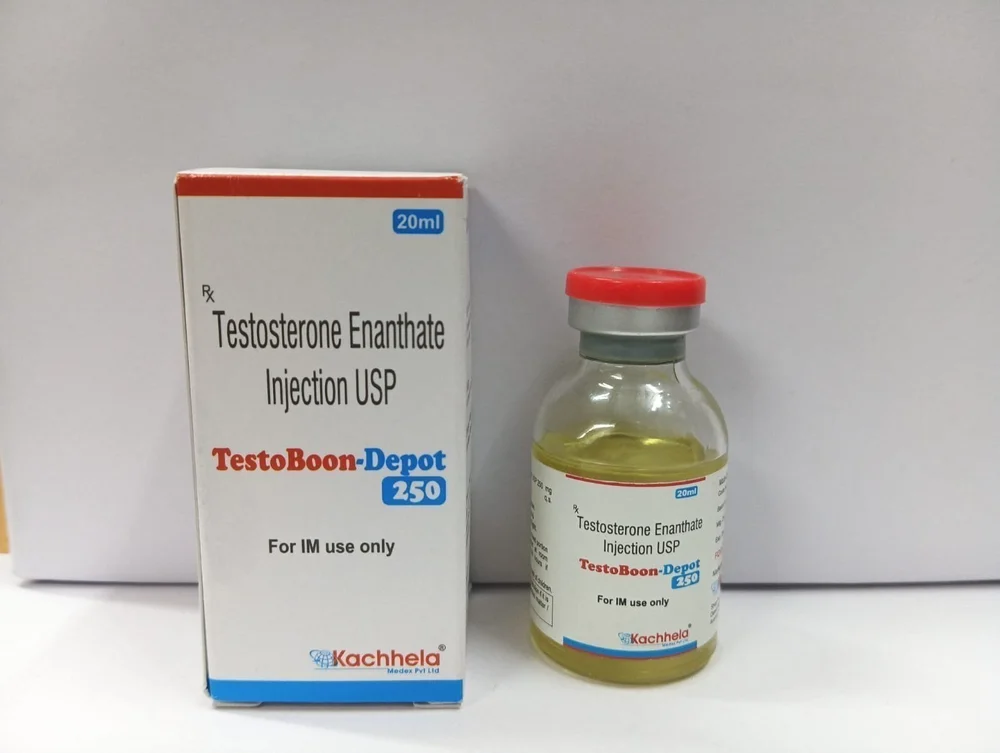
Testosterone Injection 20 mL – Product Information
Testosterone Injection 20 mL is an injectable testosterone formulation used in certain medically diagnosed cases of testosterone deficiency. Testosterone is an androgen hormone that plays an important role in the development and maintenance of male reproductive tissues, muscle and bone mass, red blood cell production, and other physiological functions.
The exact concentration, testosterone ester, approved indications, and dosing schedule depend on the specific manufacturer’s formulation. A 20 mL vial therefore should not be assumed to contain a particular testosterone compound or strength without checking the manufacturer’s label.
What Is Testosterone Injection Used For?
Prescription testosterone replacement therapy may be used for appropriately diagnosed male hypogonadism, where testosterone production is inadequate because of an underlying medical condition. Diagnosis generally requires clinical symptoms together with consistently low testosterone concentrations and appropriate medical evaluation.
Testosterone should not be used simply to increase athletic performance, muscle mass, or physical appearance.
How Testosterone Works
Testosterone binds to androgen receptors throughout the body and influences gene expression and physiological processes involved in sexual development, reproductive function, muscle and bone maintenance, and red blood cell production.
Depending on the formulation, injectable testosterone may provide a longer-lasting release of the hormone following intramuscular administration.
Important Safety Information
Testosterone therapy requires medical supervision. Potential adverse effects can include:
- Acne and oily skin
- Changes in mood
- Increased hematocrit or red blood cell count
- Fluid retention
- Changes in cholesterol
- Reduced sperm production
- Testicular shrinkage
- Gynecomastia
- Worsening of sleep apnea in susceptible individuals
- Injection-site discomfort
Testosterone can also affect the prostate and may require appropriate monitoring based on the patient’s age and clinical circumstances.
Who Should Not Use Testosterone Without Medical Assessment?
Testosterone therapy may be inappropriate for people with certain conditions, including some prostate or breast cancers, elevated hematocrit, severe untreated sleep apnea, or significant cardiovascular or other medical conditions.
A physician should review the patient’s medical history, medications, laboratory results, and treatment goals before prescribing testosterone.
Administration
The administration route and dosage depend entirely on the specific testosterone formulation. Do not use the 20 mL vial size to determine the dose.
Patients should follow the exact prescription and manufacturer’s instructions. Injectable testosterone should be administered using appropriate sterile technique by a qualified healthcare professional or as specifically instructed by the prescriber.
Frequently Asked Questions
What is Testosterone Injection 20 mL?
It is a multi-dose injectable presentation of a testosterone-containing medicine. The precise formulation and concentration must be confirmed from the product packaging and manufacturer’s information.
Is testosterone a prescription medicine?
In many countries, testosterone is a controlled or prescription-only medicine. Requirements vary by jurisdiction.
Can testosterone be used for bodybuilding?
Testosterone should not be promoted or used as a bodybuilding or performance-enhancing drug. Non-medical use can expose users to significant health risks and may violate applicable laws or sporting regulations.
Does testosterone affect fertility?
Yes. Exogenous testosterone can suppress the body’s natural production of testosterone and sperm, potentially reducing fertility. Anyone concerned about fertility should discuss this with a qualified clinician before treatment.
Does the 20 mL size determine the strength?
No. 20 mL describes the volume of the vial, not the amount of testosterone per millilitre. The concentration must be verified on the manufacturer’s label.
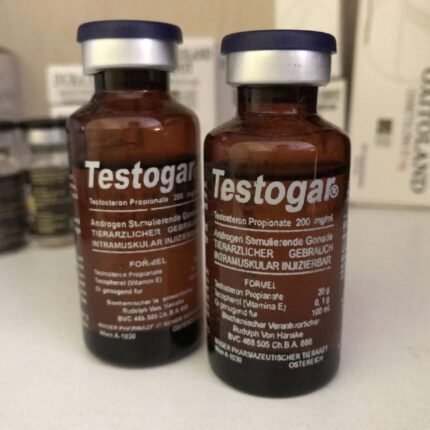
Testosterone injection was the first successfully synthesized anabolic steroid. Testosterone propionate is a fast-acting, short-ester, oil-based injectable testosterone compound that is commonly prescribed for the treatment of hypogonadism – low testosterone levels and various related symptoms in males.
Testosterone propionate was first described in 1935 to increase synthetic testosterone’s therapeutic usefulness by slowing its release into the bloodstream. It was released for clinical use two years later by Schering AG in Germany, featured in a hybrid blend with testosterone enanthate under the brand name Testoviron. This was also the first commercially available version on the U.S. prescription drug market and remained the dominant form of testosterone globally prior to 1960.
Testosterone is the primary androgen found in the body. Endogenous testosterone is synthesized by cells in the testis, ovary, and adrenal cortex. Therapeutically, testosterone is used in the management of hypogonadism, either congenital or acquired. Testosterone is also the most effective exogenous androgen for the palliative treatment of carcinoma of the breast in postmenopausal women. Testosterone was in use in 1938 and approved by the FDA in 1939. Anabolic steroids, derivatives of testosterone, have been used illicitly and are now controlled substances. Testosterone, like many anabolic steroids, was classified as a controlled substance in 1991. Testosterone is administered parenterally in regular and delayed-release (depot) dosage forms. In September 1995, the FDA initially approved testosterone transdermal patches (Androderm); many transdermal forms and brands are now available including implants, gels, and topical solutions. A testosterone buccal system, Striant, was FDA approved in July 2003; the system is a mucoadhesive product that adheres to the buccal mucosa and provides a controlled and sustained release of testosterone. In May 2014, the FDA approved an intranasal gel formulation (Natesto). A transdermal patch (Intrinsa) for hormone replacement in women is under investigation; the daily dosages used in women are much lower than for products used in males. The FDA ruled in late 2004 that it would delay the approval of Intrinsa women’s testosterone patch and has required more data regarding safety, especially in relation to cardiovascular and breast health.Testosterone injection
The Propionate Ester: An ester is any of a class of organic compounds that react with water to produce alcohols and organic or inorganic acids. Most esters are derived from carboxylic acids, and injectable testosterone is typically administered along with one or multiple esters. The addition of a carbon chain (ester) attached to the testosterone molecule controls how soluble it will be once it’s inside the bloodstream. The larger the carbon chain, the longer the ester, and the less soluble the medication; a large/long ester will have a longer half-life. The inverse is true of short carbon chains, like the propionate ester, which acts rapidly upon the body and evacuates the body at a similar rate. With a three-carbon chain, the testosterone ester possesses the shortest half life of all testosterone esters at 4 days. Testosterone injection


Reviews
There are no reviews yet.