
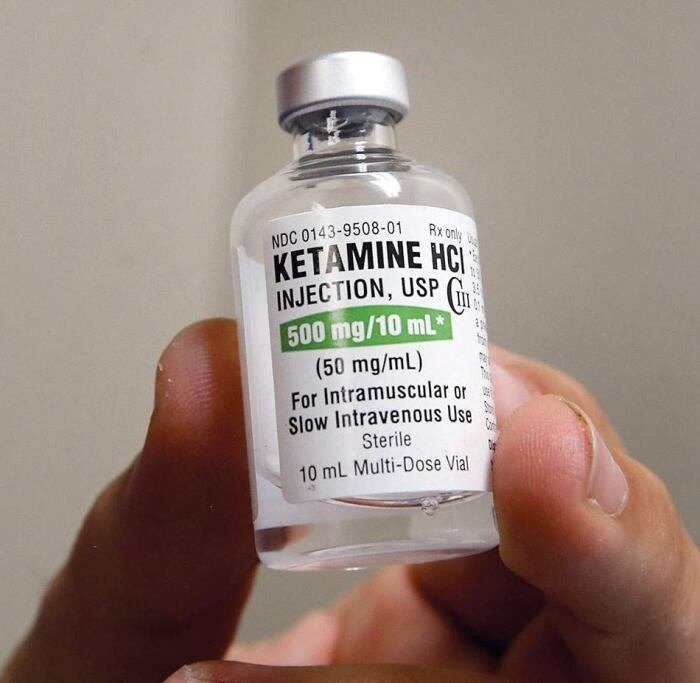
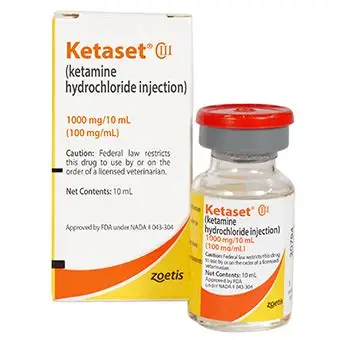
Ketamin Injection – Veterinary Ketamine Hydrochloride Anesthetic
Ketamin Injection, commonly searched as Ketamine Injection, is a veterinary injectable medicine containing ketamine hydrochloride, a rapid-acting dissociative anesthetic used in veterinary anesthesia and restraint. Current U.S. veterinary labeling for 100 mg/mL ketamine hydrochloride injection identifies it as a prescription animal drug and states that the labeled product is for intramuscular use in cats and subhuman primates.
Ketamine is a specialized anesthetic medicine rather than a routine pet-care product, nutritional supplement or general-purpose injectable. Its administration requires professional veterinary assessment and appropriate monitoring. The U.S. label specifically states that federal law restricts the drug to use by or on the order of a licensed veterinarian.
For Vet Pharma Med, the strongest product-page strategy is to explain what Ketamin Injection is, identify its active ingredient and formulation, describe legitimate veterinary applications, explain why professional supervision is necessary, and provide accurate safety and regulatory information without making exaggerated claims.
What Is Ketamin Injection?
Ketamin Injection is an injectable formulation containing ketamine hydrochloride.
In current U.S. veterinary labeling, a 100 mg/mL formulation contains 100 mg of ketamine base equivalent per mL, corresponding to approximately 115 mg of ketamine hydrochloride per mL. The formulation also contains a preservative and ingredients used to adjust the solution’s pH.
Ketamine belongs to the dissociative anesthetic class and has a long history of use in veterinary medicine.
Depending on the approved product and species, ketamine may be used as part of an anesthetic protocol or for veterinary restraint.
Because different ketamine products can have different concentrations, formulations, manufacturers, approved species and regulatory indications, veterinary professionals should always verify the exact label of the product being used.
Ketamin Injection Active Ingredient
The active pharmaceutical ingredient is ketamine hydrochloride.
Ketamine is responsible for the anesthetic effects of the medicine.
The current U.S. veterinary labeling for 100 mg/mL ketamine hydrochloride injection identifies ketamine as the active ingredient and describes the medicine as a rapid-acting, nonnarcotic, nonbarbiturate anesthetic.
The exact inactive ingredients can differ between manufacturers, which is another reason that the actual package labeling should be checked before use.
Ketamine Injection 100mg/mL
One common veterinary formulation is Ketamine Hydrochloride Injection 100 mg/mL.
Current DailyMed information lists 100 mg/mL ketamine veterinary injection supplied in 10 mL vials by some manufacturers. One current Dechra formulation is approved under ANADA 200-073 and is identified as a prescription animal drug with intramuscular administration.
Another current veterinary ketamine product is listed under FDA approval NADA 045-290. This illustrates that multiple approved manufacturers and labels can exist for ketamine injection.
Therefore, Ketamin Injection 100mg/mL should not be treated as a single globally identical product.
Ketamin Injection for Veterinary Use
Ketamine injection has an established role in veterinary anesthesia.
The exact approved use depends on the product and jurisdiction.
For example, current U.S. veterinary labeling for certain 100 mg/mL ketamine hydrochloride injections identifies use in cats for restraint or as the sole anesthetic for diagnostic or minor, brief surgical procedures that do not require skeletal muscle relaxation. The same labeling identifies restraint in subhuman primates.
Veterinarians may also use ketamine within broader multimodal anesthetic protocols when clinically appropriate.
The specific protocol should always be selected by the veterinarian responsible for the animal.
Ketamin Injection for Cats
Cats are specifically identified as a target species on current U.S. ketamine hydrochloride veterinary labels.
The approved labeling describes use for restraint and certain diagnostic or minor, brief surgical procedures that do not require skeletal muscle relaxation.
Feline anesthesia requires careful patient evaluation.
Important considerations include:
- Age
- Body condition
- Existing disease
- Cardiovascular status
- Respiratory status
- Neurological status
- Current medicines
- Previous anesthetic reactions
- Nature and duration of the procedure
Ketamine should therefore be selected as part of an individualized veterinary anesthetic plan.
Ketamin Injection for Dogs
The phrase “ketamine injection for dogs” is frequently searched online, but veterinary professionals should distinguish between general ketamine use and the approved labeling of a particular commercial product.
The current U.S. 100 mg/mL ketamine hydrochloride veterinary labels cited above identify cats and subhuman primates, rather than dogs, as their labeled target species.
This does not mean ketamine has no veterinary application in canine medicine; rather, the legal and clinical use of a particular formulation must be determined from the applicable product label, veterinary regulations and professional judgment.
Vet Pharma Med should avoid incorrectly stating that every ketamine injection is approved for dogs.
Ketamin Injection for Horses
Searches for ketamine injection for horses are also common because ketamine is known within veterinary anesthesia.
However, species authorization depends on the specific formulation and country.
A product registered for cats in the United States should not automatically be advertised as a horse product.
For horses, veterinary professionals should select a legally appropriate anesthetic product and protocol according to the applicable jurisdiction and clinical circumstances.
Ketamine and Veterinary Anesthesia
Ketamine is used in veterinary anesthesia because of its rapid onset and distinctive pharmacological effects.
It produces a dissociative anesthetic state rather than functioning exactly like conventional inhalational anesthetics.
In practice, ketamine may be incorporated into multimodal anesthesia alongside other agents selected by the veterinarian.
The appropriate combination depends on the patient and procedure.
Ketamine and Veterinary Restraint
Some animals require chemical restraint when physical restraint alone would cause excessive stress or create risks to the animal or veterinary personnel.
Ketamine-containing veterinary products can have a role in restraint protocols where specifically indicated.
Current U.S. labeling identifies restraint as an approved application for certain ketamine products in cats and subhuman primates.
The objective should always be safe, humane and professionally controlled handling.
Ketamine for Diagnostic Procedures
Diagnostic procedures sometimes require an animal to remain completely still.
Examples can include certain imaging, examinations or procedures where movement could compromise safety or diagnostic quality.
For appropriately labeled products, ketamine may be used as an anesthetic for certain diagnostic procedures.
The veterinarian should determine whether sedation, general anesthesia or another approach is more appropriate.
Ketamine for Minor Procedures
The current U.S. labeling for certain 100 mg/mL ketamine injections states that the medicine may be used as the sole anesthetic in cats for minor, brief surgical procedures that do not require skeletal muscle relaxation.
This limitation is important.
It would be inaccurate to describe ketamine injection as universally suitable for every surgical procedure.
More complicated procedures can require a carefully designed combination of anesthetic, analgesic and muscle-relaxing medicines.
Ketamine and Muscle Relaxation
Ketamine does not provide every characteristic required for all surgical procedures.
Current labeling specifically limits sole-anesthetic use to procedures that do not require skeletal muscle relaxation.
When substantial muscle relaxation is required, the veterinarian can select additional agents as part of the anesthetic protocol.
This is one reason why product information should distinguish between ketamine anesthesia and a complete anesthetic protocol.
Ketamine and Pain Management
Anesthesia and analgesia are related but different concepts.
A patient can be unconscious while still requiring an appropriate pain-management plan.
For painful procedures, veterinarians may use multimodal analgesia rather than relying exclusively on ketamine.
The appropriate pain-management approach depends on the procedure, patient condition and other medicines being used.
Ketamin Injection Safety
Ketamine injection requires professional handling.
Current veterinary labeling warns that serious adverse effects can occur, including respiratory and cardiovascular complications.
Appropriate veterinary anesthesia requires:
- Patient assessment
- Appropriate anesthetic selection
- Professional administration
- Monitoring
- Emergency preparedness
- Recovery observation
This is particularly important because injectable anesthetics can produce rapid changes in consciousness and physiological function.
Potential Adverse Effects
Ketamine can produce adverse reactions.
Depending on the formulation and patient, reported effects can include:
- Salivation
- Vomiting
- Vocalization
- Muscle movements
- Tremors
- Erratic recovery
- Prolonged recovery
- Respiratory depression
- Cardiovascular complications
The exact adverse-effect profile depends on the product, animal, dose, route, concurrent medicines and clinical circumstances.
Any unexpected reaction during anesthesia requires immediate veterinary management.
Respiratory Monitoring
Respiratory function is an important component of anesthetic monitoring.
Current veterinary ketamine labeling warns about respiratory depression and serious respiratory events.
A veterinary facility using injectable anesthetics should therefore have appropriate monitoring and emergency capabilities.
The animal should remain under professional observation throughout anesthesia and recovery.
Cardiovascular Monitoring
Anesthetic drugs can influence cardiovascular function.
The patient’s cardiovascular condition should therefore be considered before anesthesia.
Animals with known cardiovascular disease may require specialized anesthetic planning.
The veterinarian can determine whether ketamine is appropriate or whether an alternative protocol would be safer.
Ketamine and Recovery
Recovery is an important part of anesthesia.
An animal that appears awake may not yet have fully recovered normal coordination, awareness or physiological stability.
Veterinary staff should continue monitoring until the patient reaches an appropriate recovery stage.
A quiet and controlled environment can help reduce unnecessary stimulation during recovery.
Ketamine Drug Interactions
Ketamine can be used alongside other anesthetic and sedative medicines, but combinations can change the depth and duration of anesthesia.
The current U.S. labeling for veterinary ketamine should be reviewed carefully before combining it with other medications.
The veterinarian should review the animal’s complete medication history, including:
- Sedatives
- Analgesics
- Anesthetics
- Cardiovascular drugs
- Neurological medicines
- Other prescription medications
- Supplements
Ketamine and Multimodal Anesthesia
Modern veterinary anesthesia often uses multimodal approaches.
A multimodal protocol can involve different medicines with complementary effects.
The purpose is to provide appropriate anesthesia and analgesia while allowing the veterinarian to tailor the protocol to the patient’s needs.
Ketamine can be one component of such a protocol when appropriate.
Ketamin Injection Prescription Status
In the United States, current veterinary ketamine injection labels state that federal law restricts the drug to use by or on the order of a licensed veterinarian.
Current DailyMed information also identifies veterinary ketamine injection as a DEA Schedule CIII product.
This means that ketamine should not be presented on an SEO product page as an unrestricted consumer medicine.
Ketamin Injection and Controlled-Substance Regulations
Ketamine is subject to controlled-substance regulation in the United States.
Veterinary practices must comply with applicable laws concerning prescribing, storage, records and handling.
Other countries have their own controlled-substance frameworks.
Consequently, an international product page should avoid implying that the medicine can be freely purchased or imported everywhere.
Ketamin Injection in the USA
For U.S. veterinary professionals, current FDA-linked labeling provides specific information about approved ketamine hydrochloride injection products.
For example, one current 100 mg/mL product is approved under ANADA 200-073, while another current veterinary ketamine injection is approved under NADA 045-290.
This demonstrates why the exact manufacturer and product label matter.
Ketamin Injection in Canada
Canadian veterinary professionals should confirm the regulatory status of the specific ketamine formulation available in Canada.
U.S. approval does not automatically mean that an identical product is approved or marketed in Canada.
Local prescription and controlled-substance rules should be followed.
Ketamin Injection in Australia
Veterinary professionals in Australia should verify the exact product registration, approved species and controlled-drug requirements applicable to the formulation they intend to use.
The same active ingredient can be available under different commercial names and regulatory conditions in different countries.
Ketamin Injection in Europe
European customers should verify the regulatory status of the exact product in their country.
This is particularly relevant to searches from:
- France
- Germany
- Spain
- Netherlands
- Italy
- Belgium
- Austria
- Other European markets
A product’s authorization in the United States should not automatically be represented as authorization throughout Europe.
Ketamin Injection and Product Authenticity
Veterinary injectable products should come from legitimate, traceable sources.
Professionals should check:
- Manufacturer
- Product name
- Active ingredient
- Concentration
- Lot number
- Expiration date
- Packaging
- Storage conditions
- Regulatory labeling
If the product’s identity or integrity is uncertain, it should not be administered.
Ketamine Injection 100mg/mL Product Information
A current U.S. Dechra formulation is supplied as 100 mg/mL ketamine hydrochloride injection in a 10 mL vial and is labeled for intramuscular administration in cats and subhuman primates.
Another current DailyMed listing similarly identifies a 100 mg/mL formulation and notes its veterinary prescription status.
These details provide useful information for professionals searching for Ketamine Injection 100mg/mL, but the actual package should always be checked before use.
Why the Exact Product Label Matters
The term “ketamine injection” describes an active ingredient and dosage form, not necessarily one single commercial product.
Different products may differ in:
- Manufacturer
- Concentration
- Preservatives
- Package size
- Approved species
- Approved indications
- Route
- Country of authorization
This is why Vet Pharma Med should avoid combining information from unrelated ketamine products into one misleading set of directions.
Frequently Asked Questions
What is Ketamin Injection?
Ketamin Injection, commonly spelled Ketamine Injection, is an injectable veterinary medicine containing ketamine hydrochloride, a dissociative anesthetic.
What is Ketamine Injection used for?
The approved use depends on the exact product. Current U.S. 100 mg/mL veterinary labeling identifies certain formulations for restraint and anesthesia in cats and restraint in subhuman primates.
Does Ketamin Injection contain ketamine hydrochloride?
Yes. Ketamine hydrochloride is the active pharmaceutical ingredient.
What strength is veterinary Ketamine Injection?
One currently marketed U.S. veterinary formulation contains 100 mg ketamine base equivalent per mL.
Is Ketamine Injection prescription-only?
Yes. Current U.S. veterinary labeling states that federal law restricts the drug to use by or on the order of a licensed veterinarian.
Is Ketamine Injection a controlled substance?
Current U.S. DailyMed labeling identifies veterinary ketamine hydrochloride injection as DEA Schedule CIII.
Can Ketamine Injection be used in cats?
Certain FDA-approved veterinary ketamine injections are labeled for cats.
Can Ketamine Injection be used in dogs?
The exact product label must be checked. The current U.S. 100 mg/mL labels cited here identify cats and subhuman primates rather than dogs as labeled species.
Can Ketamine Injection be used in horses?
Veterinary ketamine use in horses depends on the exact product, jurisdiction and veterinary protocol. A cat-labeled U.S. product should not automatically be advertised as approved for horses.
Is Ketamine Injection an antibiotic?
No. Ketamine is an anesthetic, not an antibiotic.
Is Ketamine Injection a steroid?
No. Ketamine is a dissociative anesthetic and is chemically unrelated to corticosteroids.
Does Ketamine Injection provide anesthesia?
Yes. Ketamine is an anesthetic, and approved veterinary formulations can be used for anesthesia in appropriately indicated animals.
Does ketamine provide muscle relaxation?
Ketamine should not be assumed to provide all the muscle relaxation needed for surgical procedures. Current labeling specifically limits sole-anesthetic use to procedures that do not require skeletal muscle relaxation.
Why is veterinary monitoring necessary?
Ketamine anesthesia can involve respiratory, cardiovascular and recovery-related complications, making professional monitoring important.
Can ketamine be combined with other anesthetics?
Veterinarians may incorporate ketamine into multimodal anesthetic protocols when appropriate. The exact combination must be determined professionally because interactions can affect anesthesia and recovery.
Is Ketamin Injection available worldwide?
Availability and legal status vary by country. Veterinary professionals should verify local authorization, prescription requirements and controlled-substance regulations.
Final Product Summary
Ketamin Injection, more commonly written Ketamine Injection, is a veterinary injectable anesthetic containing ketamine hydrochloride. Current U.S. veterinary labeling for 100 mg/mL formulations identifies ketamine as a rapid-acting anesthetic and specifies professional veterinary use. Certain current labels identify cats and subhuman primates as the target species and restrict the medicine to use by or on the order of a licensed veterinarian.
ketamin injection As an anaesthetic agent for diagnostic and surgical procedures. When used by intravenous or intramuscular injection, is best suited for short procedures. With additional doses, or by intravenous infusion, Ketamine can be used for longer procedures. If skeletal muscle relaxation is desired, a muscle relaxant should be used and respiration should be supported.
For the induction of anaesthesia prior to the administration of other general anaesthetic agents. To supplement other anaesthetic agents.
Specific areas of application or types of procedures :ketamin injection
When the intramuscular route of administration is preferred.
Debridement, painful dressings, and skin grafting in burned patients, as well as other superficial surgical procedures.
Neurodiagnostic procedures such as pneumoencephalograms, ventriculograms, myelograms, and lumbar punctures.
Diagnostic and operative procedures of the eye, ear, nose, and mouth, including dental extractions.
Note: Eye movements may persist during ophthalmological procedures.ketamin injection
Anaesthesia in poor-risk patients with depression of vital functions or where depression of vital functions must be avoided, if at all possible.
Orthopaedic procedures such as closed reductions, manipulations, femoral pinning, amputations, and biopsies.
Sigmoidoscopy and minor surgery of the anus and rectum, circumcision and pilonidal sinus.
Cardiac catheterization procedures.
Caesarean section; as an induction agent in the absence of elevated blood pressure.
Anaesthesia in the asthmatic patient, either to minimise the risks of an attack of bronchospasm developing, or in the presence of bronchospasm where anaesthesia cannot be delayed.
For intravenous infusion, intravenous injection or intramuscular injection.
NOTE: All doses are given in terms of ketamine base
Adults, elderly (over 65 years) and children:
For surgery in elderly patients ketamine has been shown to be suitable either alone or supplemented with other anaesthetic agents.
Preoperative preparations
Ketamine has been safely used alone when the stomach was not empty. However, since the need for supplemental agents and muscle relaxants cannot be predicted, when preparing for elective surgery it is advisable that nothing be given by mouth for at least six hours prior to anaesthesia.
Premedication with an anticholinergic agent (e.g. atropine, hyoscine or glycopyrolate) or another drying agent should be given at an appropriate interval prior to induction to reduce ketamine- induced hypersalivation.
Midazolam, diazepam, lorazepam, or flunitrazepam used as a premedicant or as an adjunct to ketamine, have been effective in reducing the incidence of emergence reactions.
Onset and duration
As with other general anaesthetic agents, the individual response to Ketamine is somewhat varied depending on the dose, route of administration, age of patient, and concomitant use of other agents, so that dosage recommendation cannot be absolutely fixed. The dose should be titrated against the patient’s requirements.
Because of rapid induction following intravenous injection, the patient should be in a supported position during administration. An intravenous dose of 2 mg/kg of bodyweight usually produces surgical anaesthesia within 30 seconds after injection and the anaesthetic effect usually lasts 5 to10 minutes. An intramuscular dose of 10 mg/kg of bodyweight usually produces surgical anaesthesia within 3 to 4 minutes following injection and the anaesthetic effect usually lasts 12 to 25 minutes. Return to consciousness is gradual.
A. Ketamine as the sole anaesthetic agent
Intravenous Infusion
The use of Ketamine by continuous infusion enables the dose to be titrated more closely, thereby reducing the amount of drug administered compared with intermittent administration. This results in a shorter recovery time and better stability of vital signs.
A solution containing 1 mg/ml of ketamine in dextrose 5% or sodium chloride 0.9% is suitable for administration by infusion.
General Anaesthesia Induction
An infusion corresponding to 0.5 – 2 mg/kg as total induction dose.
Maintenance of anaesthesia
Anaesthesia may be maintained using a microdrip infusion of 10 – 45 microgram/kg/min (approximately 1 – 3 mg/min).
The rate of infusion will depend on the patient’s reaction and response to anaesthesia. The dosage required may be reduced when a long acting neuromuscular blocking agent is used.
Intermittent Injection
Induction
Intravenous Route
The initial dose of Ketamine administered intravenously may range from 1 mg/kg to 4.5 mg/kg (in terms of ketamine base). The average amount required to produce 5 to 10 minutes of surgical anaesthesia has been 2.0 mg/kg. It is recommended that intravenous administration be accomplished slowly (over a period of 60 seconds). More rapid administration may result in respiratory depression and enhanced pressor response.
Dosage in Obstetrics
In obstetrics, for vaginal delivery or in caesarean section, intravenous doses ranging from 0.2 to 1.0 mg/kg are recommended (see section 4.6 Fertility, pregnancy and lactation).
Intramuscular Route
The initial dose of Ketamine administered intramuscularly may range from 6.5 mg/kg to 13 mg/kg (in terms of ketamine base). A low initial intramuscular dose of 4 mg/kg has been used in diagnostic manoeuvres and procedures not involving intensely painful stimuli. A dose of 10 mg/kg will usually produce 12 to 25 minutes of surgical anaesthesia.
Dosage in Hepatic Insufficiency
Dose reductions should be considered in patients with cirrhosis or other types of liver impairment. (see section 4.4 Special Warnings and Special Precautions for Use)
Dosage in Obstetrics
Data are lacking for intramuscular injection and maintenance infusion of ketamine in the parturient population, and recommendations cannot be made. Available data are presented in Section 5.2.
Maintenance of general anaesthesia
Lightening of anaesthesia may be indicated by nystagmus, movements in response to stimulation, and vocalization. Anaesthesia is maintained by the administration of additional doses of Ketamine by either the intravenous or intramuscular route.
Each additional dose is from ½ to the full induction dose recommended above for the route selected for maintenance, regardless of the route used for induction.
The larger the total amount of Ketamine administered, the longer will be the time to complete recovery.
Purposeless and tonic-clonic movements of extremities may occur during the course of anaesthesia. These movements do not imply a light plane and are not indicative of the need for additional doses of the anaesthetic.
B. Ketamine as induction agent prior to the use of other general anaesthetics
Induction is accomplished by a full intravenous or intramuscular dose of Ketamine as defined above. If Ketamine has been administered intravenously and the principal anaesthetic is slow- acting, a second dose of Ketamine may be required 5 to 8 minutes following the initial dose. If Ketamine has been administered intramuscularly and the principal anaesthetic is rapid-acting, administration of the principal anaesthetic may be delayed up to 15 minutes following the injection of Ketamine.

Reviews
There are no reviews yet.