
Buy Ketaset Injection Online – Veterinary Ketamine Anesthetic
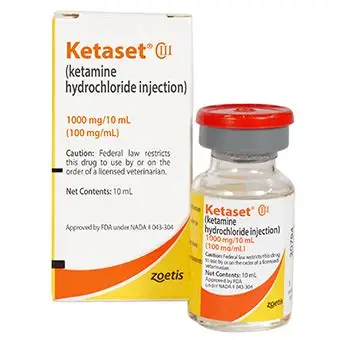
Ketaset Injection is a veterinary injectable anesthetic containing ketamine hydrochloride, formulated for professional veterinary use. The current U.S. Zoetis product information identifies Ketaset as a rapid-acting, nonnarcotic, nonbarbiturate anesthetic for use in cats and for restraint in subhuman primates. The product contains the equivalent of 100 mg ketamine base per mL and is supplied as an intramuscular injection.
Ketaset is a specialist veterinary medicine and should be used only by, or under the direction of, a licensed veterinarian. The official label states that federal law restricts the drug to use by or on the order of a licensed veterinarian.
Because ketamine is a potent anesthetic, appropriate patient assessment, professional administration, monitoring and recovery care are essential. Ketaset should not be treated like an ordinary over-the-counter animal supplement or routine pet medication.
What Is Ketaset Injection?
Ketaset is the trade name for ketamine hydrochloride injection used in veterinary medicine.
According to the current Zoetis product information, Ketaset contains the equivalent of 100 mg of ketamine base per mL. The formulation also contains benzethonium chloride as a preservative. It is supplied as a slightly acidic injectable solution intended for intramuscular administration.
Ketamine belongs to the dissociative anesthetic class. Its pharmacological effects can produce a state suitable for restraint or anesthesia, depending on the animal and the clinical application.
Ketaset therefore has a specialized role in veterinary anesthetic practice.
Ketaset Injection Active Ingredient
The active ingredient in Ketaset is ketamine hydrochloride.
The official label identifies the chemical substance as ketamine hydrochloride and states that the formulation contains the equivalent of 100 mg ketamine base per mL.
Ketamine has been used in veterinary medicine for many years and remains an important component of anesthetic protocols for appropriately selected patients.
Its use must nevertheless be individualized because animals can respond differently depending on species, age, health status, procedure and other medications used during anesthesia.
Ketaset 100mg/mL
The concentration of the Ketaset formulation described in the current Zoetis U.S. label is 100 mg/mL ketamine base equivalent.
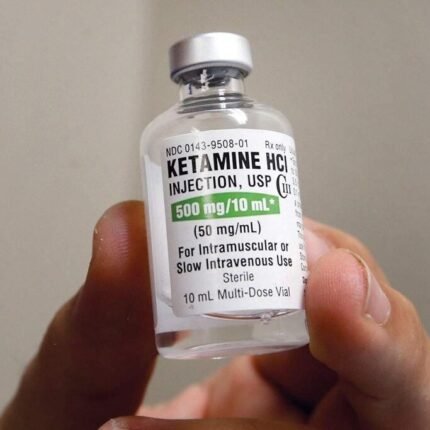
This concentration should not be confused with other ketamine formulations that may be marketed at different concentrations.
Veterinary professionals should always verify the concentration printed on the actual product label before preparing an anesthetic protocol.
This is particularly important when comparing different ketamine products because concentration, formulation, preservatives, approved species and authorized routes can vary.
Ketaset for Cats
Cats are specifically identified as a target species for Ketaset in the current U.S. product label.
The label states that Ketaset may be used in cats for restraint or as the sole anesthetic agent for diagnostic procedures and minor, brief surgical procedures that do not require skeletal muscle relaxation.
The veterinarian must determine whether ketamine is appropriate for an individual cat after considering its health status, age, procedure and other relevant clinical factors.
Ketaset should not be administered to a cat without appropriate veterinary oversight.
Ketaset for Veterinary Restraint
One important veterinary application of Ketaset is restraint.
Some animals cannot safely undergo certain examinations or procedures while fully conscious because of fear, aggression, pain or inability to remain still.
A veterinarian may therefore use an anesthetic or sedative protocol to facilitate safe handling.
The official Ketaset label identifies restraint as an approved use in cats and subhuman primates under the specified labeling conditions.
The objective is not simply to immobilize the animal. Proper veterinary restraint should prioritize patient welfare, staff safety and appropriate monitoring.
Ketaset for Anesthesia
Ketaset can also be used for anesthesia in cats under the approved labeling.
The official label describes its use as the sole anesthetic agent for diagnostic procedures and minor, brief surgical procedures that do not require skeletal muscle relaxation.
More complicated procedures may require a multimodal anesthetic protocol.
The veterinarian must determine which combination of anesthetic, analgesic and muscle-relaxing agents is appropriate.
Ketaset and Minor Surgical Procedures
Ketaset may be used for certain minor and brief surgical procedures in cats where skeletal muscle relaxation is not required, according to the approved label.
This is an important distinction.
Ketaset should not automatically be regarded as appropriate for every surgical procedure. Longer, more invasive or more painful procedures can require additional anesthetic and analgesic support.
Veterinary assessment is therefore essential.
Ketaset and Diagnostic Procedures
Veterinary diagnostic procedures sometimes require an animal to remain sufficiently still for accurate examination.
Depending on the procedure and patient’s temperament, sedation or anesthesia may be appropriate.
Ketaset is labeled for certain diagnostic procedures in cats.
The veterinarian should select the appropriate protocol based on the individual animal and the diagnostic procedure being performed.
Ketaset and Skeletal Muscle Relaxation
One of the important limitations identified in the Ketaset label is that it is not intended to provide all the muscle-relaxation characteristics required for every procedure.
The official label specifically describes Ketaset as a sole anesthetic for procedures that do not require skeletal muscle relaxation.
For procedures requiring substantial muscle relaxation, the veterinary anesthetic plan may need additional agents.
This distinction is clinically important and should be clearly explained on an educational product page.
Ketaset and Anesthetic Monitoring
Monitoring is an essential component of veterinary anesthesia.
According to the official Ketaset labeling, apnea, respiratory arrest, cardiac arrest and death have occasionally been reported with ketamine used alone and have been reported more frequently when ketamine is used together with sedatives or other anesthetics. Close monitoring is strongly advised during induction, anesthesia and recovery.
Professional monitoring may include evaluation of:
- Respiratory rate and quality
- Heart rate
- Circulation
- Oxygenation
- Body temperature
- Anesthetic depth
- Muscle tone
- Reflexes
- Recovery
The exact monitoring protocol depends on the animal and procedure.
Ketaset Safety Information
Ketaset is a potent anesthetic and should be handled accordingly.
The official product information emphasizes that respiratory depression and serious cardiovascular or respiratory events can occur.
Appropriate emergency equipment and trained personnel should therefore be available whenever an animal undergoes general anesthesia.
This is one of the major reasons Ketaset is restricted to professional veterinary use.
Ketaset Adverse Reactions
The official Ketaset label lists several reported adverse reactions, including:
- Vomiting
- Salivation
- Vocalization
- Erratic recovery
- Prolonged recovery
- Spastic jerking movements
- Convulsions
- Muscle tremors
- Hypertonicity
- Dyspnea
- Cardiac arrest
Respiratory depression may occur following high doses.
The occurrence and severity of adverse effects can vary according to the individual animal and anesthetic protocol.
Any concerning reaction requires immediate professional veterinary attention.
Ketaset and Recovery
Recovery is an important stage of anesthesia.
The official label recommends avoiding unnecessary sound or handling during recovery to reduce emergence reactions while still maintaining appropriate monitoring of vital signs.
A controlled recovery environment can help reduce stimulation and allows veterinary staff to identify complications promptly.
Recovery should continue until the animal has returned to an appropriate level of consciousness and physiological stability.
Ketaset and Respiratory Depression
Respiratory depression is a recognized potential adverse effect of ketamine, particularly at higher exposures.
The Ketaset label warns that respiratory depression may occur and states that prompt resuscitative measures should be instituted if respiration becomes excessively depressed and cyanosis develops.
This highlights why Ketaset should only be used where appropriate veterinary monitoring and emergency support are available.
Ketaset and Cardiovascular Effects
Ketamine can affect cardiovascular function.
The official Ketaset labeling includes cardiac arrest among reported adverse reactions.
Before anesthesia, the veterinarian should assess the animal’s overall health and determine whether ketamine is appropriate.
Monitoring during induction, anesthesia and recovery remains important.
Ketaset and Emergence Reactions
Some animals may experience unusual behavior or movement during recovery from ketamine anesthesia.
The official label refers to erratic recovery, vocalization, spastic movements and other reactions.
Reducing unnecessary stimulation during recovery can help minimize emergence-related problems.
Veterinary staff should continue monitoring until the animal has recovered adequately.
Ketaset Contraindications and Precautions
The suitability of ketamine depends on the individual patient.
Veterinary professionals should review the official current label before use and consider the animal’s:
- Age
- Species
- Health condition
- Cardiovascular status
- Respiratory status
- Neurological status
- Current medications
- Procedure
- Anesthetic history
Ketaset should never be treated as a universally appropriate anesthetic.
Ketaset and Other Anesthetic Drugs
Ketamine can be incorporated into broader anesthetic protocols.
However, combining anesthetic agents can change the depth and duration of anesthesia and can increase the risk of adverse effects.
The current product label specifically warns that serious respiratory and cardiovascular events have been reported more frequently when ketamine is used with sedatives or other anesthetics.
The veterinarian responsible for the procedure should therefore determine which agents are appropriate.
Ketaset Veterinary Prescription Status
In the United States, the current Ketaset label states that federal law restricts this drug to use by or on the order of a licensed veterinarian.
The FDA’s animal-drug database identifies Ketaset under NADA 043-304 as a prescription animal drug administered intramuscularly.
Because ketamine is a controlled substance in the United States, appropriate legal and recordkeeping requirements also apply.
Ketaset and Controlled-Substance Regulations
Ketamine is subject to controlled-substance regulation in the United States.
This means that legitimate veterinary use requires compliance with applicable federal and state laws.
Regulations can also differ internationally.
For this reason, Vet Pharma Med should avoid language suggesting unrestricted purchase, personal possession or unsupervised administration.
A professional product page should clearly identify Ketaset as a veterinary-controlled anesthetic.
Ketaset in the United States
The U.S. Ketaset product is manufactured by Zoetis and has an FDA-approved veterinary label.
The FDA database identifies Ketaset as a prescription animal drug under NADA 043-304.
The current Zoetis label identifies cats and subhuman primates as the labeled species and specifies intramuscular administration.
These approved indications should be distinguished from other ketamine products and from veterinary use in countries with different registrations.
Ketaset in Canada
Canadian veterinary professionals should verify the current Canadian regulatory status of Ketaset or an equivalent ketamine veterinary product before use.
A U.S. FDA approval does not automatically establish Canadian approval.
Veterinary medicines and controlled substances can have country-specific requirements.
Ketaset in Australia
Australian veterinary professionals should verify current Australian registration, availability and controlled-drug requirements before use.
The same principle applies to other international markets.
The product name, manufacturer, concentration, approved species and legal status can differ between countries.
Ketaset in Europe
European veterinary professionals should verify the regulatory status of the exact Ketaset product in the relevant country.
France, Germany, Spain, the Netherlands and other European markets have their own regulatory requirements for veterinary medicines and controlled substances.
An American product label should not automatically be treated as an authorization for European use.
Ketaset for Veterinary Clinics
Ketaset can be relevant to veterinary practices that perform procedures requiring sedation, restraint or anesthesia in approved species.
A veterinary clinic considering any ketamine anesthetic should maintain appropriate:
- Patient assessment procedures
- Anesthesia protocols
- Monitoring equipment
- Emergency equipment
- Controlled-drug records
- Storage procedures
- Recovery protocols
- Staff training
These measures are more important than simply selecting an anesthetic brand.
Ketaset for Veterinary Professionals
Veterinary professionals researching Ketaset Injection may be interested in the product’s:
Active ingredient: Ketamine hydrochloride
Strength: Equivalent to 100 mg ketamine base per mL
Dosage form: Injectable solution
Labeled route: Intramuscular
U.S. labeled species: Cats and subhuman primates
Primary veterinary applications: Restraint and anesthesia under approved labeling
Regulatory status: Prescription veterinary medicine
These details are derived from the current U.S. product information.
Ketaset Product Authenticity
When dealing with injectable veterinary anesthetics, product authenticity and traceability are particularly important.
Veterinary professionals should verify:
- Product name
- Manufacturer
- Lot number
- Expiration date
- Concentration
- Packaging integrity
- Labeling
- Storage conditions
- Regulatory status
An injectable anesthetic should never be used if its identity, integrity or storage history is uncertain.
Ketaset Storage
The exact current package insert should always be consulted for storage requirements.
The product should be stored and handled according to the manufacturer’s current labeling.
Light exposure can affect the appearance of ketamine solutions. The Ketaset label notes that the solution may range from colorless to slightly yellowish and can darken after prolonged exposure to light without necessarily affecting potency; it should not be used if a precipitate appears.
Ketaset and Product Quality
A high-quality veterinary product page should provide accurate information about the formulation rather than making exaggerated claims.
For Ketaset, useful information includes:
- Ketamine concentration
- Target species
- Approved applications
- Professional-use requirements
- Safety warnings
- Adverse reactions
- Storage
- Regulatory information
This type of content helps veterinary professionals make informed decisions.
Why Accurate Veterinary Content Matters
A strong 2026 SEO strategy should prioritize useful, trustworthy content over keyword repetition.
For a veterinary medicine such as Ketaset, a high-quality page should answer genuine questions a veterinary professional might have:
- What is Ketaset?
- What is the active ingredient?
- What concentration is supplied?
- Which species are labeled?
- What is it indicated for?
- What safety considerations apply?
- Why is veterinary monitoring required?
- What are the potential adverse reactions?
- What regulations apply?
Providing answers to these questions creates a substantially more useful resource than a short commercial description.
Ketaset and Responsible Veterinary Use
Ketaset should always be used responsibly.
A veterinarian should assess the patient and select an anesthetic plan based on the individual animal and procedure.
The goal of veterinary anesthesia is not simply unconsciousness. A successful anesthetic protocol should also address patient safety, pain management, muscle relaxation when needed, physiological monitoring and recovery.
Ketaset can play an important role within an appropriate protocol, but it is not appropriate to assume that one anesthetic is suitable for every patient.
Frequently Asked Questions About Ketaset Injection
What is Ketaset Injection?
Ketaset Injection is a veterinary ketamine hydrochloride injectable anesthetic. The current U.S. formulation contains the equivalent of 100 mg ketamine base per mL.
What is Ketaset used for?
Under its U.S. veterinary labeling, Ketaset is used in cats for restraint and as a sole anesthetic for certain diagnostic or minor brief surgical procedures, and in subhuman primates for restraint.
Is Ketaset ketamine?
Yes. Ketaset contains ketamine hydrochloride.
What concentration is Ketaset?
The current U.S. Ketaset label identifies a concentration equivalent to 100 mg ketamine base per mL.
Is Ketaset an antibiotic?
No. Ketaset is an anesthetic and does not treat bacterial infections.
Is Ketaset a sedative?
Ketaset is primarily classified as a dissociative anesthetic, although its veterinary applications include restraint.
Can Ketaset be used in cats?
Yes. Cats are a labeled target species in the current U.S. Ketaset product information.
Can Ketaset be used in dogs?
The current U.S. Ketaset label cited here does not list dogs as a target species. Veterinary professionals should therefore not assume that the Ketaset label for cats and primates applies to dogs.
Is Ketaset prescription-only?
The current U.S. label states that federal law restricts Ketaset to use by or on the order of a licensed veterinarian.
Does Ketaset require monitoring?
Yes. The official label strongly advises close monitoring during induction, anesthesia and recovery because serious respiratory and cardiovascular events have been reported.
Can Ketaset be used for every surgical procedure?
No. The U.S. label specifically describes sole-anesthetic use for diagnostic and minor brief procedures that do not require skeletal muscle relaxation.
Can Ketaset cause side effects?
Yes. Reported adverse reactions include vomiting, salivation, vocalization, erratic or prolonged recovery, tremors, convulsions, dyspnea and cardiac arrest.
Why should Ketaset only be used by professionals?
Ketamine anesthesia can cause respiratory and cardiovascular complications and requires appropriate patient assessment, monitoring and emergency support.
Is Ketaset the same as all ketamine injections?
Not necessarily. Ketamine products can differ in concentration, formulation, preservatives, manufacturer, approved species, routes and regulatory status. The exact product label should always be checked.
Where To Ketaset Injection Online
Ketaset Injection is a professional veterinary anesthetic containing ketamine hydrochloride, with the current U.S. formulation providing the equivalent of 100 mg ketamine base per mL. It is labeled for intramuscular use in cats and for restraint in subhuman primates, with veterinary use restricted by federal law to use by or on the order of a licensed veterinarian.
Ketaset has an established role in veterinary anesthesia and restraint, but its use requires careful clinical judgment. Veterinary professionals must consider the animal’s health, procedure, concurrent medications, anesthetic requirements and potential adverse effects.
Buy Ketaset Injection Online From Vet Pharma Med
ketaset injection As an anaesthetic agent for diagnostic and surgical procedures. When used by intravenous or intramuscular injection, is best suited for short procedures. With additional doses, or by intravenous infusion, Ketamine can be used for longer procedures. If skeletal muscle relaxation is desired, a muscle relaxant should be used and respiration should be supported.
For the induction of anaesthesia prior to the administration of other general anaesthetic agents. To supplement other anaesthetic agents.
Specific areas of application or types of procedures :ketamin injection
When the intramuscular route of administration is preferred.
Debridement, painful dressings, and skin grafting in burned patients, as well as other superficial surgical procedures.
Neurodiagnostic procedures such as pneumoencephalograms, ventriculograms, myelograms, and lumbar punctures.
Diagnostic and operative procedures of the eye, ear, nose, and mouth, including dental extractions.
Note: Eye movements may persist during ophthalmological procedures.ketamin injection
Anaesthesia in poor-risk patients with depression of vital functions or where depression of vital functions must be avoided, if at all possible.
Orthopaedic procedures such as closed reductions, manipulations, femoral pinning, amputations, and biopsies.
Sigmoidoscopy and minor surgery of the anus and rectum, circumcision and pilonidal sinus.
Cardiac catheterization procedures.
Caesarean section; as an induction agent in the absence of elevated blood pressure.
Anaesthesia in the asthmatic patient, either to minimise the risks of an attack of bronchospasm developing, or in the presence of bronchospasm where anaesthesia cannot be delayed.
For intravenous infusion, intravenous injection or intramuscular injection.
NOTE: All doses are given in terms of Ketaset Injection base
Adults, elderly (over 65 years) and children:
For surgery in elderly patients ketamine has been shown to be suitable either alone or supplemented with other anaesthetic agents.
Preoperative preparations
Ketamine has been safely used alone when the stomach was not empty. However, since the need for supplemental agents and muscle relaxants cannot be predicted, when preparing for elective surgery it is advisable that nothing be given by mouth for at least six hours prior to anaesthesia.
Premedication with an anticholinergic agent (e.g. atropine, hyoscine or glycopyrolate) or another drying agent should be given at an appropriate interval prior to induction to reduce ketamine- induced hypersalivation.
Midazolam, diazepam, lorazepam, or flunitrazepam used as a premedicant or as an adjunct to ketamine, have been effective in reducing the incidence of emergence reactions.
Onset and duration
As with other general anaesthetic agents, the individual response to Ketamine is somewhat varied depending on the dose, route of administration, age of patient, and concomitant use of other agents, so that dosage recommendation cannot be absolutely fixed. The dose should be titrated against the patient’s requirements.
Because of rapid induction following intravenous injection, the patient should be in a supported position during administration. An intravenous dose of 2 mg/kg of bodyweight usually produces surgical anaesthesia within 30 seconds after injection and the anaesthetic effect usually lasts 5 to10 minutes. An intramuscular dose of 10 mg/kg of bodyweight usually produces surgical anaesthesia within 3 to 4 minutes following injection and the anaesthetic effect usually lasts 12 to 25 minutes. Return to consciousness is gradual.
A. Ketamine as the sole anaesthetic agent
Intravenous Infusion
The use of Ketamine by continuous infusion enables the dose to be titrated more closely, thereby reducing the amount of drug administered compared with intermittent administration. This results in a shorter recovery time and better stability of vital signs.
A solution containing 1 mg/ml of ketamine in dextrose 5% or sodium chloride 0.9% is suitable for administration by infusion.
General Anaesthesia Induction
An infusion corresponding to 0.5 – 2 mg/kg as total induction dose.
Maintenance of anaesthesia
Anaesthesia may be maintained using a microdrip infusion of 10 – 45 microgram/kg/min (approximately 1 – 3 mg/min).
The rate of infusion will depend on the patient’s reaction and response to anaesthesia. The dosage required may be reduced when a long acting neuromuscular blocking agent is used.
Intermittent Injection
Induction
Intravenous Route
The initial dose of Ketamine administered intravenously may range from 1 mg/kg to 4.5 mg/kg (in terms of ketamine base). The average amount required to produce 5 to 10 minutes of surgical anaesthesia has been 2.0 mg/kg. It is recommended that intravenous administration be accomplished slowly (over a period of 60 seconds). More rapid administration may result in respiratory depression and enhanced pressor response.
Dosage in Obstetrics
In obstetrics, for vaginal delivery or in caesarean section, intravenous doses ranging from 0.2 to 1.0 mg/kg are recommended (see section 4.6 Fertility, pregnancy and lactation).
Intramuscular Route
The initial dose of Ketamine administered intramuscularly may range from 6.5 mg/kg to 13 mg/kg (in terms of ketamine base). A low initial intramuscular dose of 4 mg/kg has been used in diagnostic manoeuvres and procedures not involving intensely painful stimuli. A dose of 10 mg/kg will usually produce 12 to 25 minutes of surgical anaesthesia.
Dosage in Hepatic Insufficiency:
Dose reductions should be considered in patients with cirrhosis or other types of liver impairment. (see section 4.4 Special Warnings and Special Precautions for Use)
Dosage in Obstetrics
Data are lacking for intramuscular injection and maintenance infusion of ketamine in the parturient population, and recommendations cannot be made. Available data are presented in Section 5.2.
Maintenance of general anaesthesia
Lightening of anaesthesia may be indicated by nystagmus, movements in response to stimulation, and vocalization. Anaesthesia is maintained by the administration of additional doses of Ketamine by either the intravenous or intramuscular route.
Each additional dose is from ½ to the full induction dose recommended above for the route selected for maintenance, regardless of the route used for induction.
The larger the total amount of Ketamine administered, the longer will be the time to complete recovery.
Purposeless and tonic-clonic movements of extremities may occur during the course of anaesthesia. These movements do not imply a light plane and are not indicative of the need for additional doses of the anaesthetic.
B. Ketamine as induction agent prior to the use of other general anaesthetics
Induction is accomplished by a full intravenous or intramuscular dose of Ketamine as defined above. If Ketamine has been administered intravenously and the principal anaesthetic is slow- acting, a second dose of Ketamine may be required 5 to 8 minutes following the initial dose. If Ketamine has been administered intramuscularly and the principal anaesthetic is rapid-acting, administration of the principal anaesthetic may be delayed up to 15 minutes following the injection of Ketamine.
Reviews
There are no reviews yet.