
Shop Tonophosphan 10mL Injection Online Vet Pharma Med
Tonophosphan 10mL Injection is a veterinary injectable product containing phosphorus-based nutritional ingredients and is used in veterinary practice as supportive therapy in appropriate clinical and nutritional situations.
Phosphorus is an essential mineral involved in many normal physiological processes, including energy metabolism, cellular function, bone development and maintenance, and the formation of important biochemical compounds.
Tonophosphan is therefore associated with nutritional and metabolic support rather than being an antibiotic or conventional pain-relief medicine.
Because it is an injectable veterinary product, its use should be determined by a qualified veterinarian. The exact formulation, concentration, approved species, route of administration and indications can vary between countries and product versions, so the current label supplied with the product should always take priority.
What Is Tonophosphan?
Tonophosphan is a veterinary phosphorus-containing injectable preparation.
It has historically been used as a supportive product in veterinary medicine where phosphorus supplementation or metabolic support is considered appropriate.
Depending on the specific formulation and market, Tonophosphan products may contain phosphorus compounds together with other nutritional ingredients.
The product is not intended to replace a balanced ration.
Instead, it may be used as part of a broader veterinary management plan.
Tonophosphan and Phosphorus
Phosphorus is one of the major minerals required by animals.
It has important roles in:
- Energy metabolism
- Bone development
- Cellular function
- Nucleic acid formation
- Phospholipid metabolism
- Normal muscle function
- Normal physiological processes
A horse or other animal requires phosphorus as part of a balanced mineral intake.
Both phosphorus deficiency and excessive supplementation can create nutritional problems, which is why supplementation should be based on the animal’s complete diet and veterinary assessment.
Tonophosphan for Horses
Tonophosphan may be considered by veterinarians when nutritional or metabolic support involving phosphorus is appropriate.
This can be particularly relevant to horses undergoing:
- Training
- Recovery
- Periods of nutritional stress
- Increased physiological demands
- Veterinary treatment
However, an injection should never be used simply because a horse appears tired.
Poor performance or fatigue can have many possible causes.
Tonophosphan for Performance Horses
Performance horses have increased nutritional demands compared with horses at maintenance.
Their management may need to address:
- Energy
- Protein
- Minerals
- Electrolytes
- Hydration
- Recovery
- Conditioning
Phosphorus participates in energy metabolism, making it an important component of normal physiological function.
Tonophosphan may be used as supportive nutritional therapy when a veterinarian determines that additional phosphorus or metabolic support is appropriate.
Tonophosphan and Energy Metabolism
One of phosphorus’s most important physiological roles involves energy metabolism.
Phosphate groups are involved in compounds that store and transfer cellular energy.
This includes ATP, the molecule widely recognized as an important energy currency of cells.
For an exercising horse, normal energy metabolism is essential to muscle function.
However, Tonophosphan should not be regarded as an instant energy booster or stimulant.
Adequate calories, forage, conditioning and recovery remain fundamental.
Tonophosphan and Muscle Function
Phosphorus contributes to normal cellular and muscular physiology.
Muscles require energy for contraction and relaxation.
Phosphorus-containing compounds participate in the biochemical processes that make this possible.
A horse experiencing weakness or poor exercise tolerance should nevertheless be examined to identify the underlying cause.
Tonophosphan and Bone Health
Phosphorus works closely with calcium in maintaining normal skeletal structure.
Both minerals need to be present in appropriate proportions.
For growing horses, balanced calcium and phosphorus nutrition is particularly important.
Excessive supplementation of one mineral without considering the other can be counterproductive.
Tonophosphan for Growing Horses
Young horses have significant mineral requirements because their skeletal system is developing.
A balanced diet should provide appropriate:
- Calcium
- Phosphorus
- Magnesium
- Trace minerals
- Vitamins
- Protein
- Energy
Tonophosphan should not be used indiscriminately in growing horses.
The complete ration should be assessed before supplemental phosphorus is introduced.
Tonophosphan for Foals
Foals have specialized nutritional requirements.
Their mineral balance can influence normal skeletal development.
Any injectable mineral supplement should be used only when there is a clear veterinary reason for doing so.
Tonophosphan for Yearlings
Yearlings continue to undergo rapid growth.
Their diet should be carefully formulated to provide appropriate amounts of energy, protein and minerals.
Veterinary or nutritional assessment is particularly useful when a young horse demonstrates poor growth or other nutritional concerns.
Tonophosphan During Recovery
Veterinarians may use supportive nutritional products during recovery from illness or periods of increased physiological demand.
Recovery management can include:
- Appropriate calories
- Forage
- Water
- Electrolytes
- Protein
- Vitamins and minerals
- Rest
- Treatment of the underlying disease
Tonophosphan may form part of such a program where professionally indicated.
Tonophosphan and Metabolic Support
The term “metabolic support” refers broadly to supporting normal biochemical processes.
Phosphorus participates in numerous cellular pathways.
This makes phosphorus-containing products potentially useful as nutritional adjuncts in selected situations.
Nevertheless, metabolic disease requires diagnosis rather than supplementation alone.
Tonophosphan for Livestock
Phosphorus is also important in livestock nutrition.
Cattle, sheep and other production animals require balanced mineral intake for:
- Growth
- Bone development
- Reproduction
- Energy metabolism
- General health
Whether Tonophosphan is appropriate depends on the exact product’s approved species and local labeling.
Tonophosphan for Cattle
Cattle require adequate phosphorus as part of their mineral nutrition.
Phosphorus deficiency can affect productivity and normal physiological functions.
However, injectable supplementation should be undertaken only when justified by veterinary or nutritional assessment.
Tonophosphan for Sheep
Sheep require carefully balanced mineral nutrition.
Mineral requirements can vary according to:
- Age
- Production stage
- Pregnancy
- Lactation
- Forage quality
- Geographic region
The appropriate use of an injectable phosphorus product should be determined by a veterinarian.
Tonophosphan and Reproductive Animals
Mineral nutrition can influence normal reproductive performance.
Phosphorus is involved in numerous physiological processes.
However, reproductive problems should not automatically be attributed to phosphorus deficiency.
A comprehensive veterinary evaluation may be required.
Tonophosphan and Appetite
Poor appetite can have many causes.
Possible causes include:
- Dental problems
- Infection
- Gastrointestinal disease
- Pain
- Stress
- Poor-quality feed
- Sudden diet changes
- Metabolic disorders
Tonophosphan should not be considered a universal appetite stimulant.
If an animal stops eating, the cause should be investigated.
Tonophosphan and Weakness
Weakness can result from many conditions.
These can include:
- Dehydration
- Electrolyte abnormalities
- Infection
- Anemia
- Nutritional deficiencies
- Pain
- Neurological disease
- Metabolic disease
A phosphorus-containing supplement may be useful only when it addresses a relevant nutritional or metabolic need.
Tonophosphan and Vitamin Deficiency
Vitamin deficiencies are different from mineral deficiencies.
A product containing phosphorus does not necessarily correct every vitamin deficiency.
The animal’s complete nutritional status should be considered.
Tonophosphan and Electrolytes
Electrolytes such as sodium, potassium and chloride have important physiological functions.
Phosphorus is also involved in cellular metabolism, but it should not be considered a replacement for a properly formulated electrolyte product.
For horses undergoing prolonged exercise, appropriate hydration and electrolyte management are especially important.
Tonophosphan and Dehydration
Dehydration requires appropriate fluid management.
A phosphorus-containing injection is not a substitute for fluid therapy when an animal is clinically dehydrated.
Severely dehydrated animals require veterinary assessment.
Tonophosphan Administration
Tonophosphan is an injectable product.
The exact route of administration must be determined from the current product label and veterinary instructions.
Depending on the particular formulation, injectable veterinary products can have specific requirements concerning:
- Intravenous administration
- Intramuscular administration
- Subcutaneous administration
- Injection volume
- Frequency
These routes should never be assumed to be interchangeable.
Tonophosphan Dosage
The correct dosage depends on the:
- Animal species
- Body weight
- Age
- Clinical condition
- Product concentration
- Route
- Veterinary objective
- Other medications
For that reason, a single universal dosage recommendation should not be used.
The veterinarian should determine the appropriate administration schedule for the individual animal.
Tonophosphan Safety
Injectable medications should always be administered using appropriate veterinary technique.
Potential problems associated with inappropriate injection can include:
- Injection-site irritation
- Tissue damage
- Infection
- Incorrect dosing
- Accidental intravenous administration
- Adverse systemic reactions
Veterinary professionals should follow the product label and accepted injection procedures.
Tonophosphan and Other Medicines
The veterinarian should know about all medications and supplements the animal is receiving.
This includes:
- Antibiotics
- NSAIDs
- Corticosteroids
- Sedatives
- Vitamins
- Mineral supplements
- Electrolytes
- Other injectable products
Using multiple nutritional products can result in overlapping mineral intake.
Tonophosphan and Mineral Balance
Mineral supplementation should always be considered as part of the entire ration.
For horses, important nutritional minerals include:
- Calcium
- Phosphorus
- Magnesium
- Sodium
- Potassium
- Chloride
- Copper
- Zinc
- Selenium
The correct balance is often more important than simply increasing the amount of an individual mineral.
Tonophosphan and Calcium
Calcium and phosphorus work together in skeletal metabolism.
A feeding program should maintain an appropriate relationship between the two.
Adding phosphorus without considering calcium intake may not be appropriate.
This is particularly important in young, growing animals.
Tonophosphan and Competition Horses
Competition horses should be managed carefully when using injectable products.
Some sporting organizations have strict rules concerning:
- Injectable medications
- Pharmacological substances
- Supplements
- Medication withdrawal periods
- Prohibited substances
Horse owners and trainers should consult the current rules of the relevant organization.
Tonophosphan and Racing
Racehorses are subject to particularly strict medication-control requirements in many jurisdictions.
Any injectable product should be documented and administered under veterinary supervision.
A product’s nutritional classification does not automatically mean it is permitted for use close to competition.
Tonophosphan and Performance
Tonophosphan should not be promoted as a product that artificially enhances athletic performance.
Its purpose is nutritional or metabolic support where appropriate.
A healthy performance program should focus on:
- Conditioning
- Nutrition
- Hydration
- Recovery
- Veterinary care
- Appropriate training
Tonophosphan Storage
Follow the storage instructions printed on the current product packaging.
General storage principles include:
- Keep the container closed.
- Protect from inappropriate temperatures.
- Protect from contamination.
- Check the expiration date.
- Keep away from children.
- Do not use damaged containers.
Storage requirements can differ between formulations and markets.
Tonophosphan 10mL Presentation
The product requested is the 10mL injection presentation.
Packaging alone does not establish the concentration or approved use.
Customers should verify the exact:
- Manufacturer
- Concentration
- Active ingredients
- Package size
- Species
- Expiration date
- Regulatory labeling
before purchase.
Buying Tonophosphan 10mL Injection Online
Customers researching this product may search for:
- Buy Tonophosphan 10mL Online
- Tonophosphan 10mL Injection
- Tonophosphan Injection for Horses
- Tonophosphan Veterinary Injection
- Tonophosphan Phosphorus Injection
- Tonophosphan Equine Supplement
- Tonophosphan Metabolic Support
- Tonophosphan for Livestock
- Tonophosphan Veterinary Supplement
- Tonophosphan Injection Online
The exact product formulation should always be verified before placing an order.
Tonophosphan in the USA
Customers in the United States should confirm the current approved product information, intended species, prescription requirements and veterinary directions.
For competition horses, applicable medication rules should also be checked.
Tonophosphan in Canada
Canadian customers should verify the current Canadian label and any requirements relating to veterinary prescription products and food-producing animals.
Tonophosphan in Australia
Australian customers should verify local veterinary product requirements and competition regulations before use.
Tonophosphan in Mexico
Customers in Mexico should verify local registration, labeling and veterinary requirements before purchasing or importing an injectable veterinary product.
Tonophosphan in France, Germany, Spain and the Netherlands
European customers should verify country-specific authorization, labeling and veterinary requirements.
A product’s availability in another country does not automatically establish authorization for the same use locally.
Frequently Asked Questions
What is Tonophosphan?
Tonophosphan is a veterinary phosphorus-containing injectable product used as nutritional and metabolic support in appropriate animals.
What does Tonophosphan contain?
Tonophosphan formulations contain phosphorus-based nutritional ingredients. Exact composition should be confirmed from the current product label.
Is Tonophosphan used for horses?
Tonophosphan may be used in equine veterinary medicine where phosphorus or metabolic support is considered appropriate.
Is Tonophosphan an antibiotic?
No. Tonophosphan is not an antibiotic.
Is Tonophosphan a painkiller?
No. It is not primarily an analgesic.
Is Tonophosphan a steroid?
No. It is a phosphorus-containing veterinary nutritional product.
What is phosphorus used for in horses?
Phosphorus participates in bone metabolism, energy metabolism, cellular processes and numerous normal physiological functions.
Can Tonophosphan be used for performance horses?
It may be used as supportive nutritional therapy when a veterinarian considers it appropriate.
Can Tonophosphan replace a mineral supplement?
Not necessarily. The complete mineral ration should be assessed before adding or replacing products.
Can Tonophosphan be used for young horses?
Potentially, but young horses have specific mineral requirements. Veterinary guidance is recommended before administering an injectable phosphorus product.
What is the dose of Tonophosphan?
The appropriate dose depends on the product formulation, animal species, body weight, indication and route. The veterinarian should determine the dose.
Can Tonophosphan be injected intravenously?
The permitted route depends on the exact formulation and label. Do not assume that every injectable presentation can be administered by every route.
Can Tonophosphan be given with other supplements?
Potentially, but the total nutritional intake should be reviewed to avoid unnecessary duplication.
Is Tonophosphan suitable for racehorses?
It may have nutritional applications, but current racing medication rules must be checked before administration.
Can Tonophosphan treat phosphorus deficiency?
A veterinarian should determine whether phosphorus deficiency exists and whether supplementation is appropriate.
Is Tonophosphan suitable for cattle?
Some Tonophosphan products have veterinary applications beyond horses, but the approved species should be confirmed from the exact product label.
What size is the product?
The product requested here is the 10mL injectable presentation.
Tonophosphan 10mL Injection — Vet Pharma Med
Tonophosphan 10mL Injection is a phosphorus-containing veterinary injectable used as nutritional and metabolic support when additional phosphorus is considered appropriate. Phosphorus plays essential roles in normal energy metabolism, cellular function and skeletal health, making adequate mineral nutrition an important part of horse and livestock management.
For horses, the product may be considered within broader veterinary management programs involving training, recovery, nutritional support or specific mineral requirements. It should not, however, be treated as a universal solution for fatigue, weakness, poor appetite or reduced athletic performance.
A balanced ration remains the foundation of good animal nutrition. Calcium, phosphorus, magnesium, sodium, potassium, trace minerals, vitamins, protein and energy all need to be considered together.
Because Tonophosphan is an injectable veterinary product, the exact dose and administration route should be determined by a veterinarian using the current product label. The 10mL package size does not by itself establish the concentration, approved species or appropriate dosage.
Horse owners should also check competition regulations before administering injectable products to racing or sport horses. Local veterinary regulations can vary considerably between the USA, Canada, Australia, Mexico, France, Germany, Spain, the Netherlands and other international markets.
For customers researching Tonophosphan 10mL Injection, Tonophosphan for Horses, Tonophosphan Veterinary Injection, or Tonophosphan Phosphorus Injection, Vet Pharma Med provides product-focused information to help customers understand the product and make informed purchasing decisions. This information does not replace professional veterinary diagnosis or treatment.
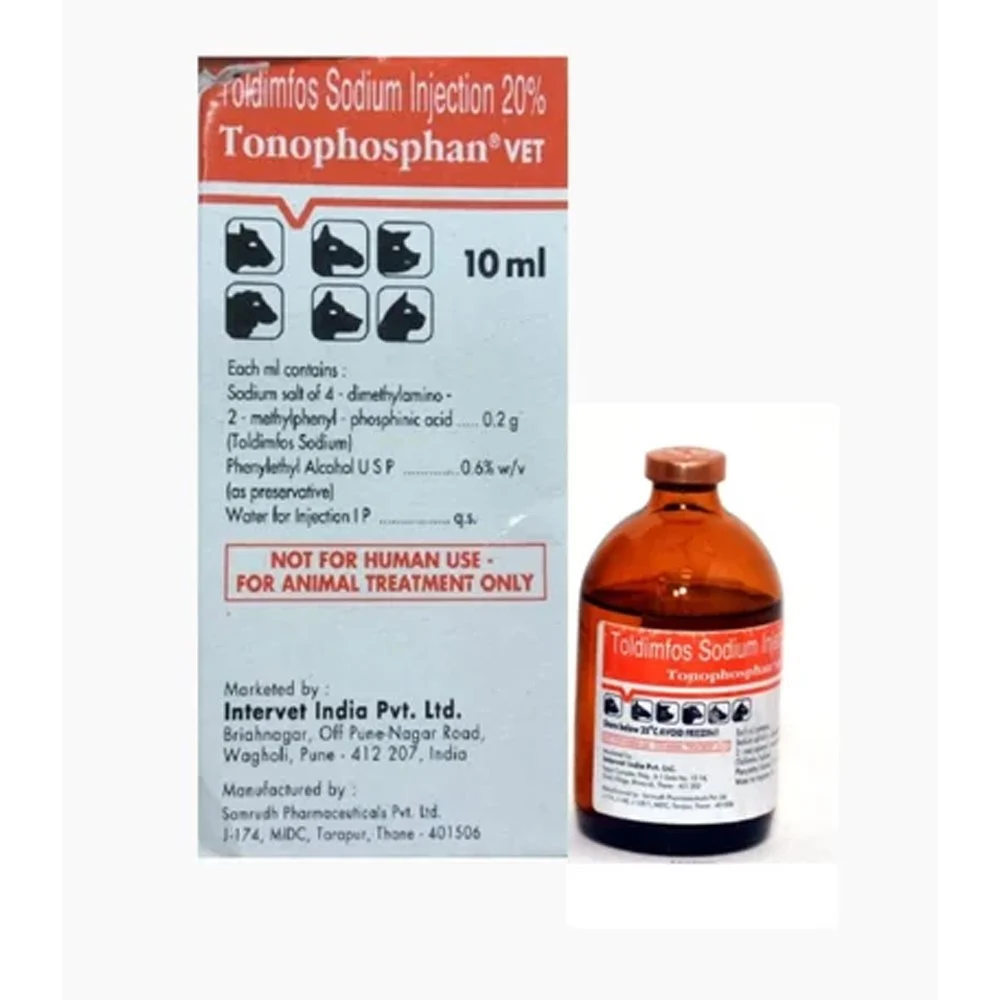
Tonophosphan 10ml Each ml contains Sodium salt of 4-dimethylamine,2-methylphenyl-phosphonic acid 0.2 g. It is used for improving metabolism, milk production and fertility in livestock.
Tonophosphan 10ml Each ml contains: Sodium salt of 4-dimethylamino-2-methyl-phenylphosphinic acid (Toldimfos Sodium): 0.2 gm
Indications for use:
As absorbent and tonic used in general metabolic disorders, debility, exhaustion, reduced milk production and in the treatment of nutritional infertility. Tonophosphan® Vet is recommended in disorders of bones in rickets and osteomalasia to promote callus formation in fractures in combination with Vitamin D preparations, also used for tetany paresis resulting from calcium, magnesium and phosphorus imbalance ( in combination with calcium and magnesium therapy
Dosage and Administration:
Depending on size and weight (intravenous, intramuscular or subcutaneous injection)
Large Animals: 5-20 ml and Small Animals: 1-3 ml Tonophosphan 10ml
For chronic conditions 5-10 subcutaneous or intramuscular injections should be given at 48 hour intervals with the following dose rates: Large Animals: 2.5 -5 ml and Small Animals: 1-2 ml.
Withdrawal Period
Meat-0 days, Milk- 0 days
Storage:
Store below 25 0C. Avoid Freezing
Presentation:
Vials of 10 ml, 30 ml and 100 ml
Indications for use:
As absorbent and tonic used in general metabolic disorders, debility, exhaustion, reduced milk production and in the treatment of nutritional infertility. Tonophosphan® Vet is recommended in disorders of bones in rickets and osteomalasia to promote callus formation in fractures in combination with Vitamin D preparations, also used for tetany paresis resulting from calcium, magnesium and phosphorus imbalance ( in combination with calcium and magnesium therapy.)
Dosage and Administration:
Depending on size and weight (intravenous, intramuscular or subcutaneous injection)
Large Animals: 5-20 ml and Small Animals: 1-3 ml
For chronic conditions 5-10 subcutaneous or intramuscular injections should be given at 48 hour intervals with the following dose rates: Large Animals: 2.5 -5 ml and Small Animals: 1-2 ml.
Withdrawal Period:
Meat-0 days, Milk- 0 days
Storage:
Store below 25 0C. Avoid Freezing
Presentation:
Vials of 10 ml, 30 ml and 100 ml
Dosage and Administration:
Depending on size and weight (intravenous, intramuscular or subcutaneous injection)
Large Animals: 5-20 ml and Small Animals: 1-3 ml
For chronic conditions 5-10 subcutaneous or intramuscular injections should be given at 48 hour intervals with the following dose rates: Large Animals: 2.5 -5 ml and Small Animals: 1-2 ml.
Withdrawal Period:
Meat-0 days, Milk- 0 days
Reviews
There are no reviews yet.