
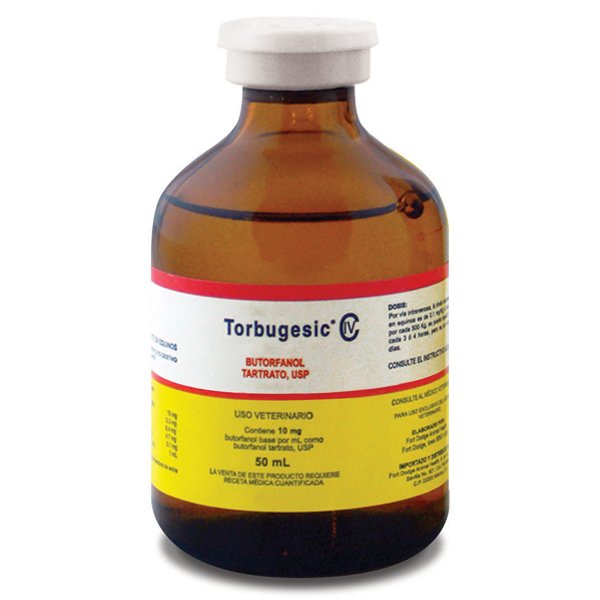
Shop Torbugesic 50mL Injection (Butorphanol Tartrate) Online Vet Pharma Med
Torbugesic 50mL Injection is a veterinary injectable formulation containing butorphanol tartrate, an opioid analgesic used in veterinary medicine for the management of pain and, in appropriate circumstances, as part of sedation or anesthesia protocols.
Butorphanol is a centrally acting opioid with analgesic properties. Veterinary use depends on the animal species, diagnosis, severity and type of pain, and whether the drug is being used alone or alongside other medications.
Because Torbugesic contains an opioid active ingredient, it should be handled as a prescription veterinary medicine and administered only according to the directions of a qualified veterinarian. It is not an ordinary supplement, performance product or general-purpose injectable.
What Is Torbugesic?
Torbugesic is a brand formulation of butorphanol tartrate used in veterinary medicine.
Butorphanol has been used in veterinary practice for analgesia and as a component of sedation and anesthesia protocols. The drug can affect the central nervous system, producing analgesia as well as sedation or other behavioral effects depending on dose, species and concurrent medications.
The exact formulation and approved uses can vary by country and product presentation. The current manufacturer label should therefore be checked before use.
What Is Butorphanol Tartrate?
Butorphanol tartrate is the salt form of butorphanol used in pharmaceutical formulations.
Butorphanol is classified pharmacologically as an opioid with activity at opioid receptors. Its receptor profile differs from that of traditional full μ-opioid agonists, which contributes to its particular clinical characteristics.
Its veterinary applications can include:
- Analgesia
- Sedation
- Pre-anesthetic medication
- Anesthetic protocols
- Management of certain acute pain conditions
The appropriate use depends on veterinary assessment.
Torbugesic for Horses
Butorphanol has an established role in equine veterinary medicine.
Veterinarians may use it when analgesia or sedation is required for appropriate clinical situations.
Examples can include pain associated with certain:
- Musculoskeletal conditions
- Colic-related conditions
- Diagnostic procedures
- Minor procedures
- Sedation protocols
The cause of pain must be assessed before treatment.
A horse displaying signs of abdominal pain, severe lameness or another emergency should receive prompt veterinary evaluation rather than simply being treated at home with an analgesic.
Torbugesic and Equine Pain Management
Pain management is an important part of responsible horse care.
Pain can result from:
- Injury
- Surgery
- Colic
- Musculoskeletal disease
- Dental problems
- Hoof disorders
- Other medical conditions
Butorphanol may reduce the perception of pain, but reducing pain does not necessarily eliminate the underlying cause.
For example, a horse with severe abdominal pain requires investigation for the cause rather than simply receiving repeated analgesic treatment.
Torbugesic for Colic
Butorphanol may be used by veterinarians in the management of pain associated with equine colic.
Colic is a clinical sign rather than a single disease.
Possible causes range from relatively mild gastrointestinal discomfort to life-threatening intestinal obstruction or displacement.
A horse showing signs such as:
- Repeated rolling
- Pawing
- Sweating
- Looking at the flank
- Persistent restlessness
- Reduced manure production
- Abdominal discomfort
should be assessed promptly by a veterinarian.
Analgesia may be part of treatment, but it should not delay diagnosis.
Torbugesic for Musculoskeletal Pain
Veterinarians may use butorphanol in selected pain-management situations.
Musculoskeletal pain can involve:
- Muscles
- Tendons
- Ligaments
- Joints
- Hooves
- Bones
Treatment depends on the underlying diagnosis.
A horse with persistent lameness may require physical examination and potentially diagnostic imaging rather than repeated administration of analgesics.
Torbugesic and Sedation
Butorphanol can be incorporated into veterinary sedation protocols.
Sedation may be required for procedures such as:
- Physical examination of difficult patients
- Diagnostic procedures
- Wound management
- Certain imaging procedures
- Minor procedures
- Other veterinary interventions
Veterinarians may combine butorphanol with other sedative medications when clinically appropriate.
These combinations require professional knowledge because respiratory and cardiovascular effects can vary.
Torbugesic in Anesthesia
Butorphanol may also form part of some veterinary anesthesia protocols.
Anesthesia requires careful monitoring of:
- Heart rate
- Respiratory rate
- Oxygenation
- Blood pressure
- Level of consciousness
- Recovery
An injectable opioid should never be used for unsupervised anesthesia.
Torbugesic for Dogs
Butorphanol is also used in veterinary medicine for dogs in appropriate circumstances.
Veterinary applications may include:
- Analgesia
- Sedation
- Pre-anesthetic medication
- Perioperative pain management
The correct dose and route depend on the specific product and clinical situation.
Dog owners should not attempt to calculate an injectable opioid dose independently.
Torbugesic for Cats
Butorphanol is also used by veterinarians in cats.
However, feline pharmacology differs from canine and equine pharmacology.
Therefore, the dose, interval, route and clinical indication must be determined specifically for the cat.
Torbugesic and Veterinary Pain Relief
Effective pain management begins with identifying the type of pain.
Veterinarians may distinguish between:
- Somatic pain
- Visceral pain
- Neuropathic pain
- Acute pain
- Chronic pain
- Surgical pain
Butorphanol may be appropriate for certain situations but not necessarily for every type of pain.
Torbugesic and Acute Pain
Acute pain occurs suddenly, often because of:
- Trauma
- Surgery
- Acute disease
- Inflammation
- Gastrointestinal problems
Veterinary analgesia can help improve patient comfort while the underlying condition is treated.
The medication selected depends on the diagnosis and severity.
Torbugesic and Chronic Pain
Chronic pain requires a more comprehensive management strategy.
Depending on the cause, treatment can involve:
- Veterinary medication
- Physical rehabilitation
- Weight management
- Corrective farriery
- Exercise modification
- Surgery
- Environmental changes
Butorphanol is not automatically the best long-term option for every chronic pain condition.
Torbugesic and Veterinary Examination
Before administering an opioid analgesic, veterinarians consider:
- Species
- Age
- Body weight
- Medical history
- Pain severity
- Current medications
- Cardiovascular status
- Respiratory status
- Liver and kidney function
- Intended procedure
This individualized approach helps reduce avoidable medication risks.
Torbugesic Administration
Torbugesic is an injectable veterinary medicine.
Depending on the specific formulation and approved label, butorphanol may be administered by routes such as:
- Intravenous
- Intramuscular
- Subcutaneous
The permitted route must be confirmed from the exact product label and veterinary prescription.
Injection routes are not interchangeable.
For example, a product approved for IV administration should not automatically be assumed to be appropriate for another route.
Torbugesic Dosage
Butorphanol dosing is highly dependent on species and clinical purpose.
Factors influencing veterinary dosing include:
- Species
- Body weight
- Pain severity
- Procedure
- Sedation requirements
- Other drugs being administered
- Patient health
- Route of administration
For this reason, a universal dosage recommendation would be inappropriate.
The veterinarian should determine the dose and administration interval for the individual animal.
Torbugesic and Other Sedatives
Butorphanol is frequently used as part of multimodal sedation protocols.
Veterinarians may combine analgesics with sedatives to achieve an appropriate level of restraint and comfort.
However, combining central nervous system depressants can increase effects such as:
- Sedation
- Respiratory depression
- Cardiovascular changes
- Reduced coordination
Such combinations require professional monitoring.
Torbugesic and Alpha-2 Agonists
In equine medicine, opioids such as butorphanol may be incorporated into sedation protocols involving alpha-2 agonists.
The combination can provide useful sedation and analgesia for certain procedures.
Because both drug classes can influence cardiovascular and respiratory function, these protocols should be administered by trained veterinary professionals.
Torbugesic and Anesthesia Recovery
Analgesia can be an important component of perioperative management.
Appropriate pain control can improve patient comfort during recovery.
The anesthesia team may determine whether butorphanol is suitable before, during or after a procedure.
Torbugesic Safety
Because butorphanol is an opioid, it should be treated with appropriate care.
Potential adverse effects vary between species but may include:
- Sedation
- Drowsiness
- Ataxia
- Changes in heart rate
- Respiratory effects
- Gastrointestinal changes
- Behavioral changes
The veterinarian should explain relevant risks for the individual patient.
Torbugesic in Horses and Ataxia
Sedated horses may become less coordinated.
For this reason, horses receiving sedative or opioid medication should be kept in a safe environment.
They should not be allowed to perform strenuous activity or be placed in situations where impaired coordination could cause injury.
Torbugesic and Respiratory Effects
Opioids can affect respiration.
The magnitude of respiratory effects depends on:
- Species
- Dose
- Route
- Other medications
- Patient condition
Extra caution is required in animals with respiratory disease or other conditions that could increase the risk of complications.
Torbugesic and Cardiovascular Monitoring
Sedation and analgesic drugs can affect cardiovascular function.
Veterinary monitoring may include:
- Heart rate
- Pulse quality
- Blood pressure
- Respiratory rate
- Mucous membranes
- Level of sedation
Monitoring is especially important when butorphanol is combined with other sedative or anesthetic drugs.
Torbugesic and Pregnancy
The use of butorphanol during pregnancy should be determined by a veterinarian after considering the potential benefits and risks.
Pregnant animals should not be given prescription medication without veterinary guidance.
Torbugesic and Nursing Animals
The veterinarian should also determine whether butorphanol is appropriate in lactating animals.
The risk-benefit assessment can depend on:
- Species
- Dose
- Timing
- Nursing status
- Condition of the mother
- Condition of offspring
Torbugesic Drug Interactions
The veterinarian should know about all medications the animal receives.
This includes:
- Sedatives
- Tranquilizers
- Anesthetics
- Other opioids
- NSAIDs
- Antihistamines
- Other central nervous system depressants
Butorphanol’s effects can change when used with other drugs.
Torbugesic and Other Opioids
Butorphanol should not be combined with other opioid medications unless specifically directed by a veterinarian.
Because opioid drugs interact with the same physiological systems, combinations require careful consideration.
Torbugesic and NSAIDs
In multimodal pain management, veterinarians may use medications from different classes to address pain through different mechanisms.
Whether butorphanol should be combined with an NSAID depends on the animal’s diagnosis and medical status.
Torbugesic Storage
Store Torbugesic according to the manufacturer’s current label.
Important considerations include:
- Temperature
- Light exposure
- Container integrity
- Expiration date
- Secure storage
- Proper disposal
Because the product contains an opioid, access should be appropriately controlled.
Torbugesic and Controlled-Drug Handling
Butorphanol is an opioid medication and is subject to specific regulatory requirements in some jurisdictions.
Veterinary practices and animal owners should follow applicable laws governing:
- Prescription
- Storage
- Record keeping
- Administration
- Disposal
Requirements vary between countries and jurisdictions.
Torbugesic for Competition Horses
Competition regulations are particularly important for equine athletes.
Butorphanol can be prohibited or restricted under racing and equestrian medication rules.
A horse that receives butorphanol may be ineligible to compete for a specified period.
Owners and trainers should check the current rules of the applicable governing body.
Torbugesic and Racing
Racehorse medication regulations can be strict.
Trainers should maintain accurate records of:
- Date administered
- Time administered
- Dose
- Route
- Veterinarian
- Product
- Reason for treatment
This documentation can help with responsible medication management.
Torbugesic and Performance
Torbugesic should not be used to enhance athletic performance.
Its purpose is veterinary analgesia and sedation where medically appropriate.
Using an analgesic to suppress pain and then exercising an injured animal can potentially worsen the underlying injury.
Torbugesic for Veterinary Procedures
One of the useful applications of butorphanol is its role in veterinary procedural protocols.
Depending on the procedure, it may help provide:
- Analgesia
- Sedation
- Improved patient tolerance
- Reduced stress
The veterinary team determines whether it is appropriate.
Torbugesic for Dental Procedures
Dental procedures may require sedation in horses, dogs or other animals.
Butorphanol can be incorporated into selected sedation protocols.
The exact combination depends on the animal and procedure.
Torbugesic for Diagnostic Procedures
Some diagnostic procedures require an animal to remain calm and relatively still.
Butorphanol may be included in a sedation plan when clinically appropriate.
The veterinary team should monitor the animal throughout the procedure.
Torbugesic 50mL Presentation
The product requested here is the 50mL injectable presentation.
Packaging can vary by manufacturer, country and product version.
Before ordering, customers should verify:
- Exact product name
- Active ingredient
- Concentration
- Volume
- Manufacturer
- Expiration date
- Label information
Buying Torbugesic 50mL Online
Customers searching for this product may use terms such as:
- Buy Torbugesic 50mL Online
- Torbugesic Injection 50mL
- Torbugesic Butorphanol Tartrate
- Butorphanol Tartrate Injection
- Torbugesic for Horses
- Torbugesic Veterinary Injection
- Butorphanol Injection for Horses
- Butorphanol Injection for Dogs
- Torbugesic Injectable
- Torbugesic Veterinary Pain Relief
The exact formulation should always be verified before purchase.
Torbugesic in the USA
U.S. customers should verify the current veterinary prescription and controlled-substance requirements applicable to butorphanol.
The veterinarian should determine whether the product is appropriate for the animal.
Torbugesic in Canada
Canadian customers should verify the current Canadian product label and applicable prescription and controlled-drug requirements.
Torbugesic in Australia
Australian customers should check current veterinary medicine requirements and competition regulations where the product is intended for an equine athlete.
Torbugesic in Mexico
Customers should verify local veterinary and controlled-medicine requirements before purchasing or importing butorphanol products.
Torbugesic in France, Germany, Spain and the Netherlands
European customers should confirm local authorization, prescription requirements and applicable veterinary regulations.
A product available in one market is not automatically authorized for identical use in another.
Frequently Asked Questions
What is Torbugesic?
Torbugesic is a veterinary injectable containing butorphanol tartrate, an opioid analgesic used in veterinary medicine.
What is butorphanol used for?
Butorphanol can be used for veterinary analgesia and as part of sedation or anesthesia protocols.
Is Torbugesic used in horses?
Yes. Butorphanol has important applications in equine veterinary medicine, including analgesia and sedation protocols.
Is Torbugesic used for colic?
Veterinarians may use butorphanol as part of the management of pain associated with equine colic while investigating the underlying cause.
Is Torbugesic a painkiller?
Yes. Butorphanol is an opioid analgesic used for veterinary pain management.
Is Torbugesic a sedative?
Butorphanol can contribute to sedation and is often used as part of a broader veterinary sedation protocol.
Is Torbugesic an antibiotic?
No. Torbugesic does not treat bacterial infections.
Is Torbugesic an anti-inflammatory?
No. Butorphanol is an opioid analgesic rather than an NSAID or corticosteroid.
Can Torbugesic be given without a veterinarian?
No. Because butorphanol is an opioid prescription veterinary medicine, administration should be directed by a qualified veterinarian.
What is the dose of Torbugesic?
The dose depends on the species, body weight, clinical indication, route and other medications. The veterinarian should determine the appropriate dose.
Can Torbugesic be used before surgery?
It may be incorporated into veterinary pre-anesthetic or anesthetic protocols when appropriate.
Can Torbugesic be combined with sedatives?
Veterinarians may combine butorphanol with other sedatives, but these combinations require professional dosing and monitoring.
Can Torbugesic be used in competition horses?
Butorphanol may be prohibited or restricted by racing and equestrian organizations. Current competition rules should be checked before administration.
Is Torbugesic suitable for dogs?
Butorphanol is used in veterinary medicine in dogs under professional direction.
Is Torbugesic suitable for cats?
Butorphanol may also be used in cats for appropriate veterinary indications.
What size is the product?
The product specified here is the 50mL injection presentation. Always verify the package and concentration on the actual product label.
Can Torbugesic treat the cause of pain?
No. It provides analgesic effects but does not necessarily treat the underlying cause of pain.
Can Torbugesic mask an injury?
Analgesics can reduce signs of pain. This is one reason animals receiving butorphanol should not simply be returned to strenuous activity without veterinary assessment.
Torbugesic 50mL Injection — Vet Pharma Med
Torbugesic 50mL Injection (Butorphanol Tartrate) is a veterinary injectable formulation used for analgesia and, where appropriate, as part of sedation and anesthesia protocols. Butorphanol is an opioid analgesic with established veterinary applications in horses and other animal species.
For equine patients, veterinary applications can include management of selected pain conditions, assistance with sedation protocols and analgesia associated with certain procedures. In cases such as colic, pain relief may be an important part of patient management, but it should never replace investigation of the underlying condition.
Because Torbugesic contains an opioid, it requires substantially more careful handling than an ordinary vitamin or nutritional supplement. The appropriate dose, route, frequency and combination with other medications must be determined by a veterinarian.
Competition horse owners should take particular care because butorphanol can be subject to strict medication-control regulations. It should never be administered with the intention of masking pain so that an injured horse can continue training or competing.
For customers researching Torbugesic 50mL Injection, Torbugesic Butorphanol Tartrate, Butorphanol Injection for Horses, or Torbugesic Veterinary Injection, the product label, concentration, manufacturer, expiration date and applicable prescription requirements should be verified before purchase.
Customers in the USA, Canada, Australia, Mexico, France, Germany, Spain, the Netherlands and other international markets should also verify local veterinary and controlled-medicine requirements.
Vet Pharma Med provides product information for horse owners, trainers and animal-care professionals researching veterinary medicines. This information is educational and does not replace a veterinarian’s diagnosis, prescription or administration instructions.
TORBUGESIC is for the relief of pain associated with colic in adult horses and yearlings. It can be used to alleviate abdominal pain associated with torsion, impaction, intussusception, spasmodic and tympanic colic and postpartum pain.
As part of the trusted equine pain and sedation portfolio from Zoetis, TORBUGESIC is a safe, simple solution for equine abdominal pain relief. Analgesic effects are seen within 15 minutes following injection and persist for approximately four hours.


Reviews
There are no reviews yet.